NRM MANIFESTO REVIEW! Here’s what the health sector has done in the last 2 years
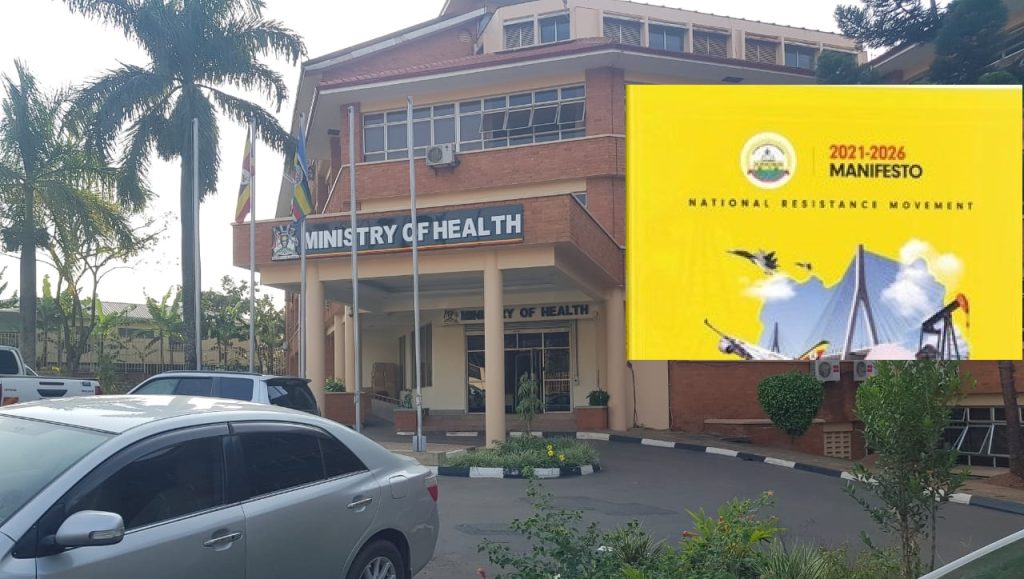
In 2021, Ugandans went to the polls and 59% voted the National Resistance Movement (NRM) for another term with President Museveni on the steering wheel.
The 2021 NRM re-election bid success followed a promising manifesto hinged on securing the future of Ugandans.
Voters felt convinced and showed this through the ballot box. The rest is history.
Two years later, we fast track what was promised vis-a-vis what has been done so far.
We shall be reviewing sector by sector and today our antennas have been positioned to the health sector.
INFRASTRUCTURE DEVELOPMENT
The NRM government has managed to complete the National Medical Stores (NMS) warehouse at Kajjansi, in Wakiso district. This is a State-of-the-art 30,000 pallet, the best in Sub Saharan Africa which was commissioned in November 2022. This has increased the pallet space available from 8,000 at Entebbe warehouse.
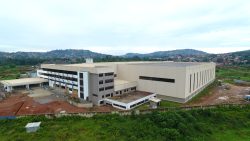
More so, the construction of Regional Cancer Centre in Gulu is complete and was commissioned in December 2022.
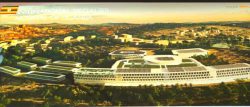
Though there is still noise over this project with some Ugandans calling it a ‘white Elephant’, construction of Lubowa International Specialised Hospital is ongoing at about 33%.
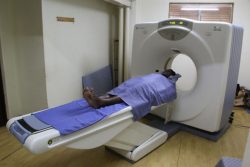
In the two years, 14 Regional Referral Hospitals have been equipped with CT scans and these include: Arua, Entebbe, Fort Portal, Gulu, Hoima, Jinja, Kabale, Lira, Mbale, Mbarara, Moroto, Mubende, Mbarara and Soroti. Installation of the CT Scans is ongoing and will be commissioned very soon.
OXYGEN SUPPLY
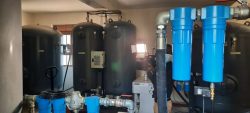
Aware that Oxygen is life, the NRM government is not sleeping. Available data shows that all Regional Referral Hospitals (RRHs) are equipped with 15cc per hour plants and currently operational.
Government procured an additional sixteen 100cc per hour plants and four 50cc / hour plants and installation is ongoing in all RRHs.
NMS has also procured and installed a 60,000 litre Cryogenic oxygen storage tank to improve supply of oxygen in the country.
RENOVATION AND EQUIPPING OF GENERAL HOSPITALS
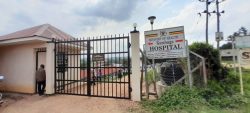
In the last two years, the NRM government has managed to complete renovation of Gombe GH.
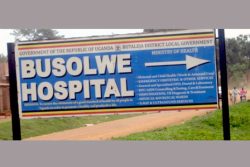
Renovation and expansion of Busolwe hospital in Butaleja District commenced in October 2022 and is at about 15% completion. Renovation of Kambuga hospital in Kanungu District has also commenced.
UPGRADES
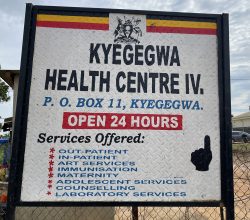
To ensure better service delivery, the NRM government has in the last two years upgraded Kotido HC IV-to a general hospital. Kyegegwa HC IV infrastructure was upgraded with support from the DRDP project and upgraded to a general hospital in FY 2021/22. The Ministry of Health has also approved the upgrading of Kisenyi HC IV to a general hospital to cater for the population needs.
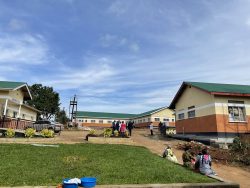
More so, in the last two years, 10 HC IIIs have been upgraded to HC IVs in various parts of the Country. These include: Kawuanzeki HCIII and Bondo HC III in Arua; Bugaya HC III in Buyende; Palabek-kal in Lamwo; Mayuge HC IV; Rwebisengo HC IV in Bundibugyo; Panyandoli HC IV in Kiryandongo; Rugyeyo in Kanungu; Ruteete in Kabarole and Ongica HCIII in Lira is ongoing.
In Kampala Metropolitan Area, upgrade of Kiira HC III to IV is ongoing with funding from the UgIFT Program Development Grant; construction of a 60-bed maternity ward is ongoing at Kiswa HC III for upgrading to a HC IV on completion; construction of a theatre is ongoing at Goma HC III in Mukono Municipality.
Under the upgrading of Health Centre IIs to IIIs; 381 (100%) target HC IIs (340 UgIFT and 41 URMCHIP) were funded for upgrade. Under the UgIFT Program; 220 out of 340 (65%) upgrades are complete, 64 have been fully equipped and the rest to be fully equipped very soon.
Under URMCHIP; 35 out of 41 upgrades have been completed and over 45 facilities have minor works ongoing and are expected to be completed by the end of this month.
Construction of HC IIIs in sub counties without any health facility has also been ongoing and so far, construction of 31 out of the 134 planned new HC IIIs is ongoing with funding under the UgIFT program.
WHY UPGRADES
The move has increased the number of public HC IIIs from 1,165 in 2018/19 to 1,536 in 2022/23. Mothers can now access quality antenatal care and delivery services, vaccination services now more accessible, more comprehensive OPD services including laboratory, enhanced in-patient services and improved quality of healthcare services.
This has further reduced walking distances—77% of the population is within 3km distance of any health facility (NSDS Report 2021). Over 20,000 deliveries have been conducted in the completed facilities.
THREE MORE BLOOD BANKS
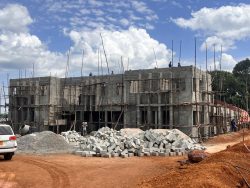
We all know what blood means to our existence and the NRM government is neither sleeping. As we report this, Soroti Regional Blood Bank is under construction with funding from the COVID-19 Fund and is at 80% completion. Construction of Arua and Hoima Regional Blood Banks is ongoing with funding from the UgIFT Program to be completed and equipped in FY 2023/24.
NON-COMMUNICABLE DISEASES DILEMMA
In the last two years, there has been scaling up services for screening of cancer of the cervix. Human Papilloma Virus (HPV) testing sites have increased from 16 to 62 in FY 2021/22. This helps in identifying and treating those affected to reduce the risk of developing cervical cancer. 25% of women aged 30 to 49 years were screened for cervical cancer. Immunization of young girls against cancer of the cervix achieved 105% first dose vaccination coverage for Human Papillomavirus for the10-year-old girls and 56% for 2nd dose (fully immunised) in FY 2021/22.
HIV/AIDS: HIV prevalence has reduced from 6% in 2016 to 5.5% in 2020. The Country is on track towards achieving UNAIDS targets for HIV cascade. (95% HIV positive Know Status: 95% On Treatment: 95% on treatment with Viral Suppression). ART coverage is 95%, ART viral load suppression 96% and ART retention 83%. Low retention is mainly due to non-adherence by adolescents and hard to reach areas. HIV positive pregnant women initiated on ARVs at 98%. Proportion of HIV exposed infants with first DNA PCR test within 2 months, at 81%.
TUBERCULOSIS:TB prevalence reduced from 234 per 100,000 population in 2019/20 FY to 192 per 100,000 in 2021/22.The achievements under the TB program are largely due to; Increased awareness through the Community Awareness, Screening, Testing and Treatment Campaigns held every 6 months and a total of 14,500 TB cases identified; Increased access to diagnostic services like the 320 Gene Xpert machines which have been placed in all National and Regional Referral Hospitals, 79 General hospitals, 123 HC IVs and 55 high-volume HC IIIs; Community Engagements with cultural leaders and as well procurement of three Mobile TB Clinics with digital x-rays procured to increase community access.
MALARIA: Epidemic response interventions for the high burden districts included distribution of mosquito nets, Indoor Residual Spraying, RDTs and antimalarials. Seasonal Malaria Chemoprophylaxis (SMC) is conducted in Karamoja every six months. Indoor residual spraying was conducted in the West Nile region. Larviciding was conducted in Kabale, Kisoro, Rubanda and Lira. A total of 28million Long Lasting Insecticide Treated Nets are to be distributed this year 2023.
As far as management of emerging diseases and outbreaks is concerned, the NRM government has been able to swiftly detect and respond to all emerging diseases and outbreaks.
COVID-19 SUCCESS STORY
Uganda reported her first case of COVID-19 in March 2020. Despite challenges, Uganda has been applauded as the best in responding to COVID-19 on the African continent registering fewer cases.
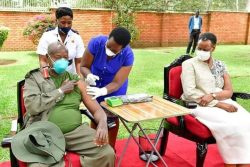
By April 2023, 82% of the population above 18 years had received at least one dose and 53% were fully vaccinated. This achievement is attributed to; early detection of cases using good laboratories set by the Government; availability of vaccines; increased efforts by the MoH to reach the target groups through three Accelerated Mass Vaccination Campaigns; reduced risk perception currently limiting uptake of vaccination. A COVID-19 stabilization and transition Plan was developed to guide integration of COVID-19 care and management into routine care.
EBOLA VIRUS DISEASE OUTBREAK
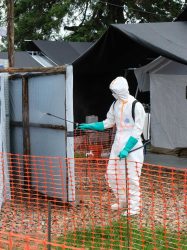
Uganda reported an Ebola Virus Disease Outbreak in Mubende on 20 September 2022. Over 9 districts including Mubende, Kassanda, Kyegegwa, Kagadi, Bunyangabu, Wakiso, Jinja, Masaka and Kampala were affected. The Ministry of Health and partners working with the District Task Forces mounted a swift and well-planned response to the Ebola outbreak. Government was able to contain the outbreak in a record 69 days.
Following the COVID-19 pandemic, over 53 port health infrastructure have been set up at most of the points of entry. These help screen all incoming travellers against common diseases including COVID-19.
Malaba Border Post laboratory and staff houses were completed. This will strengthen disease surveillance at the border points of entry.
AMBULANCE SERVICES
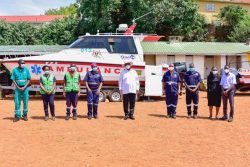
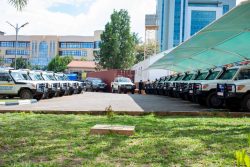
In the last two years, 120 equipped ambulances were acquired through procurements by the Government of Uganda, Development Partners and donations. These have been deployed according to the Government policy of regional ambulance systems to ease coordination, maintenance, control, and accessibility. Two regional hubs were also established at Naguru National referral hospital and Masaka regional referral hospital.
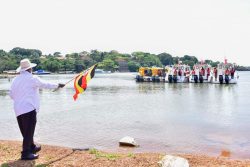
The NRM government also listened to the cries of islanders by procuring and distributing 14 Boat Ambulances for the Local Governments with islands. These were launched by H.E President Yoweri Museveni.
EMERGENCY MEDICAL SERVICES (EMS) TEAMS
For swift response to any health emergency related incident, 860 lay first responders have since been trained in Kampala and Masaka. More so, 460 professional health workers have been trained in Basic Emergency Care. And to strengthen the EMS system, MoH provided scholarships for training of Emergency Physicians and Emergency Medical technicians.
HUMAN RESOURCE WELFARE
Enhancing health workers’ salaries and other benefits has also been prioritised and salary enhancements started in July 2022.
99 Masters and Fellowship scholarships and 41 Bachelor of Anaesthesia scholarships have been awarded to increase the number of specialists and critical care.
WHAT NEXT
The NRM government plans to mobilize and sensitize the community for primary prevention of diseases to improve overall health of the population before any signs of morbidity.
Continued investment in prevention and control of the high burden of communicable diseases especially malaria, HIV/AIDS and TB will also be prioritised.
The NRM government also intends to address high levels of out-of-pocket expenditure in order to protect households from catastrophic spending by broadening pre-payment mechanisms such as the National Health Insurance Scheme as well as mobilizing the population to join other Social Protection Schemes. FULL SCORECARD REPORT CAN BE ACCESSED HERE: Key-Manifesto-Acheivement-in-the-Health-Sector_final_23052023
About Post Author