Exclusive! How elite Ugandan women are producing fewer children
By Evans Najuna
Kampala – Fertility rate among women have dropped from 6.2 children per woman in 2011 to 5.2 children per woman in 2022.
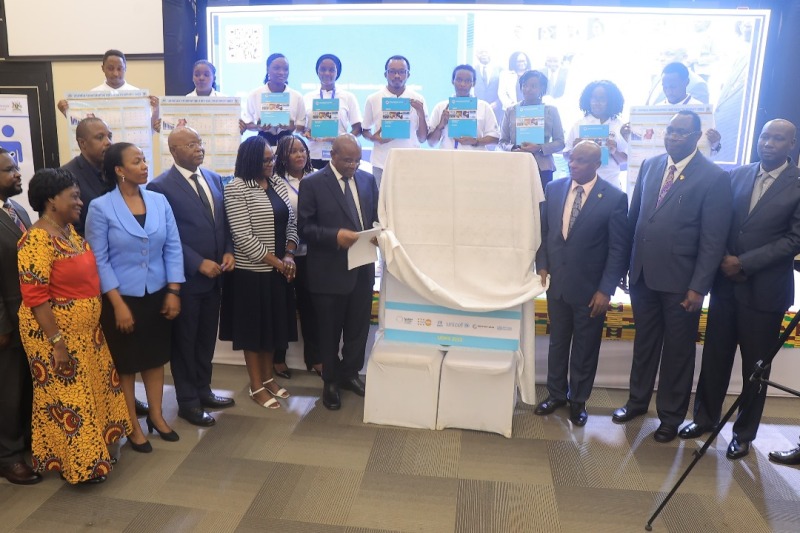
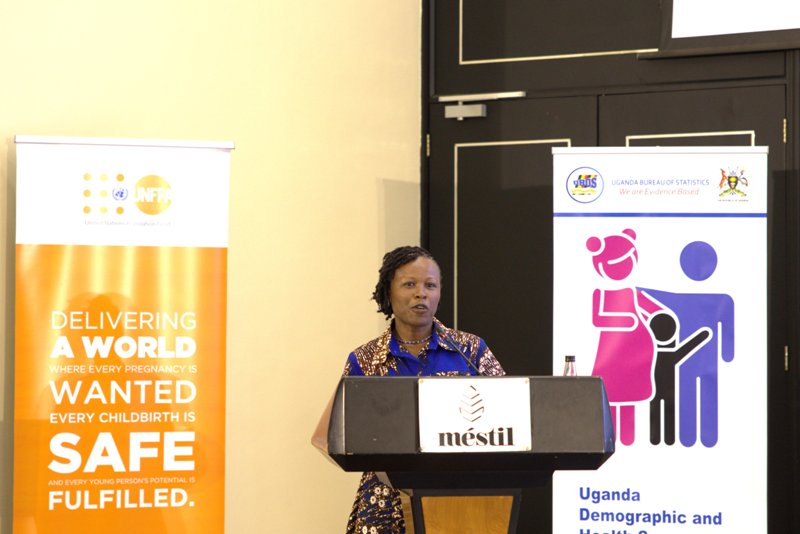
This is according to the Uganda Demographic Health Survey (UDHS) 2022 that was released on Thursday by Uganda Bureau of Statistics (UBOS) together with other development partners during a function held at Mestil Hotel in Kampala.
The report also shows that women in rural areas produce more children (5.6 children) compared to those in urban areas (4.3 children) with Kampala region having the lowest fertility rate of 3.7 children per woman and the highest rate in the Karamoja region with 6.7 children per woman.
The report also shows a correlation in education level of women to the number of children they are likely to produce; whereby a woman with no education has an average of 5.8 children compared to 3.6 children for a woman with more that secondary education.
The report also indicates that fertility in women decreases with increasing household wealth whereby women in the poorest households have an average of 6.3 children, compared to 4.0 children among women livng in the wealthiest households.
Concerning marriage, the report shows that 61% of women and 54% of men age 15-49 are married or living together with a partner as though they are married.
By age 45-49, only 3% of women and 1% of men and have never been married. Eleven percent of women and 6% of men were separated.
Only 3% of women and less than one percent (0.2%) of men are widowed. At age 15-19, the proportion of women who are in union is higher than that of men by 16% (17% versus 1%).
The report also reveals that, early marriage increases the risk of teenage pregnancy, which can have a profound effect on the health and lives of young women and contribute to the country’s high fertility rate.
The percentage of women married or living together has declined from 63% in 2011 to 61% in 2022.
Shockingly, the same report indicates that adult Ugandans are mostly living with multiple sexual partners. Accordingly twenty three percent (23%) of men age 15-49 years and 4% of women age 15-49 years reported having more than one sexual partner in the 12 months before the survey.
Among men with more than one partner in the past 12 months, 3% reported using a condom during their most recent sexual intercourse, 34% reported having sex with a person who neither was their wife nor lived with them, and 18% reported using a condom during the last sexual intercourse with such a partner.
The percentage of women who had sex with someone who was not their husband or living with them in the past 12 months increases with increasing education, from 8% among those with no education to 21% among those with more than a secondary education on average, women have had 2.4 lifetime sexual partners while men have had two.
It has also been reported that most of adult Ugandans are knowledgeable about HIV/STIs prevention methods. 88% of men age 15-24 know that using condoms consistently can reduce the risk of contracting HIV. Similarly 87% of women and 89% of men recognise that limiting sexual intercourse to one uninfected partner who has no other partner can reduce the risk of HIV. 7 in 10 women (78%) and 8 in every 10 men (82%) are aware of both of those prevention methods.
The percentage of women with comprehensive knowledge of HIV/AIDS increased from 40% in 2016 to 56% in 2022, which the percentage of men with comprehensive knowledge of HIV/AIDS increased from 46% in 2016 to 3455 2022
More so, discriminatory attitudes towards people living with HIV, about 1 in 6 women (15%) and (men (17%) believe that children living with HIV should not be able to attend school with children who are HIV negative. 19% of women and 20% of men would not buy fresh vegetables from a shopkeeper who has HIV. Discriminatory attitudes among women are lowest in Kampala region (14%) and highest in Bukedi region (55%). The range among men, is 11% in Kampala region and 44% Elgon region
The Minister of State for Planning and Economic Development Amos Lugoloobi who was the guest of honour at the launch of the report noted that the timing of the report should be consistent as the country gears up for the launch of the National Development Plan Four (NDPIV), with NDPIII set to end in 2025.
Ms. Susan Ngongi Namondo, the United Nations Resident Coordinator noted that the issue of child pregnancy needs to be nipped in the bud if the country is to stay on course with its development agenda.
Dr Chris Mukiza, the executive director of the Bureau in his remarks at the launch of the report underscored the importance of statistics in the proper planning of the country. This is the seventh Uganda Demographic report that has been done UBOS funding from government, UNICEF, UNHCR, and the United Nations Population Fund ( UNFPA)
About Post Author