NAKIVUBO FLOODS! FUTA Boss On Spot as ‘2,000 Traders’ List Explodes—ISO, KCCA, OPM, Police Swing-in Over Shs20bn Flood Compensation Storm
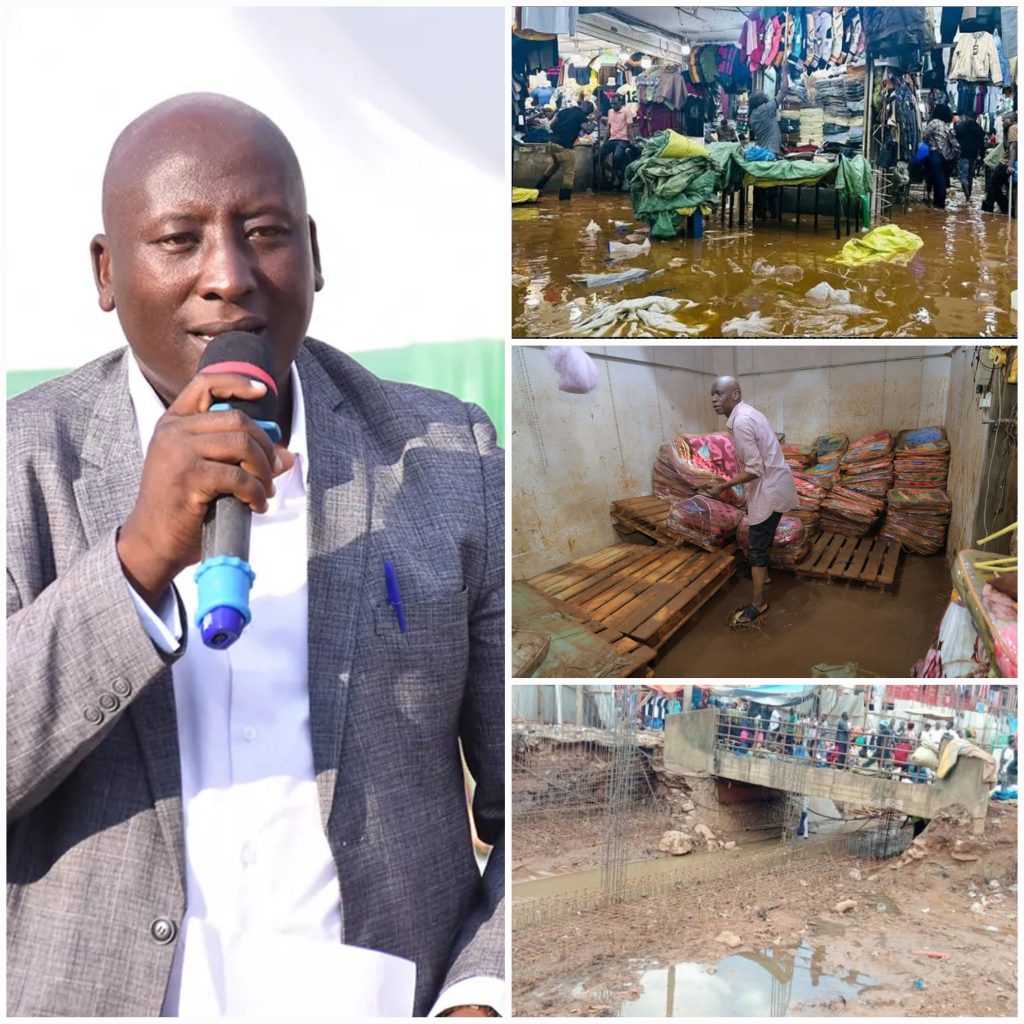
A storm is brewing in the heart of Kampala’s business district, and this time it is not rainwater flooding the streets—but a raging controversy over who really deserves a share of the Shs20 billion compensation package approved after last year’s devastating floods.
At the centre of the unfolding drama is Federation of Uganda Traders Associations (FUTA) boss John Kabanda, who now finds himself under intense pressure after explosive allegations that the list of flood victims his group submitted may have been inflated, triggering a high-level security and administrative showdown involving Uganda Police Force, Internal Security Organisation and Kampala Capital City Authority.
The matter dramatically resurfaced on Wednesday when Kabanda was summoned to Naguru Police Headquarters by senior police officers, a move that signaled just how serious the situation has become behind closed doors. Sources say investigators are now trying to untangle a web of conflicting figures, accusations, and counter-claims that have left thousands of traders confused and angry.
Tension has been building for days as aggrieved traders threatened to pour onto Kampala streets in protest, vowing to march straight to the Office of the Prime Minister to demand answers. Many claim they were informed that compensation funds had already been released by the Treasury months ago and were being held up, a claim that has only fueled suspicion and frustration.
“We are ready to demonstrate until we get what belongs to us,” one trader fumed during a heated meeting, echoing the growing anger among those who say they lost goods and livelihoods when floods ravaged their businesses.
But in a swift and firm response, the Office of the Prime Minister moved to shut down the allegations, insisting that no such irregularities had occurred. In its official statement, the government clarified that a multi-sectoral technical assessment was conducted immediately after the disaster to determine what exactly happened, how extensive the damage was, and who was affected.
According to the government, the floods were not just a natural disaster but the result of a dangerous combination of blocked drainage systems, illegal structural modifications, inadequate infrastructure, poor waste management, and the shrinking capacity of natural drainage channels. It is a cocktail of urban chaos that turned heavy rains into a citywide crisis.
To ensure fairness, authorities said a transparent verification exercise was commissioned, capturing detailed information including names of affected traders, business locations, shop numbers, types of goods destroyed, and estimated losses. On paper, it sounded like a watertight system.
But behind the scenes, a different story was unfolding.
Exclusive information indicates that the government directed KCCA and traders’ leaders to jointly compile a harmonised list of victims for submission. However, sources claim that FUTA leaders declined to fully cooperate with KCCA during this critical process, setting the stage for the current chaos.
Then came the bombshell.
An undercover probe by ISO reportedly established that only about 700 traders were directly affected by the floods. This figure sharply contrasts with FUTA’s list, which contains more than 2,000 names. KCCA’s own assessment reportedly identified around 400 affected traders, further widening the gap and deepening the mystery.
Three different lists. Three wildly different numbers. One pot of Shs20 billion.
The discrepancies have now triggered a full-blown deadlock over which list should be used to allocate the compensation funds, with each figure carrying massive financial implications.
When contacted, Kabanda did not deny that FUTA’s list contains a significantly higher number of names. However, he insisted that there is overlap between FUTA’s data, KCCA’s findings, and the ISO probe, suggesting that the truth may lie somewhere in between.
Meanwhile, the ghosts of the disaster itself still linger.
The floods that sparked this storm struck on 31 October 2025, when heavy rains overwhelmed Kampala and submerged large sections of the city, especially around the Nakivubo Channel. Areas such as Ssebaana Road, Allen Road, Juba Plaza, Farmers Plaza, Sekaziga Building, Pentagon Building, Qualicell, French Plaza and Totala Building were among the hardest hit, with basement shops turning into water traps.
For many traders, it was a night of total loss. Goods were destroyed, businesses crippled, and livelihoods wiped out in hours.
Now, months later, what should have been a relief effort is turning into a high-stakes battle over numbers, accountability and trust.
One question hangs heavily in the air: Who are the real victims—and who is trying to cash in on the flood?
GOT A HOT STORY? EMAIL: redpeppertips@gmail.
SOURCE PROTECTION/CONFIDENTIALITY IS OUR NO.1 PRIORITY.
About Post Author