INSIDE YOUTH, WOMEN FUNDS MESS AT GENDER MINISTRY! Sh252Bn Loan Bill Piles Up as YLP Recovers Just 25%, UWEP Leaves Sh26.6Bn Unpaid — Report Warns Against Throwing More Money at Failing Revolving Funds
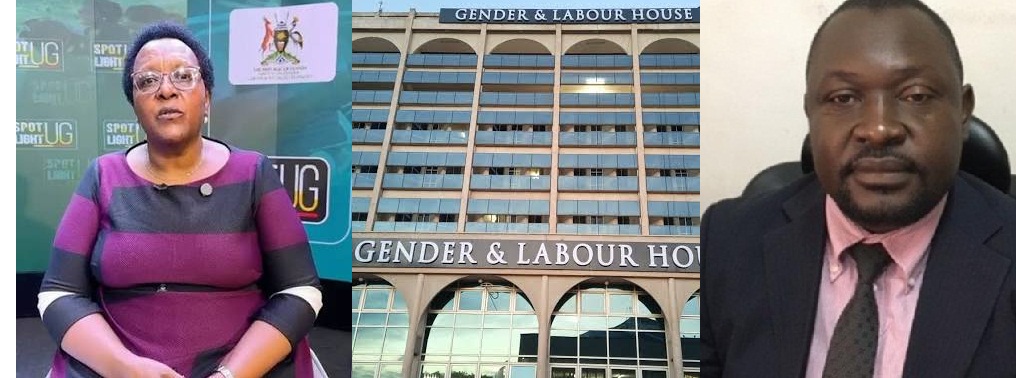
UWEP is nationally coordinated by Winfred Masiko (L) while YLP (R) is nationally coordinated by Paul Onapa both under the Ministry of Gender, Labour and Social Development (MGLSD)
A massive recovery crisis has engulfed the government’s youth and women empowerment funds, with billions of shillings remaining unpaid and Parliament questioning whether the programmes are still viable or have turned into expensive money-chasing schemes.
The latest revelations show that the Ministry of Gender, Labour and Social Development had receivables worth Sh252.49 billion as at June 30, 2025, up from Sh241.93 billion the previous year.
The Auditor General attributed the increase to additional loans advanced to women and youth groups, but the recovery figures paint a grim picture of the government’s revolving-fund model.
Under the Youth Livelihood Programme (YLP), Sh169.414 billion was due for recovery, but only Sh41.745 billion — about 25 percent — had been recovered, leaving a staggering Sh127.669 billion outstanding.
The Uganda Women Entrepreneurship Programme (UWEP) performed better, but still left a huge hole. Of the Sh67.619 billion due, only Sh41.024 billion, representing about 60 percent, had been recovered, leaving Sh26.595 billion outstanding.
Together, the two programmes had more than Sh154 billion still out in the hands of beneficiaries.
The Uganda Women Entrepreneurship Programme (UWEP) is nationally coordinated by Winfred Masiko, who serves as the National Programme Coordinator under the Ministry of Gender, Labour and Social Development (MGLSD).
The Youth Livelihood Programme (YLP) is nationally coordinated by Paul Onapa, who serves as the National Programme Manager under the Ministry of Gender, Labour and Social Development (MGLSD).
The revelations triggered sharp questioning by Parliament’s Public Accounts Committee, which demanded to know whether government was still getting value from programmes that continue to require money for monitoring and recovery while large amounts remain unpaid.
Wakiso Woman MP Betty Ethel Naluyima challenged officials from the Ministry of Gender, Labour and Social Development to explain whether YLP and UWEP were still economically viable and delivering the intended impact.
The MPs were particularly concerned about the cost of pursuing beneficiaries compared to the money actually being recovered.
The committee was told that approximately Sh25.5 billion was released for the joint YLP and UWEP programme during the 2024/25 financial year, while recoveries during the period stood at only about Sh3 billion.
This raised the uncomfortable question of whether government is spending more money chasing its own money than it is recovering.
Permanent Secretary Aggrey David Kibenge admitted that YLP had suffered serious recovery challenges, with the programme recovering only about a quarter of the money disbursed.
He explained that the programme’s fortunes took a dramatic turn after government redirected resources towards the establishment of 19 youth skilling centres.
YLP’s final major funding allocation stood at about Sh39 billion, but its budget was subsequently slashed to approximately Sh3 billion.
That effectively removed about Sh36 billion that had previously supported the programme and its operations, including beneficiary follow-up and monitoring.
According to Kibenge, the budget cuts coincided with the COVID-19 pandemic and lockdowns, making it even harder for officials to trace beneficiaries and collect the money.
The little money that remained was largely absorbed by salaries and maintenance of the programme management unit at the ministry headquarters, leaving local government officials with limited resources to chase beneficiaries.
The ministry also blamed the nature of youth groups for the poor recovery.
Some beneficiaries reportedly moved away from their original communities, while others abandoned groups after receiving government money.
Some Chief Administrative Officers have since recommended that government consider writing off the unrecovered YLP funds.
But PAC Chairperson Patrick Oshabe Nsamba pushed back hard against the proposal, warning that a write-off could create a dangerous precedent for future government revolving funds.
Nsamba said some beneficiaries appeared to have treated government loans as political donations rather than money that was supposed to be repaid and revolved to other groups.
He questioned why taxpayers should continue funding recovery operations if the eventual collections remain small.
The ministry’s National Programme Coordinator for YLP/UWEP, Winfred Masiko, told MPs that under the programme guidelines, 80 percent of the money goes directly to beneficiary groups, while the remaining 20 percent is meant to support monitoring, verification, technical support, training and recovery by local and central governments.
The programmes currently operate through 177 local government units, including Kampala Capital City Authority.
But Masiko said inadequate operational funding had made recovery difficult.
She said the ministry currently sends about Sh400 million every quarter to local governments to support follow-up activities.
The ministry estimates that approximately Sh330 billion remains outstanding from previous beneficiaries and wants Parliament to increase funding specifically for recovery.
Masiko proposed that at least 10 percent of the outstanding money be provided to finance recovery efforts, arguing that financial institutions routinely spend heavily to recover debts.
That proposal, however, immediately raised eyebrows among MPs.
Mbale City Industrial Division MP Masaba Karim warned that government could end up spending more on chasing debts than the money it eventually recovers.
He argued that many MPs who interact directly with communities already know that some beneficiaries are unlikely to repay the money.
Kioga North MP Geoffrey Ochen also challenged claims that local governments are adequately facilitated to recover the funds.
Drawing from his experience as a former district leader, Ochen said community development officers were often facilitated merely to prepare beneficiary files rather than conduct serious recovery operations.
The Auditor General’s findings further deepen the accountability concerns.
Apart from the massive outstanding loans, the audit found that Sh826.63 million in YLP and UWEP recoveries held at the Bank of Uganda as at June 30, 2025 could not be tagged to any local government or individual beneficiary group.
In other words, even money already recovered could not properly be traced to its source.
The audit also found that domestic arrears at the ministry had ballooned by 176 percent, rising from Sh7.46 billion to Sh20.58 billion, increasing the risk of litigation.
The ministry’s overall strategic funding crisis is equally alarming.
Of the Sh12.571 trillion estimated to implement its 2020/21–2024/25 Strategic Plan, only Sh1.234 trillion was actually provided, leaving a funding gap of approximately Sh11.32 trillion — or 90.05 percent.
The result was widespread partial implementation of planned outputs.
The Auditor General found that out of 20 sampled outputs worth Sh220.4 billion, only two outputs worth Sh7.239 billion were fully implemented, while 16 outputs worth Sh212.592 billion were only partially implemented. Two other outputs worth Sh569 million could not be assessed because of missing performance targets and indicators.
Against this background, MPs are now demanding a complete assessment of the YLP/UWEP recovery model before government pours more money into the programmes.
They want the ministry to establish exactly how much is being spent on recovery, how much is being recovered and whether the exercise makes economic sense.
The committee also questioned how government expects to enforce repayment when most of the funds were advanced without conventional collateral.
The controversy comes as government continues to roll out the Parish Development Model, which was partly designed to consolidate and streamline interventions aimed at increasing household incomes.
Kibenge told the committee that government had previously considered collapsing YLP and UWEP into the Parish Development Model.
Cabinet, however, allowed some funds to remain under the two programmes to facilitate recovery and replenish revolving funds for local governments that perform well.
Since 2022/23, YLP and UWEP have therefore been managed under a joint programme management arrangement.
But with more than Sh154 billion in YLP and UWEP loans officially outstanding, and the ministry estimating that total outstanding obligations from previous beneficiaries could be as high as Sh330 billion, Parliament now faces a difficult choice.
Government can either spend more money chasing the unpaid funds, write off some of the debts, or overhaul the entire revolving-fund model.
For the PAC, however, simply writing off the money is not an option.
MPs warned that treating public loans as political gifts would destroy the revolving nature of the programmes and send a dangerous message to future beneficiaries: take the money today and wait for government to forgive the debt tomorrow.
The committee has consequently demanded clearer accountability for every shilling released for recovery, tighter tracking of beneficiaries and a cost-benefit analysis showing whether additional recovery spending can actually deliver more money to the public purse.
Until then, the question hanging over the Gender Ministry’s flagship youth and women programmes is blunt: is government running a revolving fund — or an expensive system for losing and chasing public money?
GOT A HOT STORY? LET US KNOW!
Got breaking news, explosive secrets, or hard evidence?
Email us: redpeppertips@gmail.com
We accept tips, documents, videos, photos, and recordings—the more evidence you have, the better.
CONFIDENTIALITY IS OUR TOP PRIORITY. SOURCES ARE ALWAYS PROTECTED!
About Post Author