BACK TO THE ROOTS! With ACME Under Suspension, Founder Dr Mwesige Goes Back to Makerere to Teach Journalism
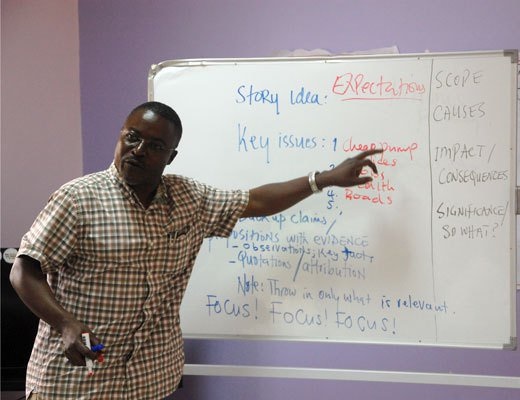
Dr Peter Mwesige
KAMPALA — African Centre for Media Excellence (ACME) founder Dr Peter Mwesige is returning to the classroom at Makerere University, nearly two decades after leaving the institution to pursue a career in journalism, media leadership and development.
Mwesige was on Wednesday, August 19, appointed a lecturer in the Department of Journalism and Communication by the Makerere University Appointments Board.
His return comes at a significant time for ACME, the media development organisation he co-founded in 2009, which was suspended by Uganda’s National Bureau for NGOs in January 2026.
The NGO regulator accused ACME of engaging in activities it considered “prejudicial to the security and the laws of Uganda”, resulting in the suspension of the organisation’s training programmes and public-interest projects.
Mwesige, however, is now heading back to an institution where he previously taught until 2007, bringing with him nearly two decades of experience gathered across journalism practice, media management, research, training, policy and media development.
The Department of Journalism and Communication has welcomed his return, saying his experience will strengthen teaching, research and professional links between Makerere and the wider journalism industry.
Department head Dr Aisha Nakiwala Ssembatya described the appointment as exciting, saying Mwesige was not simply returning as a former colleague but as an experienced professional carrying new knowledge and perspectives.
“The news of his return is definitely a delight for all of us,” Nakiwala said, adding that his years away from the university had given him valuable experience that could now benefit both staff and students.
Mwesige left Makerere in 2007 after taking up a position as head of training at Nation Media Group in Kenya.
Two years later, he teamed up with colleagues to establish ACME, where he eventually served as executive director until 2022.
He was succeeded at ACME by Dr George Lugalambi, who had himself taken over from Mwesige as head of the Department of Mass Communication at Makerere in 2007.
Nakiwala said Mwesige’s experience in civil society and journalism leadership would complement the department’s existing work, particularly in training, graduate research and professional engagement.
Mwesige says his connection to journalism education and Makerere never disappeared, despite spending almost 20 years away from the university.
He said much of his work since leaving Makerere had remained connected to the university’s traditional mandates of teaching, research and public engagement.
But he believes his return comes at a particularly important moment for journalism.
Digital technology has dramatically changed how news is produced, distributed and consumed, while traditional media business models continue to face pressure.
At the same time, journalists and media organisations are grappling with declining public trust, misinformation, artificial intelligence, digital rights and the survival of quality journalism.
Mwesige said his years working at the intersection of journalism, media development, research and policy had given him an opportunity to understand these challenges from several angles.
He said he now wants to bring that experience back into the lecture room and help prepare a new generation of journalists for a media environment vastly different from the one he left behind.
Mwesige returns to Makerere with a career that has taken him through some of Uganda’s biggest newsrooms and media organisations.
He previously served as Executive Editor of Monitor Publications, which publishes the Daily Monitor, News Editor of the New Vision and editor of The Crusader.
He later became deeply involved in media development, training and research through ACME and other regional initiatives.
More recently, he has been serving as Chief of Party for the Your Rights Activity project implemented by the Collaboration on International ICT Policy for East and Southern Africa (CIPESA).
The project had been funded by the United States Agency for International Development before the programme was gutted following the change in US administration under President Donald Trump in 2025.
Reflecting on his return, Mwesige said the past two decades had broadened his understanding of journalism far beyond what he knew when he left Makerere.
He said his experience had covered newsrooms, media management and leadership, media development, research, training, regional programmes and engagement with journalists, editors, policymakers, researchers and civil society actors across Africa.
One of the key lessons he said he was bringing back was the need for journalism education to remain connected to the realities of the profession.
Universities, he argued, must preserve the critical and intellectual foundations of journalism education while ensuring students understand the rapidly changing technological, economic and professional environment awaiting them.
Mwesige also said he hoped to contribute beyond classroom teaching.
He wants to be involved in graduate supervision, research, mentoring young academics and students, while strengthening the relationship between Makerere, news organisations, policymakers and other stakeholders shaping the future of journalism.
His appointment was part of a wider batch of 89 teaching and non-teaching appointments approved by Makerere on Wednesday.
According to a statement signed by Chief Human Resource Officer Deus Tayari Mujuni, the appointments comprised 42 new appointments, one leadership appointment, 12 post-retirement appointments, 17 ordinary appointments and 17 honorary appointments.
Of the 42 new appointments, 10 were teaching positions, while the remainder were non-teaching.
All 12 post-retirement appointments were for teaching staff at professor and associate professor level.
The university also made 17 honorary appointments, which were largely in the pure sciences, including psychiatry, ophthalmology, and paediatrics and child health.
Under Makerere’s Human Resource Manual, honorary appointments are reserved for people with distinguished academic and professional records and do not attract remuneration.
For Mwesige, however, the new appointment marks a return to familiar territory—with the veteran journalist now stepping back into the classroom armed with almost two decades of experience in a rapidly transformed media industry.
GOT A HOT STORY? LET US KNOW!
Got breaking news, explosive secrets, or hard evidence?
Email us: redpeppertips@gmail.com
We accept tips, documents, videos, photos, and recordings—the more evidence you have, the better.
CONFIDENTIALITY IS OUR TOP PRIORITY. SOURCES ARE ALWAYS PROTECTED!
About Post Author