NOT YET UHURU! Tycoon Abid Alam In Shs1.27bn Debt Trouble!
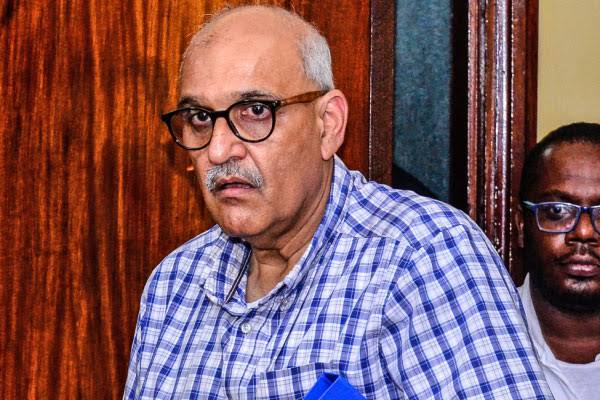
Alam
The Court of Appeal has halted execution of a High Court decree requiring Casements (Africa) Limited and businessman Abid Alam to pay Chinese glass manufacturer Weihai Rongsheng Glasswork Co. Limited more than US$338,000 (about Shs1.27 billion), pending determination of their intended appeal.
The stay was granted on August 28, 2026, by Court of Appeal Justice Florence Nakachwa, sitting as a single Justice, after the applicants challenged a High Court decision that dismissed their attempt to set aside a default judgment entered against them. The applicants had asked the Court of Appeal to stop all execution proceedings arising from High Court Civil Suit No. 0638 of 2025, arguing that enforcement of the decree would cause them substantial and irreparable loss and could render their intended appeal nugatory.
The dispute arose from three contracts signed in June 2022 under which Weihai Rongsheng Glasswork was to supply Casements (Africa) Limited with 40 crates of clear glass, 140 crates of tinted glass and 30 crates of laminated glass at a total cost of US$338,800.52. According to the Chinese company, the glass was shipped and received by Casements at its premises in Kampala Industrial Area, but payment was not made within the agreed 120-day period.
The company subsequently sued for recovery of the outstanding amount and obtained judgment in its favour. Casements and Alam, however, argued that they were denied an opportunity to defend the case because of mistakes and failures by their former lawyers. They told the Court that after being served with court documents in July 2025, they immediately instructed Karungi & Partners Advocates to file an application seeking leave to appear and defend the claim.
The lawyers filed Miscellaneous Application No. 1618 of 2025, which came before the High Court on August 20, 2025, and was later scheduled for hearing on August 25. The applicants said their former lawyers failed to attend the August 25 hearing and did not inform them about what had happened. The application was consequently dismissed, paving the way for the default judgment against them.
The applicants later instructed Muwema & Co. Advocates to seek the setting aside of the default judgment, arguing that they had acted diligently by instructing lawyers and should not be punished for the mistakes of their former advocates. The High Court dismissed that application in January 2026, prompting the intended appeal.
Weihai Rongsheng opposed the stay application, arguing that Casements and Alam had repeatedly acknowledged the debt and entered into payment arrangements which they failed to honour. The Chinese company also argued that the intended appeal lacked merit and that the applicants had failed to demonstrate that enforcement of the monetary decree would cause irreparable loss.
Weihai Rongsheng told the Court that it had already commenced execution proceedings, including seeking attachment of Alam’s shares in Casements (Africa) Limited, garnishee orders against the company’s bank accounts and the arrest and committal of Alam to civil prison. Justice Nakachwa, however, found that the applicants had satisfied the legal requirements for a stay of execution.
The judge noted that at the stay stage, an applicant is not required to prove that the intended appeal will succeed, but only that it raises reasonable and arguable questions. She found that the applicants had raised triable issues, including whether the dismissal of their application resulted from mistakes by their former lawyers or their own dilatory conduct, and whether the default judgment had been properly entered under the law.
Justice Nakachwa also found that the applicants had demonstrated a risk of substantial and irreparable harm, particularly because the execution proceedings could result in Alam’s arrest and imprisonment. She held that imprisonment could cause psychological and mental harm that might not easily be reversed even if the applicants ultimately succeeded in their appeal.
The judge said the balance of convenience therefore favoured protecting Alam’s personal liberty while the intended appeal is pursued. The Court also found that the applicants had acted without unreasonable delay, having filed the Court of Appeal application shortly after the High Court rejected their earlier application for a stay. Justice Nakachwa consequently ordered a stay of execution of the judgment and decree in High Court Civil Suit No. 0638 of 2025 pending determination of the applicants’ intended appeal.
The costs of the Court of Appeal application will abide by the outcome of the intended appeal.
GOT A HOT STORY? LET US KNOW!
Got breaking news, explosive secrets, or hard evidence?
Email us: redpeppertips@gmail.com
We accept tips, documents, videos, photos, and recordings—the more evidence you have, the better.
CONFIDENTIALITY IS OUR TOP PRIORITY. SOURCES ARE ALWAYS PROTECTED!
About Post Author