EXCLUSIVE! Why Benjamin Kumumanya’s statutory role matters in Uganda’s fight against corruption
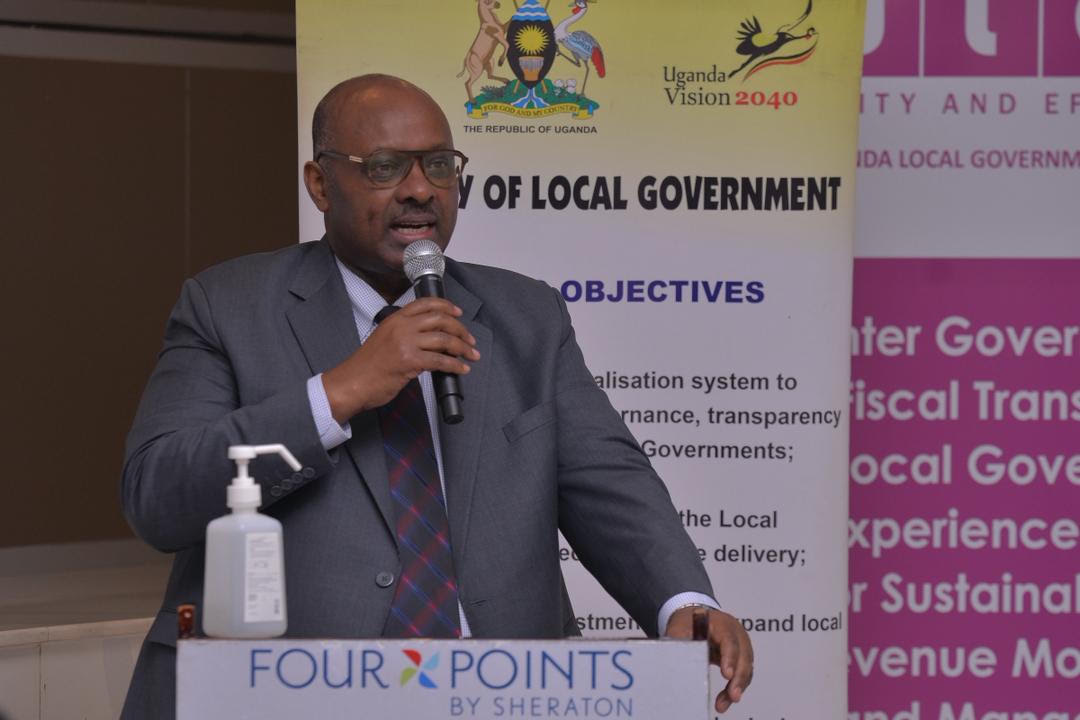
Mr. Ben Kumumanya, the Permanent Secretary for Local government during the induction training for the Entebbe Municipality local leaders at Penile Beach on Tuesday. PHOTOS BY BRIAN MUGENYI.
By Brian Mugenyi
Uganda’s decentralisation system places responsibility for public service delivery across central government ministries and local governments. But when public funds are questioned, an important issue arises: who is legally responsible for monitoring local governments, and who must account for the money allocated to public projects?
For Benjamin Kumumanya, the Permanent Secretary in the Ministry of Local Government, the answer begins with the law. His office has responsibilities for guiding, monitoring, inspecting and coordinating local governments, while district and municipal officials have their own administrative, financial and technical obligations.
Kumumanya work includes implementing the President’s directive on exposing corruption. However, the significance of his office extends beyond presidential directives to the Constitution, the Public Service Act and the Local Governments Act, which establish responsibilities for public institutions and officers.
The distinction matters because accountability requires more than identifying a stalled project or questioning how funds were used. It requires establishing who was responsible, what the law required, what was done and whether the available evidence supports allegations of wrongdoing.
In this question-and answer special report, Brian Mugenyi examines Kumumanya’s statutory mandate, the legal framework for local government oversight and the lessons from the Uganda Support to Municipal Infrastructure Development (USMID) programme.
Q: What is the Permanent Secretary’s mandate in the fight against corruption?
Kumumanya says his mandate includes implementing the President’s directive on exposing corruption.
“My mandate is to ensure that I implement the President’s directive on exposing corruption, as outlined in his swearing-in message at the Kololo Ceremonial Grounds,” Kumumanya said.
Article 174 of the Constitution provides the framework for the administration of government ministries and departments under Permanent Secretaries. Their responsibilities include organising and managing their ministries, advising the responsible ministers, implementing government policies and accounting for the proper expenditure of public funds under their responsibility.
Section 9 of the Public Service Act also addresses the responsibilities of Permanent Secretaries.
In the Ministry of Local Government, these administrative duties operate alongside the Ministry’s statutory responsibilities towards local governments.
The Permanent Secretary’s office does not replace district administrations or automatically make him personally responsible for every decision taken by a local government official. Accountability depends on the specific duty assigned to an office, the decisions taken and the evidence available.
That distinction is central to understanding Kumumanya’s role. His office is expected to exercise the oversight provided for under the law, while officials entrusted with particular budgets, contracts and projects must account for their own decisions.
Q: What does the Local Governments Act require of the Ministry?
The Local Governments Act provides the legal framework for the administration of local governments under Uganda’s decentralised system.
Article 176 of the Constitution establishes the principles of decentralisation, including the transfer of functions, powers and responsibilities to local government units and the promotion of public participation in decision-making.
Under Part IX of the Local Governments Act, Section 105 provides for the Ministry responsible for local governments to guide, inspect, monitor and coordinate local governments in accordance with the law.
Sections 106 and 107 address aspects of technical support, advice, monitoring and coordination, while Section 108 provides for inspection and monitoring intended to promote the rule of law and good governance and help address corruption and abuse of office.
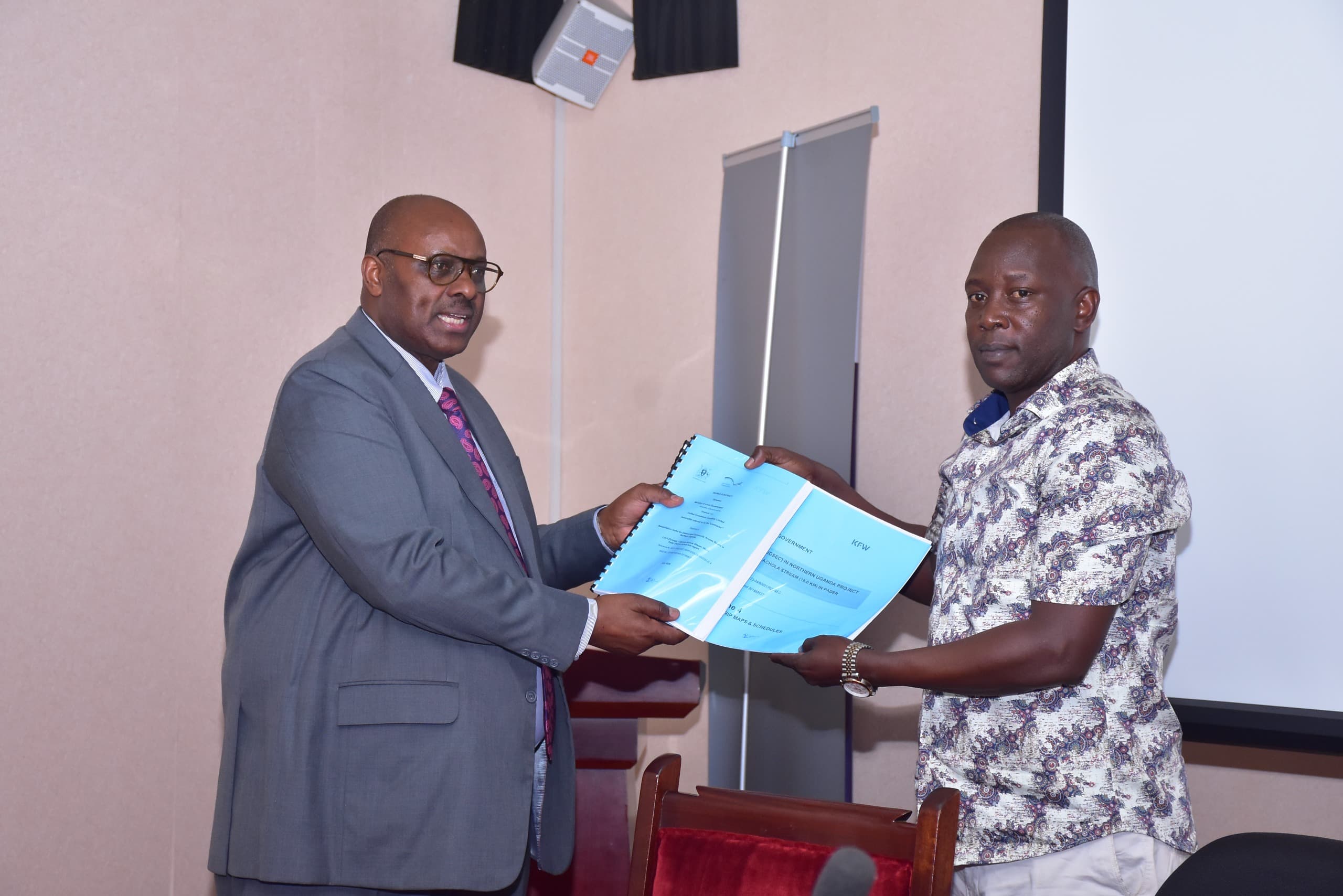
These provisions give the Ministry a legal basis for oversight. They also demonstrate that decentralisation involves more than transferring responsibilities from the centre to districts and municipalities. It requires public institutions to operate within the law, maintain proper records and account for public resources.
For Kumumanya’s office, the challenge is to ensure that local governments receive the guidance and support required to implement government programmes while identifying weaknesses that call for corrective action.
For local government officials, the same framework reinforces the obligation to manage public resources properly and explain how public funds are used.
Q: How should the public assess claims about government projects and roads funding?
Kumumanya emphasises the importance of examining specific projects rather than relying on general claims about government performance.
“Many things are happening, but it is about specifics and projects. For example, USMID gave out money for roads, and it was a success,” he added.
The programme he appears to be referring to is the Uganda Support to Municipal Infrastructure Development, known as USMID. The acronym and the specific project he meant should be confirmed against the interview recording before publication.
USMID was financed through the World Bank’s International Development Association (IDA) and implemented under the Ministry of Lands, Housing and Urban Development, working with participating local governments.
The original programme received US$150 million in World Bank financing, alongside a US$10 million government contribution. Additional World Bank financing of US$360 million was subsequently approved, comprising a US$335 million credit and a US$25 million grant.
The combined World Bank financing for the two phases was therefore US$510 million, with government counterpart funding also provided separately.
The programme supported urban infrastructure, including roads, drainage, walkways, cycle lanes and street lighting, intended to improve infrastructure and service delivery in participating urban areas.
The US$510 million figure should not be interpreted as money spent exclusively on roads. It represents combined World Bank financing for the two phases of a broader urban infrastructure programme.
That distinction is important when assessing claims of success. The public needs to know which projects received funding, how much was allocated, what was spent, what infrastructure was completed and whether the work met the required standards.
A programme’s overall achievements provide useful context, but they do not remove the need to examine individual contracts and expenditure.
Q: Has USMID faced accountability questions despite its infrastructure work?
Yes. The programme has attracted parliamentary scrutiny over the management of its financing and the implementation of projects.
On September 30, 2026, Parliament’s Public Accounts Committee sought a comprehensive account from the Ministry of Lands, Housing and Urban Development concerning the US$510 million in World Bank financing. The committee raised questions about road construction costs, project status, incomplete works and the utilisation of funds.
These questions underline the importance of accounting for public borrowing and explaining how money has been used. They do not, on their own, establish that funds were stolen or that the entire programme failed.
A programme can deliver useful infrastructure while particular projects still require explanations about costs, delays or incomplete works. Equally, an audit query or parliamentary question is not proof of criminal wrongdoing.
The appropriate response is to examine the records and establish the facts.

Which roads were planned? How much was budgeted for each contract? How much was paid? What work was completed? Were the works inspected and certified? If a project remains incomplete, what explains the delay?
Such questions help turn public concern into evidence-based scrutiny. They also illustrate why Kumumanya’s statutory role and the responsibilities of other public officers must be assessed against specific projects rather than broad claims about success or failure.
Q: What happens when there are concerns about the misuse of public resources?
Administrative action may be taken where the circumstances and applicable procedures justify it. Kumumanya has referred to issuing interdiction letters in matters requiring administrative attention.
Interdiction is an administrative measure that may temporarily remove a public officer from active duty while a matter is handled under the relevant procedures. It is not, by itself, proof of guilt or a criminal conviction.
Where public funds are questioned, the responsible authorities must establish which officers handled the relevant decisions, examine financial and administrative records and determine whether the law and applicable procedures were followed.
Where evidence points to suspected criminal conduct, the matter may require referral to the competent investigative or prosecutorial authorities.
The process must protect public resources while respecting due process. Allegations must be investigated, evidence assessed and findings made by the authorities legally empowered to determine the matter.
An interdiction letter can demonstrate that an administrative step has been taken, but it cannot independently establish that public funds were misappropriated.
Q: Who is responsible when a district project fails to deliver?
Responsibility depends on the project, the decision in question and the duties assigned to the officers involved.
Under the local government framework, the Chief Administrative Officer heads the district administration and has accounting responsibilities. Other officers may be responsible for engineering supervision, procurement, financial management or the implementation of specific projects.
The Ministry of Local Government has its own responsibilities for guidance, inspection, monitoring and coordination. These functions are important, but they do not automatically make the Permanent Secretary responsible for every contract or expenditure in every district.
When a road project fails to deliver, the first task is to establish what was approved, who was responsible for implementation, what the contract required, how payments were made and what work was completed.
The same approach applies to schools, health facilities, markets and other public investments.
Where oversight was required but not exercised, that failure should also be examined. Where a contractor failed to meet contractual obligations or a local official breached a duty, the evidence should identify the relevant responsibility.
Decentralisation distributes functions across institutions; it does not remove the obligation to account for public money.
Q: What should citizens and social media users understand about accountability?
Citizens have a legitimate interest in how government money is spent and whether promised services are delivered. Decentralisation is intended to bring decision-making closer to communities and strengthen public participation in local governance.
Residents can ask their leaders about project budgets, funding releases, contractors, completion dates and the services expected from public expenditure. They can also report concerns to the appropriate authorities.
Social media platforms, including X, have widened public debate about government performance. However, claims circulated online must be checked against reliable evidence before they are repeated as established facts.
Where a claim is attributed to a particular social media user, including Bruce Tumusiime, the original post and its context should be verified before publication.
Official statements also require scrutiny. A government explanation should be accurately attributed, while claims about expenditure, project completion or disciplinary action should be checked against available records.
Accountability is strongest when criticism identifies the specific project, decision or institution in question and is supported by evidence.
Q: What is the responsibility of journalists covering corruption and local government?
Journalists must establish what the law requires, identify the responsible office and examine the evidence.
In reporting on a road project, this means comparing the approved budget with funds released, procurement record, contract terms, inspection reports and the work completed, where those records are available. The relevant authorities and contractors should be given an opportunity to respond to specific questions.

Reports must distinguish between an allegation, an audit query, an administrative investigation and a proven offence. An officer who has been interdicted should not be described as convicted, and an incomplete project should not automatically be presented as evidence of corruption.
The same care is necessary when examining the Permanent Secretary’s office. Its statutory monitoring role must be distinguished from the operational and financial responsibilities of district accounting officers, technical departments and contractors.
Responsible journalism does not shield public officials from scrutiny. It identifies the questions that need answers, tests official explanations against the available evidence and gives the public a fair account of what has been established.
Q: How did decentralisation develop in Uganda, and what role did academics play?
Uganda’s decentralisation reforms developed through policy initiatives in the early 1990s and were subsequently entrenched in the 1995 Constitution and the Local Governments Act of 1997.
The policy’s development involved debates about how communities could participate in decisions affecting their daily lives, how local leaders could exercise authority and how public services could be delivered closer to the people.
In his account of the policy process, Professor Edward Kakonge, who served as Minister of Local Government, described his involvement in developing the decentralisation policy and appointing a committee headed by Professor Mahmood Mamdani to prepare a policy document.
Kakonge also recalled travelling across the country to promote the idea of communities participating in decisions affecting their everyday affairs.
Mamdani’s involvement forms part of the wider academic and policy history surrounding Uganda’s decentralisation reforms. The policy sought to strengthen local participation and transfer responsibilities to local government institutions, although its implementation and effects on accountability and service delivery remain important subjects for examination.
The historical context matters because decentralisation is not simply an administrative arrangement. It is also a governance framework that depends on the relationship between central government, local institutions and the communities they serve.
Its success requires clearly assigned responsibilities, capable local administrations, effective oversight and opportunities for citizens to question how public resources are used.
Q: Ultimately, how should Ugandans measure the success of decentralisation and the fight against corruption?
The test is whether public institutions comply with the law, manage public resources properly and deliver the services citizens need.
For the Ministry of Local Government, accountability includes carrying out its statutory duties, supporting local governments and addressing identified administrative weaknesses through lawful procedures.
For local government officials, it means accounting for budgets, contracts and decisions within their areas of responsibility. For citizens and journalists, it means asking specific questions, examining records and distinguishing allegations from established findings.
Kumumanya’s mandate is therefore one part of a wider system of public accountability. Its effectiveness should be judged not simply by the number of directives issued or interdiction letters written, but by whether oversight is exercised, weaknesses are addressed and public resources are protected.
The USMID experience illustrates why both sides of accountability matter: infrastructure delivery should be recognised where evidence supports it, while questions about project costs, incomplete works and expenditure must receive clear, documented answers.
Ultimately, Uganda’s fight against corruption depends on institutions doing what the law requires, officials accounting for decisions entrusted to them and public funds producing the services for which they were allocated.
Understanding the Permanent Secretary’s statutory role is an important starting point. But accountability must extend across the entire chain of public expenditure, from planning and procurement to implementation, inspection and service delivery.
GOT A HOT STORY? LET US KNOW!
Got breaking news, explosive secrets, or hard evidence?
Email us: redpeppertips@gmail.com
We accept tips, documents, videos, photos, and recordings—the more evidence you have, the better.
CONFIDENTIALITY IS OUR TOP PRIORITY. SOURCES ARE ALWAYS PROTECTED!
About Post Author