STATISTICAL POWER! UBOS unveils five-year plan to drive Museveni’s tenfold economic ambition as Lugoloobi challenges bureau to turn statistics into economic gold
By Evans Najuna
KAMPALA — The Uganda Bureau of Statistics (UBOS) has unveiled an ambitious five-year strategic blueprint aimed at strengthening Uganda’s data production systems and supporting President Yoweri Museveni’s tenfold economic growth ambition, with government challenging the Bureau to turn statistics into economic gold.
Finance, Planning and Economic Development Minister of State for Planning, Hon. Amos Lugoloobi, has tasked UBOS and other public institutions to embrace Artificial Intelligence (AI), Big Data analytics and modern digital technologies to transform the country’s statistical landscape and accelerate national development.
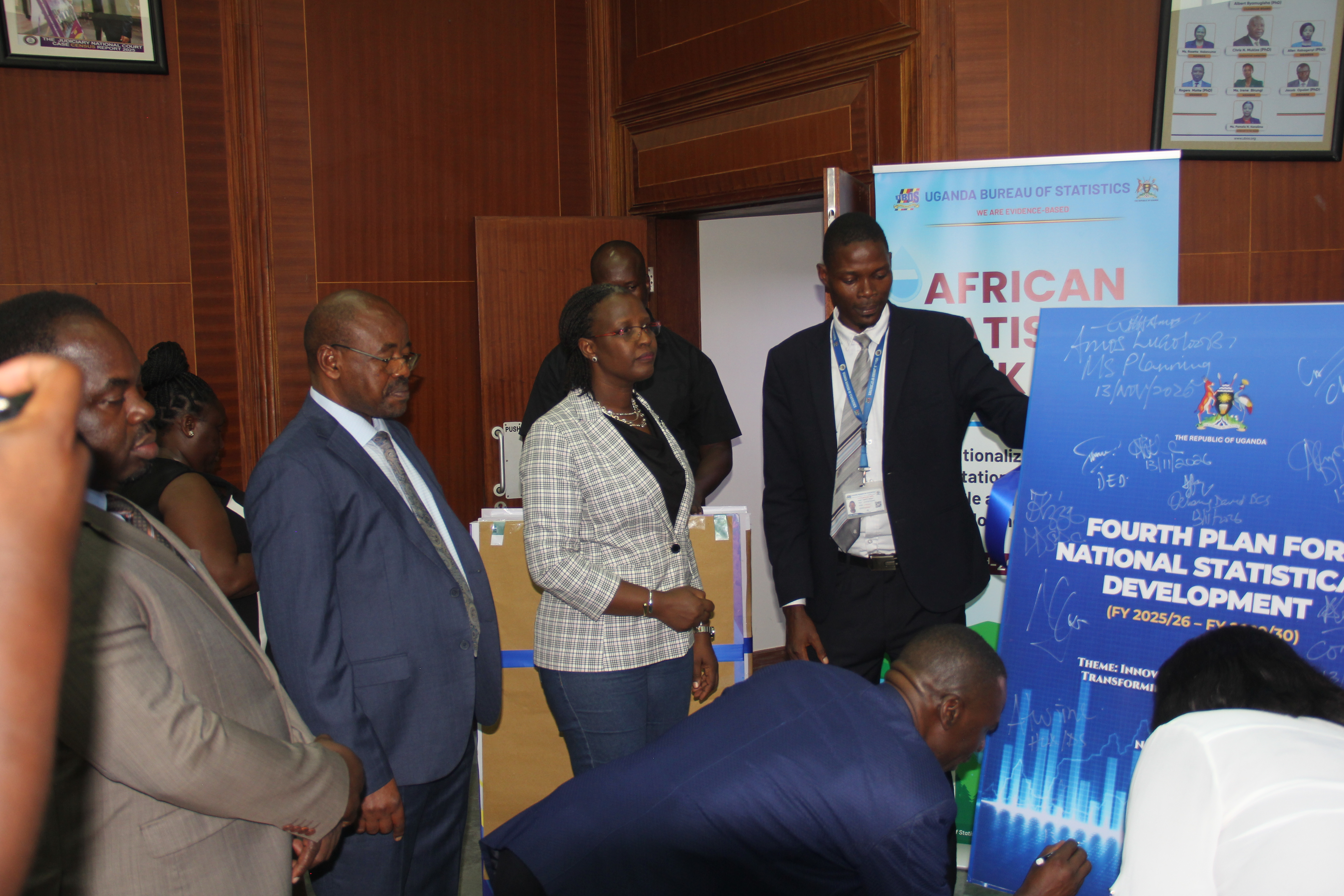
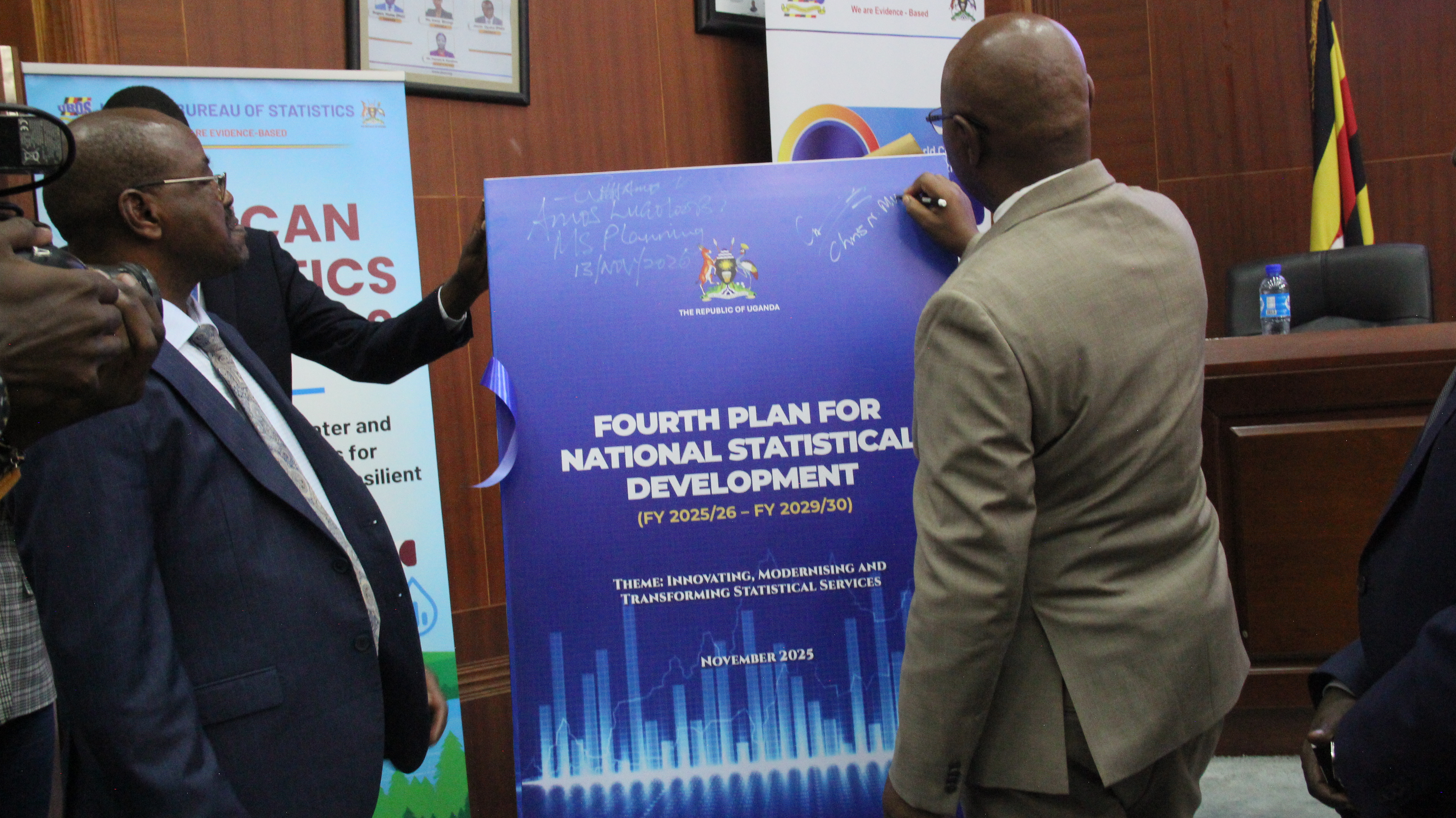
Lugoloobi made the call while officiating at the launch of the Plan for National Statistical Development (PNSD) IV, UBOS Strategic Plan IV and Service Delivery Standards for the period 2025/26–2029/30, during the commemoration of Africa Statistics Week 2026.
The new strategic documents are expected to strengthen Uganda’s National Statistical System (NSS), improve the production and utilisation of official statistics and support evidence-based planning under the Fourth National Development Plan (NDP IV).
In a striking assessment of Uganda’s changing data landscape, Lugoloobi revealed that the country has moved from struggling with statistical shortages to having an abundance of information that is sometimes underutilised.
He recalled that during the formative years of developing Uganda’s National Development Plans, government faced serious data gaps across different sectors, making it difficult to effectively monitor development targets.
“Today, we are instead choking on an oversupply of data from UBOS. The stakes have shifted to an extent that some data is instead being underutilised. This is a good problem,” Lugoloobi observed.
He challenged UBOS to move beyond simply producing and disseminating statistics and ensure that the available information is translated into practical economic decisions, effective government policies, better resource allocation and measurable development outcomes.
The Minister said strengthening the National Statistical System requires deliberate investment in modern statistical production systems, improved data integration across government agencies and adoption of emerging technologies such as Artificial Intelligence and Big Data analytics.
He also urged Ministries, Departments and Agencies (MDAs), together with Local Governments, to establish and maintain functional statistics units to improve data collection, monitoring and evaluation.
Lugoloobi said bringing the entire National Statistical System into the statistical value chain would help government bridge data gaps, eliminate duplication and make better use of administrative information generated daily by public institutions.
He argued that a stronger, well-coordinated statistical system would make Uganda’s journey towards achieving the tenfold economic growth strategy easier and more sustainable.
FIVE-YEAR BLUEPRINT
Speaking on behalf of the UBOS Board of Directors, Executive Director Dr. Chris Ndatira Mukiza said the newly launched strategic documents provide a framework for strengthening the production, coordination and dissemination of official statistics in line with Uganda’s national development priorities.
Mukiza, who represented Board Chairman Dr. Albert Byamugisha, described reliable statistics as a strategic national asset that enables government and development partners to make informed decisions and improve citizens’ livelihoods.
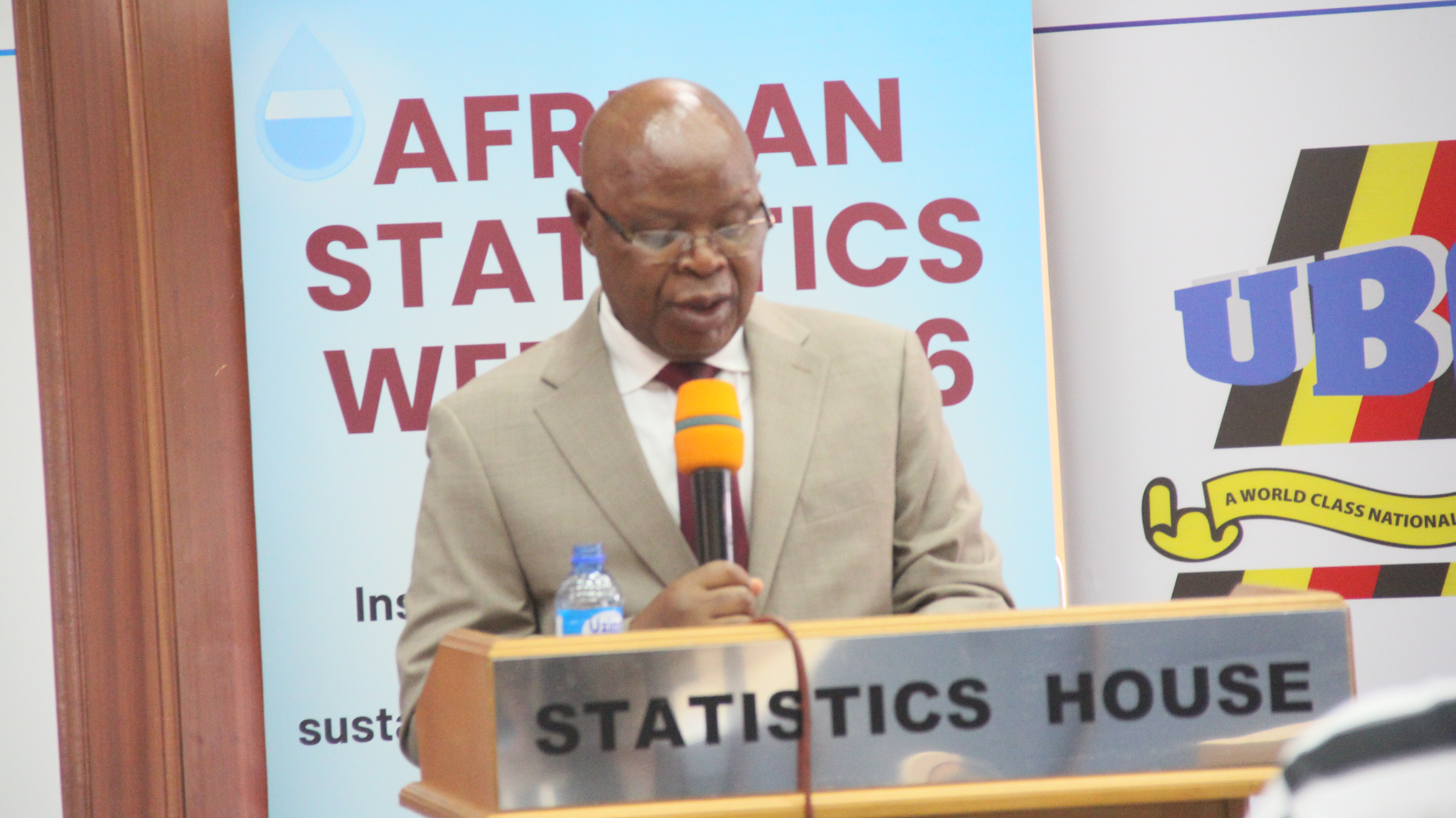
He said the UBOS Strategic Plan IV places emphasis on credible, timely and disaggregated statistics as the foundation for sound policymaking, effective resource allocation and sustainable national development.
The PNSD IV, on the other hand, seeks to modernise Uganda’s statistical system through digital technologies, Big Data, geospatial analytics and automated systems to improve the speed, accuracy and efficiency of data collection and dissemination.
The plan also prioritises stronger coordination among Ministries, Departments, Agencies and Local Governments to eliminate duplication, harmonise statistical methodologies and build institutional capacity across the National Statistical System.
Mukiza said the Board is committed to ensuring that official statistics directly support national development plans, regional integration agendas and the localisation of Sustainable Development Goals (SDGs).
He urged UBOS management and staff to take ownership of the strategic documents, uphold professionalism and treat every data user with transparency, responsiveness and respect.
UBOS PUTS SERVICE DELIVERY IN SPOTLIGHT
Beyond strengthening data production, the new Service Delivery Standards seek to improve accountability and make official statistics more accessible to the public.
Mukiza described the standards as a social contract with citizens, pledging transparency, responsiveness and professionalism in the Bureau’s execution of its mandate.
The standards provide for predictable service timelines, user-friendly platforms and accessible official statistics for researchers, businesses, academia, the media and the general public.
They also reaffirm UBOS’s commitment to the United Nations Fundamental Principles of Official Statistics, particularly independence, impartiality, confidentiality and quality assurance.
Lugoloobi said the standards operationalise the constitutional right of Ugandans to access high-quality, timely and cost-effective public services.
He urged data users, development partners, academia and the private sector to make greater use of official statistics while holding UBOS accountable for the service commitments it has made.
CENSUS OUTPUTS BOOST NATIONAL DATA BANK
The strategic blueprint comes as UBOS continues to expand Uganda’s national statistical database through major census and data collection exercises.
Among the key outputs are the 2024 National Population and Housing Census, the 2021 National Livestock Census, the May 2025 Uganda Aquaculture Census and the 2025 Baseline Education Census.
The Bureau is also preparing for the Uganda Census of Agriculture Crop Report, planned for 2027/2028, alongside other statistical programmes, including the Census of Business Establishments.
Government expects the growing body of statistical information to support better planning, guide investment decisions, improve monitoring of national development programmes and strengthen accountability across public institutions.
The Africa Statistics Week 2026 celebrations, running from November 12 to 19, are highlighting the importance of reliable statistics in governance, economic planning, public service delivery and sustainable national development.
GOT A HOT STORY? BLOW THE WHISTLE!
Have breaking news, explosive revelations, juicy leads or evidence of wrongdoing?
WE WANT TO HEAR FROM YOU!
Send your tips, documents, videos, photos and audio recordings to:
redpeppertips@gmail.com
Whether it’s corruption, scandals, abuse of office, injustice or stories others are afraid to tell, help us bring the truth to light.
SOURCES ARE PROTECTED.
CONFIDENTIALITY IS OUR NO.1 PRIORITY!
About Post Author