Dennis Adim Enap : The Lawyer, Economist, and Pilot Eyeing UPC Party Presidency
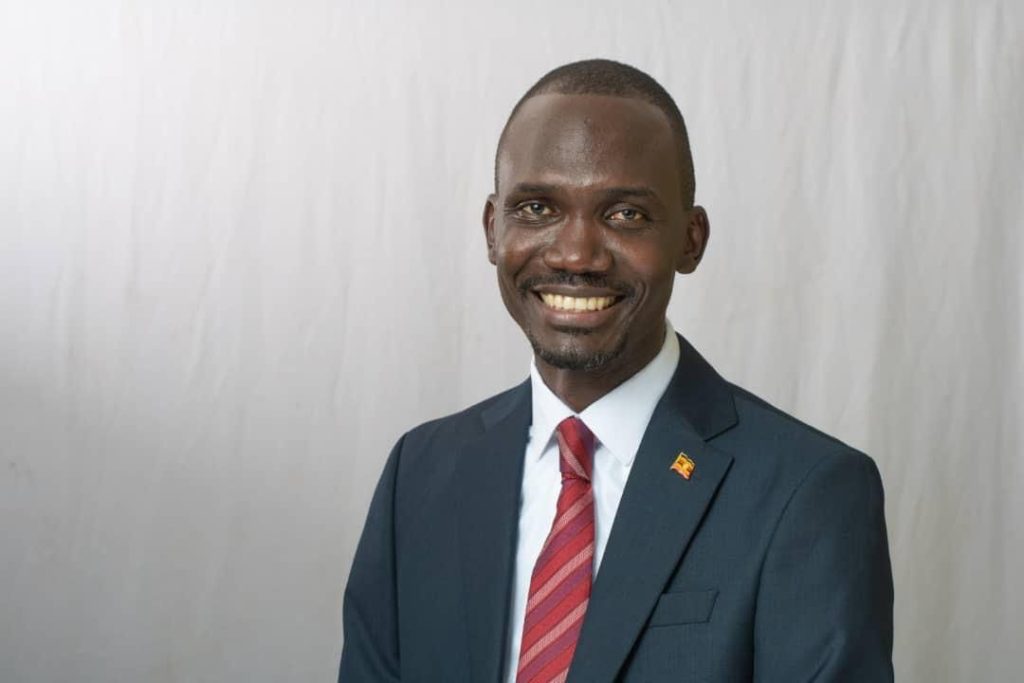
Dennis Adim Enap
Who is Dennis Adim Enap?
My name is Dennis Adim Enap. I was born in Jinja to a father from Lango and a mother from Busoga. While I have Lango roots, I identify more as a Musoga because I’ve spent my entire life in Busoga—growing up, going to school, and interacting in Lusoga more than in Langi, which I now speak with difficulty. I’m 39 years old, turning 40 this year.
Professionally, I’m a lawyer, an economist, and a trained pilot. Above all, I’m a proud Ugandan and a committed member of the Uganda People’s Congress (UPC), a party I joined back in 2008 while at university. During my time there, I served as a Guild Representative Council member (GRC), contested for Guild President—unsuccessfully—but was later elected Guild Speaker. My political journey began there, and today, I am aspiring to lead UPC into a new era.
________________________________________
What attracted you to the Uganda People’s Congress?
I was drawn to UPC because of the shallowness and pettiness that dominate our politics today. Leaders are afraid to make bold decisions to fix what’s broken. UPC, as Uganda’s Independence party, has a rich legacy. It’s one of the few post-independence parties in Africa still represented in Parliament. But our current strength doesn’t reflect our potential.
In the last election, we should have had at least 30 Members of Parliament. That would have given us a platform to build towards 60 or 70 MPs in future elections—enough muscle to contest for national power. My presence as a youthful leader brings a new face to UPC—one that the 75% youth majority in Uganda can easily relate to.
________________________________________
What is UPC’s biggest internal challenge?
The party has been weighed down by internal wrangles since the controversial election of Jimmy Akena in 2015. I was among those who campaigned for his leadership, and I admit that the process leading to his election was met with resistance. We fought to ensure his victory then, but moving forward, reconciliation is key.
UPC is fragmented. My goal is to unite the party’s factions by creating inclusive platforms where all voices—regardless of past alignments—can be heard and participate. This upcoming election presents a chance for the party to shift from the Akena era to a fresh, neutral leadership. I believe my humility and ability to engage with everyone make me the right person to rebuild unity within UPC.
________________________________________
How do you plan to strengthen UPC at the grassroots level?
The party’s grassroots structures are in a sorry state. Ironically, one of the main reasons Akena was elected was his promise to establish structures nationwide—but even in his home region of Lango, that hasn’t happened.
Lango returns 31 MPs, but UPC only has 10. The region has 10 districts, yet UPC only has four district chairpersons. In Lira, where Akena has served as MP since 2006, six MPs were elected: two from UPC, two from NRM, and two independents leaning toward NRM. That shows how even in our strongholds, we’ve been outpaced.
If elected, my first priority after the 2026 general elections will be to set up party structures across the country—within the first two years. We must lay the foundation before we can grow politically.
________________________________________
What new ideas are you bringing to the party?
Digitization is top of the agenda. We intend to replace paper membership cards with smart cards embedded with chips. These will be linked to a secure digital system that helps us track members, verify identity, and offer more efficient services.
We’ll also introduce a party mobile application to centralize member data, allowing quick access to records, communication, and party news. It’s time we modernized UPC and made it attractive to the tech-savvy younger generation.
________________________________________
How do you plan to address the challenges facing youth in Uganda?
Uganda’s youth are in crisis. They make up 75% of the population, yet they face record levels of unemployment. Our education system continues to churn out thousands of graduates—Makerere alone produces around 15,000 annually, Kyambogo about 10,000, and when you add other institutions, it’s over 45,000—yet the job market is stagnant.
Worse still, many institutions are teaching outdated courses with little relevance to today’s economy. We must push for an education model that emphasizes practical, employable skills and supports innovation and entrepreneurship among youth.
________________________________________
Beyond youth issues, why should people vote for you as UPC president?
I bring a new face and fresh energy to UPC—something the current leadership lacks. My message resonates with the country’s majority—young people—who see in me someone they can relate to, not just in age, but in lived experience.
The current leadership has lost touch. We have the party president in opposition while his wife serves as a minister in the ruling government—under UPC, not NRM. When members raised objections and demanded her expulsion, Akena ignored them. That lack of internal democracy and consistency is damaging. I intend to restore the party’s credibility and give members back their voice.
________________________________________
What is your biggest challenge going into this race?
The biggest hurdle is the legacy of state interference in political party activities. Since 1986, the NRM regime has systematically suppressed multiparty democracy. The movement system, followed by laws like the Public Order Management Act, has made it difficult for opposition parties to function.
Police routinely block or disrupt our activities, and the general public is discouraged from associating with opposition parties. We must reclaim political space through resilience and strategic organization.
________________________________________
Your final word to UPC members?
I urge UPC members to reject the illegalities being orchestrated by the current leadership. For example, the planned adult suffrage election at village level to choose the party president is unconstitutional. It should be disbanded.
Jimmy Akena has completed his second and final term as per the party constitution. It’s time for change. I have been nominated unopposed, and on July 3rd during the district conference elections, I ask for your endorsement as the new president of UPC.
Within the first two years of my leadership, members will see visible transformation. UPC will be revived, modernized, and ready to reclaim its rightful place in Uganda’s political future.
About Post Author