Karamoja’s Poverty Crisis Persists as 27% Nationwide Struggle — UBOS
By Evans Najuna
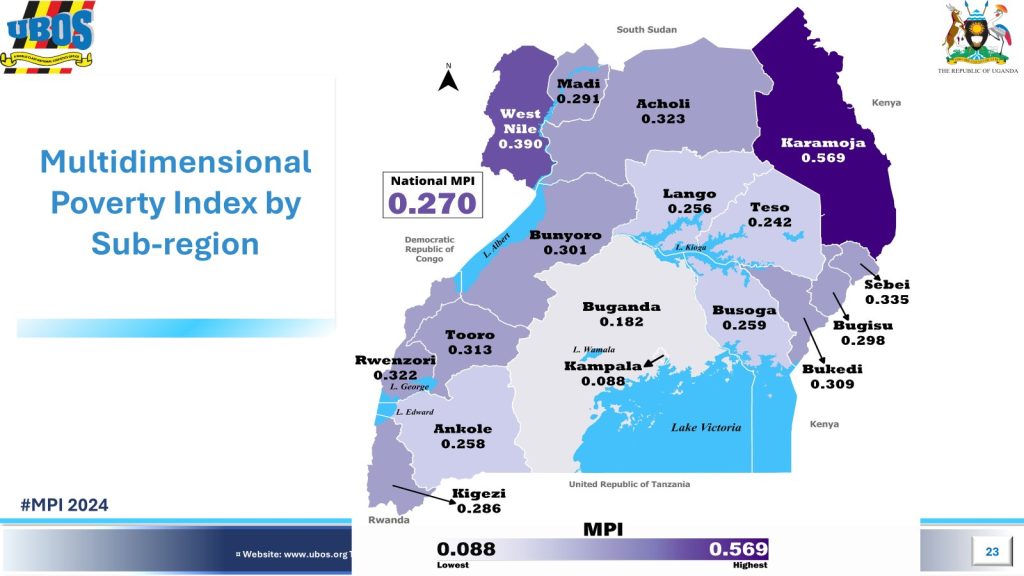
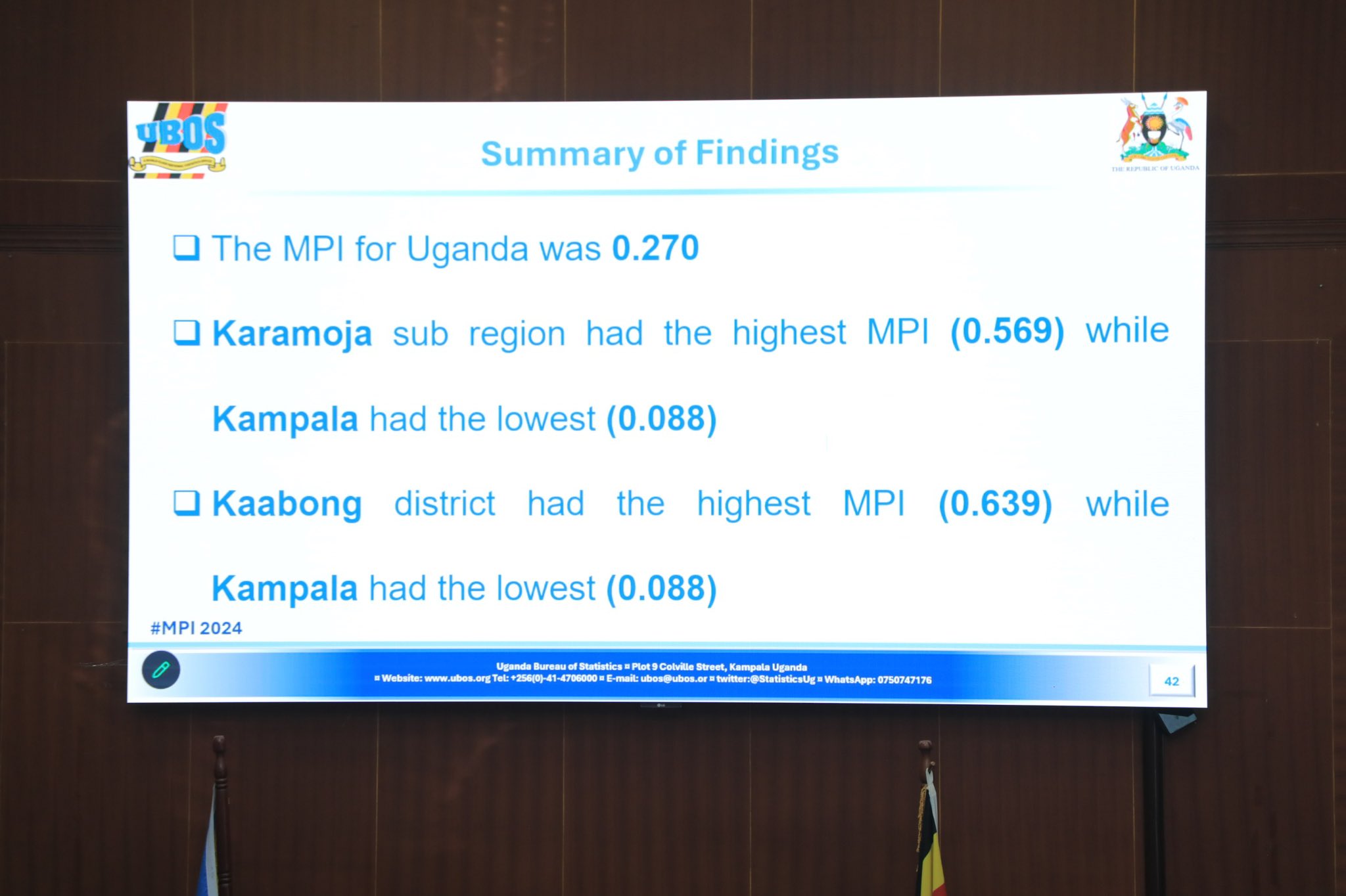
Kampala – The Uganda Bureau of Statistics (UBOS) on Thursday released Volume 5 of its Multidimensional Poverty Index (MPI) Report, revealing that 27% of Ugandans are multidimensionally poor at the national level. Karamoja sub-region recorded the highest MPI at 57%, while Kampala registered the lowest at 9%. Kaabong District was identified as the most affected, with an MPI of 64%.
According to the report, the percentage of persons who are multidimensionally poor and deprived across various indicators at the national level includes: lack of health insurance (52%), cooking fuel and technology (51.6%), access to improved sanitation (45%), housing materials (42.4%), asset ownership (39%), access to improved drinking water (29%), overcrowding (26%), years of schooling (21%), source of lighting energy (20%), and access to financial services (5%).
Regionally, Karamoja remains the most affected, with an MPI of 57%, followed by West Nile at 39% and Sebei at 34%. Most other regions recorded levels below 30%. Within Karamoja’s nine districts, Kaabong had the highest poverty prevalence, while Abim recorded the lowest levels in the sub-region.
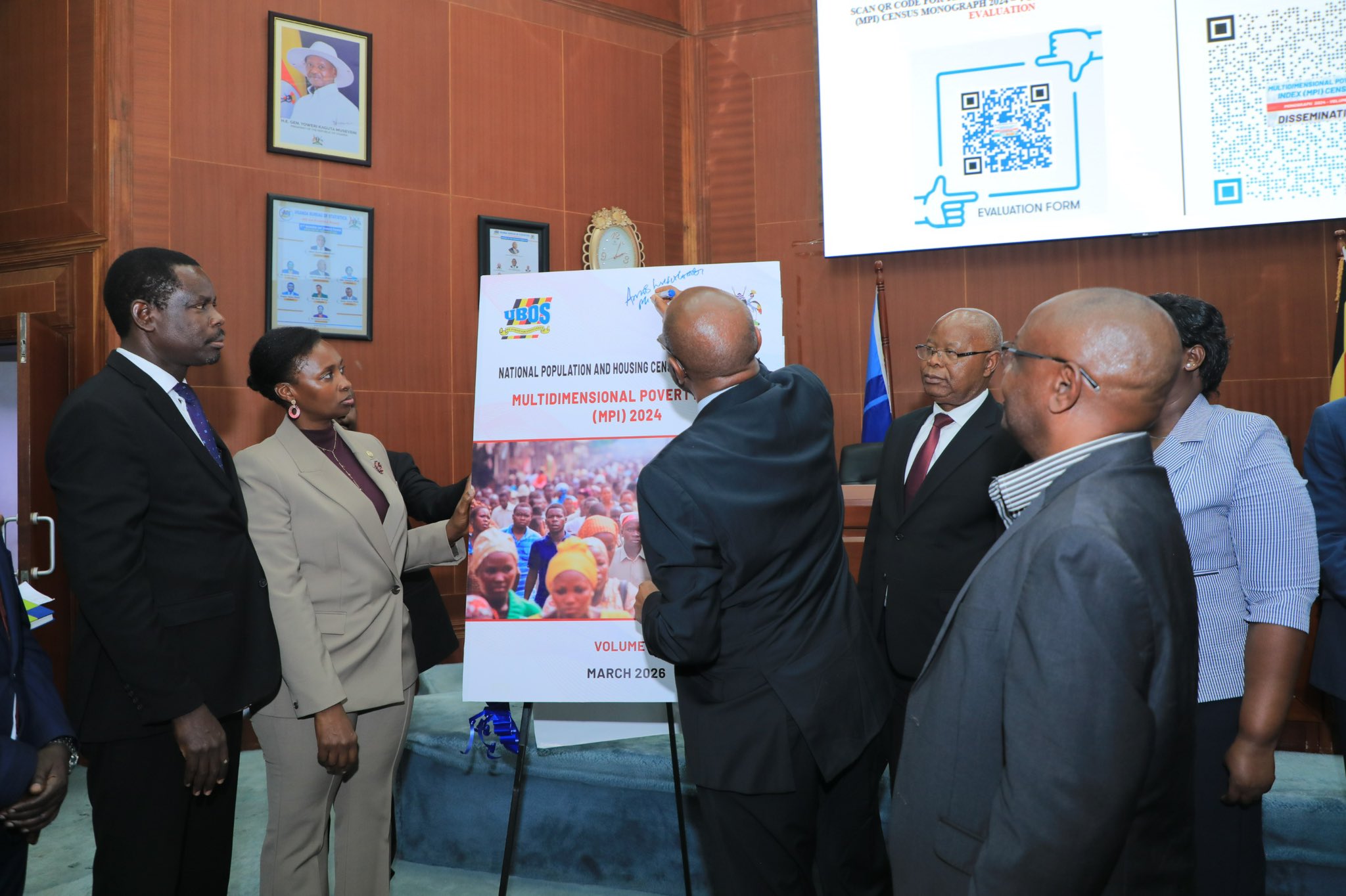
Speaking at the release of the report, the State Minister for Finance in charge of Planning and Economic Development, Amos Lugoloobi noted that although income poverty has reduced significantly—from 56% in 1992/93 to 16.1% in FY 2023/24—multidimensional poverty remains a major challenge.
He explained that the new indicators will enable the government to plan more effectively and address gaps in health, education, living standards, and access to basic services. He commended UBOS for producing a report that captures the complex nature of poverty, likening the Bureau’s role to that of a doctor who diagnoses a patient before treatment is prescribed.
He called on government agencies and other stakeholders to utilize the data effectively.
The Parliamentary Committee on Finance, Planning and Economic Development was represented by Hon. Geoffrey Ekanya, MP for Tororo North County, and Hon. Faith Nakut, Woman MP for Napak District.
Commenting on the findings, Hon. Faith Nakut noted that Napak remains among the districts most affected by multidimensional poverty, with 56 out of every 100 people experiencing its effects.
She emphasized that despite significant government investment in poverty reduction programs, outcomes remain limited, highlighting the need for more targeted and effective interventions.
“I wish to commend UBOS for producing data that supports more informed decision-making,” she said.
Hon. Geoffrey Ekanya observed that poverty trends in sub-regions such as Karamoja, Bukedi, and West Nile have remained largely consistent over time. He emphasized the importance of statistics in guiding policy and budgeting, recalling how previous Parliaments used UBOS data—such as infant mortality reports—to advocate for targeted interventions and address gender disparities.
He added that in recent years, national budgeting has increasingly aligned with the National Development Plan, guided by UBOS data, thereby strengthening evidence-based planning and decision-making.
The event was also attended by Dr. John Ilukol, an economist representing the World Bank, and Dr. Thangavel Palanivel, Chief of the Strategy and Policy Unit and Senior Economic Advisor at UNDP Uganda.
About Post Author