WITNESSES GRILLED…As Nyerere Sainthood Bid Gains Momentum
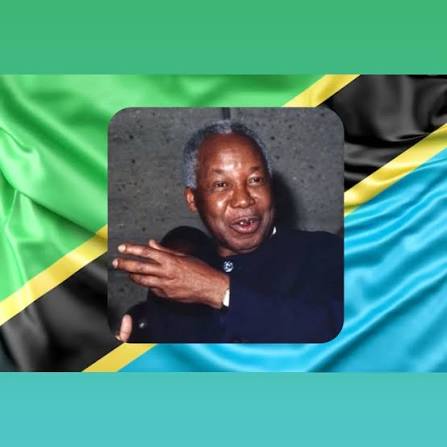
The Catholic Church’s process to have Tanzania’s founding president, Julius Kambarage Nyerere, recognised as a saint is moving forward, with officials now interrogating witnesses about his life, faith and conduct as they gather evidence about his reputation for holiness.
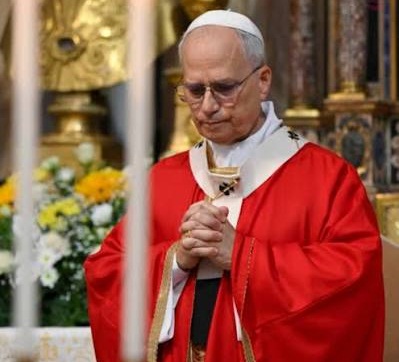
Bishop Henry Mchamungu, Auxiliary Bishop of Dar es Salaam and the official overseeing Nyerere’s sainthood cause, revealed this while speaking to ACI Africa on the sidelines of the AMECEA Plenary Assembly held in Nairobi.
“We are in the process of interrogating witnesses. This is a very important stage because we have to ask people many questions to obtain sufficient information about the life, virtues and faith of Mwalimu Nyerere,” Bishop Mchamungu told ACI Africa.
According to reports, witnesses are required to answer as many as 40 questions about the life, character and faith of Nyerere, who was popularly known as Mwalimu, a Swahili word meaning “Teacher”, as the Church builds a solid body of evidence before the cause can proceed to the next stage.
Nyerere led Tanganyika, which later became Tanzania, to independence and served as president from 1961 to 1985. He converted to Catholicism as a young man and was known for attending Mass daily, fasting regularly and seeking to govern the country according to Christian values of justice and service. He died in London in October 1999 at the age of 77.
The push to have him declared a saint began in 2005, when the Diocese of Musoma petitioned the Vatican. That same year, Pope Benedict XVI granted Nyerere the title “Servant of God”, the first official step on the path to sainthood.
According to information published on the website of the Symposium of Episcopal Conferences of Africa and Madagascar (SECAM), the case was later handed over to the Archdiocese of Dar es Salaam in 2014, since that is where Nyerere lived for much of his adult life and where many witnesses could be found.
The process slowed down for several years, partly because of the ill health of Cardinal Polycarp Pengo, who was overseeing it. It picked up pace again in 2023 after a new postulator was appointed to advance the cause.
Under Catholic Church rules, becoming a saint is a lengthy process involving several stages. After a person is named a Servant of God, a diocesan investigation into their life, known as a diocesan inquiry, is conducted.
This is the stage Nyerere’s cause is currently in. Witnesses are questioned under oath, and both positive and negative evidence about the person’s life must be collected. Once the process is completed, the findings are sent to the Vatican, where theologians and cardinals examine them. If they approve the findings, the Pope can declare the person “Venerable”.
After that, a miracle attributed to the person’s intercession must be confirmed before they can be beatified and given the title “Blessed”. A second miracle is then required before the person can be canonised as a saint.
In Uganda and Tanzania, many Catholics already hold Nyerere in high regard. Since around 2008, an annual Mass has been held at the Uganda Martyrs Shrine in Namugongo to pray for his beatification, usually ahead of Martyrs’ Day celebrations on June 3. Nyerere’s widow, Mama Maria Nyerere, or her representatives, have often attended the prayers alongside pilgrims from both countries.
However, the move to have Nyerere recognised as a saint has also drawn opposition from some Ugandan Catholics, particularly in the southern region, including Greater Masaka. For Catholics who remember the 1978–1979 Tanzania-Uganda war that led to the overthrow of Idi Amin, Nyerere’s role in the conflict makes him undeserving of sainthood.
Critics, including Jude Mbabaali, a former Masaka District LCV chairperson and a member of the Catholic Lawyers Society of Uganda, point to the suffering of civilians during the war. They also fault Nyerere for never publicly apologising for the deaths and destruction associated with the conflict.
“We hold our ground that Nyerere is not a saint,” Mbabaali told URN in a previous interview. “He caused death and suffering among our people when he used powerful weapons such as the BM-21, commonly known among Ugandans as Sabasaba. These were satanic actions, not godly actions at all. Many people were killed indiscriminately, and Nyerere never apologised for his actions against humanity.”
Opposition to Nyerere’s sainthood cause is not limited to Uganda. In Tanzania, some critics have questioned his socialist Ujamaa policies and their impact on the country. Tanzanian opposition politician Tundu Lissu has also criticised the move, arguing that Nyerere’s political record should be examined alongside his personal faith and legacy.
Delivering a keynote address at Makerere University last year, Lissu described the push to make Nyerere a saint as hypocritical. He argued that Nyerere was first and foremost an authoritarian political leader who detained hundreds, if not thousands, of people without trial. Lissu said Nyerere should instead be humanised and his record examined critically rather than placed on a religious pedestal.
Church officials have, however, said that the investigation is considering both the positive and negative aspects of Nyerere’s life. They have urged Catholics to continue praying for the cause, expressing hope that Nyerere will one day be declared Blessed.
GOT A HOT STORY? LET US KNOW!
Got breaking news, explosive secrets, or hard evidence?
Email us: redpeppertips@gmail.com
We accept tips, documents, videos, photos, and recordings—the more evidence you have, the better.
CONFIDENTIALITY IS OUR TOP PRIORITY. SOURCES ARE ALWAYS PROTECTED!
About Post Author