CAUCUS AT CROSSROADS! As Acholi MPs Battle Over Next Parliamentary Leader, Who Will Fix the Fractured Caucus?
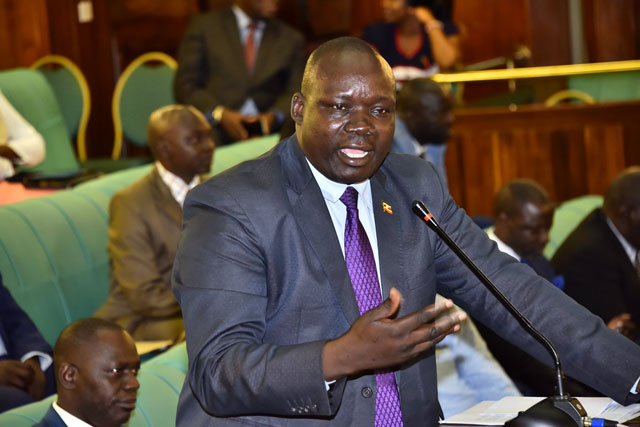
Whoever succeeds Anthony Akol as chairperson of the Acholi Parliamentary Group (APG) will inherit more than a leadership position
Whoever succeeds Anthony Akol as chairperson of the Acholi Parliamentary Group (APG) will inherit more than a leadership position.
The next chairperson will take charge of a regional caucus still struggling to regain its influence after years of internal divisions, while confronting unresolved issues ranging from land conflicts and post-war recovery to infrastructure, education, and poverty.
With Akol announcing he will not seek another term, several senior legislators have entered the race, including former Leader of the Opposition Betty Aol Ocan, Kilak South MP Gilbert Olanya, Agago County MP Edward Otto Makmot, and Layibi-Bardege Division MP Martin Ojara Mapenduzi.
Their contest has reignited debate over whether parliamentary caucuses remain effective instruments for advancing regional interests or have become largely symbolic political platforms.
Established in 1989, the APG brings together Members of Parliament from all 28 constituencies in the Acholi sub-region regardless of political affiliation. It was created to provide a united voice for a region emerging from decades of conflict, displacement, and economic devastation.
Over the years, the caucus has championed issues such as land governance, compensation for war victims, infrastructure development, education, healthcare, and transitional justice.
Yet many leaders acknowledge that the group’s influence has diminished.
Kilak South MP Gilbert Olanya attributes that decline to prolonged internal disagreements, particularly during the 11th Parliament when rival factions recognised different leaders and often issued conflicting positions on issues affecting the region.
Those divisions, analysts argue, weakened the caucus’s ability to speak with one voice.
Timothy Msobor Chemonges, Executive Director of the Centre for Policy Analysis (CEPA), says the significance of leading the APG lies not in financial benefits but in political influence.
“There is no automatic salary or constitutional allowance attached to becoming chairperson of a parliamentary group,” Chemonges said.
Instead, he explained, caucus leaders become the recognised voices on regional policy issues, engage government ministries and development partners, coordinate advocacy efforts, and often represent Parliament in regional and international policy forums.
The next chairperson will also face one of Acholi’s most sensitive challenges: land.
Former Leader of the Opposition Betty Aol Ocan says protecting customary land while encouraging responsible investment will be among her priorities if elected.
“Our biggest challenge is balancing the protection of ancestral communal land with the need to attract responsible investment,” she said.
Outgoing chairperson Anthony Akol agrees that land remains the caucus’s most pressing issue, particularly disputes involving pastoralists, commonly known as Balaalo, whose presence in parts of northern Uganda has generated tension despite repeated presidential directives ordering the removal of illegally settled cattle keepers.
“The land question remains unresolved,” Akol said.
Beyond the succession race, the contest has revived discussion about the growing influence of parliamentary caucuses in Uganda.
Although they have no constitutional powers to legislate independently, caucuses increasingly shape policy debates, influence committee work, and lobby government on issues affecting specific constituencies or sectors.
Whether the Acholi Parliamentary Group can recover its former influence may depend less on who wins the chairmanship than on whether its next leadership can rebuild unity and present a coherent voice on the issues that matter most to the region.
GOT A HOT STORY? EMAIL: redpeppertips@gmail.
SOURCE PROTECTION/CONFIDENTIALITY IS OUR NO.1 PRIORITY.
About Post Author