M7, Not Muhoozi, Stamped Monitor, NTV Closure –ICT Minister
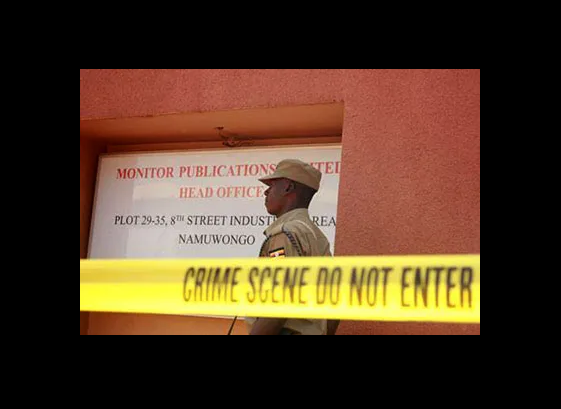
The government has, for the first time since security agencies shut down Nation Media Group (NMG), officially acknowledged that the closure was ordered under a presidentially sanctioned security inquiry, but stopped short of explaining what prompted the action or how long the restrictions will remain in place.
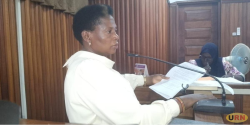
In a brief statement titled, “Security-led Inquiry into the Disruption of Nation Media Group Operations,” ICT and National Guidance Minister Justine Kasule Lumumba said the events of June 28 that disrupted the operations of Nation Media Group were the result of a security investigation instituted by President Yoweri Kaguta Museveni.
According to the minister, the inquiry involves the Uganda People’s Defence Forces (UPDF), the Criminal Investigations Directorate (CID) of the Uganda Police Force, other security agencies and technical experts.
The statement, however, does not disclose the nature of the alleged security concerns, the legal basis for the closure, the scope of the investigations, nor the conditions under which the media house will resume normal operations. Minister Lumumba noted that the government would inform the public once the inquiry had been concluded.
Speaking after issuing the statement, Lumumba defended the government’s record on media and technology, saying the National Resistance Movement government had invested heavily in communications infrastructure and digital technologies that have made it easier for journalists to work. She said today’s journalists are able to gather and transmit information using mobile phones, unlike before the NRM came to power.
Lumumba further said the disruption of NMG’s operations followed the identification of a security concern by the Chief of Defence Forces, Gen. Muhoozi Kainerugaba, and was undertaken in consultation with President Museveni, whose position, she said, had already been reflected in the general’s public communication.
Lumumba also noted that this was not the first time the government had taken action against a media house. She said similar situations had occurred before and were resolved through engagement. She added that the government was allowing the security agencies conducting the inquiry to complete their work before resolving the matter.
Her remarks came after hours of confusion and an unusual back and forth at the Uganda Media Centre.
Journalists had gathered Tuesday morning after the Uganda Media Centre announced that Lumumba would hold a press briefing at 8:20 a.m. on the ministry’s sector priorities and the government’s digital transformation agenda.
Instead, reporters waited for more than three hours without any communication. At around 10:00 a.m., State Minister for National Guidance Odria Alioni Yorke arrived at the Media Centre together with Uganda Media Centre Executive Director Alan Kasujja, who arrived separately.
The two entered the offices briefly before leaving without addressing journalists.
About 30 minutes later, Local Government ministers Balaam Barugahara and Justine Nameere made an unrelated press briefing on the impending Local Council elections.
Around midday, Lumumba finally arrived at the Media Centre accompanied by Odria and Kasujja. After entering the offices, journalists were informed by Public Affairs Assistant David Sserumaga that the minister would shortly come out to “greet” them.
The announcement was met with visible frustration. “We don’t need greetings, we came here for the press conference,” one journalist responded. “At the very least, she should answer our questions on several issues.”
Moments later, Lumumba briefly emerged from the offices, entered her vehicle and left without addressing the waiting journalists or taking questions.
Officials at the Uganda Media Centre later confirmed that the scheduled press conference had been cancelled without explanation. At 1:03 p.m., the Media Centre posted on its platforms that the minister would return at 1:20 p.m. to address the media on “issues of national importance.”
It was only during that later appearance that Lumumba released the brief statement confirming that the shutdown was linked to a security inquiry. The statement ends several days of complete official silence but leaves some questions unanswered.
Since security agencies sealed off Nation Media Group premises on Saturday, neither the Uganda Communications Commission nor any other government agency had publicly explained the reasons for the action.
The communications regulator previously said it was gathering information from other government agencies. Since then, no formal communication setting out the legal basis, duration or conditions of the shutdown.
Instead, much of the public communication has come through social media posts by the Chief of Defence Forces, Gen. Muhoozi Kainerugaba, and his supporters, some of whom hold no official government position.
Prior to lumumba’s press conference, the last indication of possible progress came from journalist Andrew Mwenda, who posted that discussions were underway on reopening the media house. Gen. Muhoozi later confirmed on X that talks would take place.
It is understood that “small talks are happening” between the parties, although no official details have been communicated.
In the absence of a published shutdown order, Nation Media Group has continued operating remotely while its premises remain under military guard. Although the Daily Monitor did not produce a printed newspaper on Monday, it continued publishing news through its website and on Tuesday released a digital edition of the newspaper.
NTV Uganda and Spark TV have also continued broadcasting and publishing content through their digital platforms despite being denied physical access to their premises.
About Post Author