HOUSE CLEANUP AFTER AMONG ERROR! Oboth-Oboth Slashes Speaker’s Cash Mountain, Billions Returned to Watchdogs
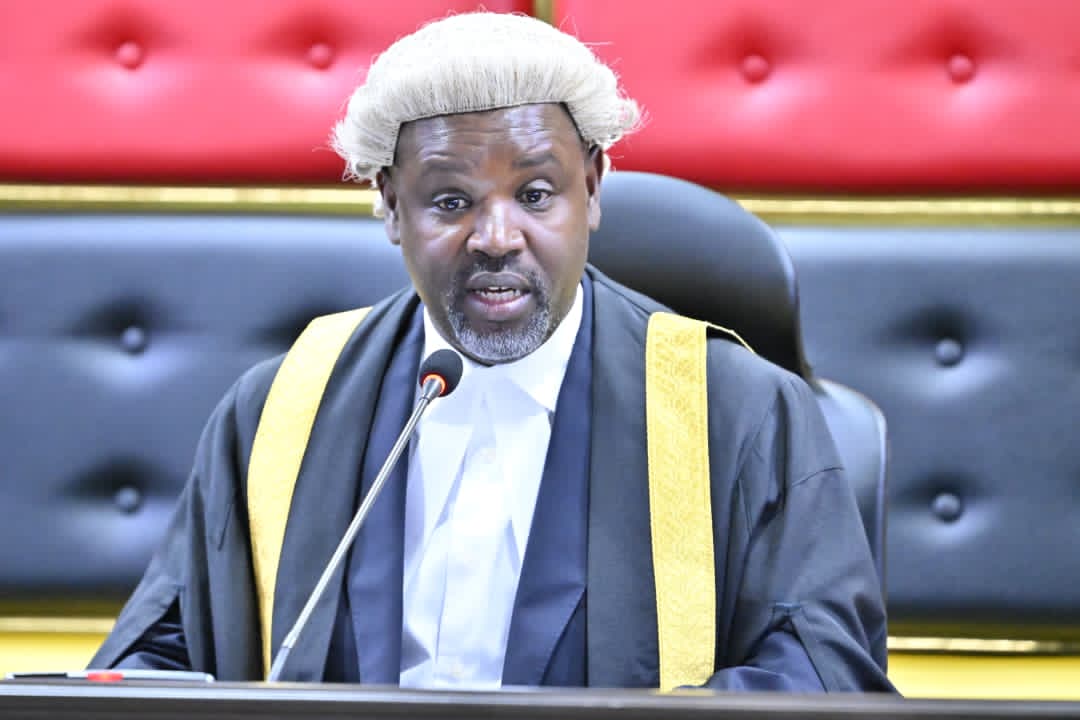
Speaker of Parliament Jacob Marksons Oboth-Oboth has defended his decision to redirect billions of shillings from the Office of the Speaker to parliamentary committees, saying the move is intended to strengthen Parliament’s oversight role and curb corruption.
The reforms come against the backdrop of sustained public criticism of the 11th Parliament, whose leadership faced accusations of extravagant spending, ballooning administrative budgets and weak oversight of the Executive.
Critics argued that Parliament’s growing expenditure, particularly under the Office of the Speaker, contrasted sharply with worsening economic conditions and declining public confidence in the institution.
Speaking on Tuesday while opening a week-long induction seminar for members of the 12th Parliament in Munyonyo, Oboth-Oboth said he directed the Clerk to Parliament to transfer 10 billion shillings from the Office of the Speaker to committee operations after learning that committees lacked adequate funding to execute their constitutional mandate.
“I asked whether the committees were adequately facilitated and was told there was a deficit. The Speaker should not be facilitated to donate money when committees do not have resources to perform their constitutional mandate,” he said.
He argued that adequately funded committees are better positioned to scrutinize government programmes independently and are less vulnerable to inducements from ministries, departments and agencies they are mandated to oversee.
The latest reallocation follows an earlier decision by the Speaker to slash the discretionary budget of the Office of the Speaker from more than Shs24 billion to about Shs3.9 billion.
The reductions mark a significant shift from the spending patterns of the previous Parliament. Budget records show that the Office of the Speaker operated on about 4.4 billion shillings during the final year of the 10th Parliament under Rebecca Kadaga and 3.9 billion shillings in 2021/22 under the late Jacob Oulanyah.
During the 11th Parliament, however, the allocation rose sharply to about 28.5 billion shillings under former Speaker Anita Among, attracting criticism from opposition politicians, civil society organisations and sections of the public over Parliament’s growing administrative expenditure.
Oboth-Oboth said the financial reforms are part of a broader effort to restore public confidence in Parliament and reposition the institution around its core constitutional responsibilities.
He described the agenda as “re-engineering and recalibrating Parliament back to factory settings,” and outlined seven priorities that will guide the 12th Parliament: Zero tolerance for corruption, stronger accountability, evidence-based legislation, people-centred lawmaking, results-based budgeting, a more open Parliament and proactive oversight of government programmes.
Prime Minister Robinah Nabbanja, pledged improved engagement between the Executive and Parliament.
She said she would personally attend the weekly Prime Minister’s Question Time and ensure ministers regularly appear before Parliament to answer questions and present government business.
“I promise that I will present government business and respond to your questions during the Prime Minister’s Question Time. I will also prevail over ministers to attend Parliament this time around in big numbers,” Nabbanja said.
Former Bugweri County MP and senior lawyer Abdu Katuntu urged legislators to uphold Parliament’s oversight role while maintaining constructive engagement with the Executive within the framework of the Constitution.
Drawing on two decades of parliamentary experience, Katuntu said the doctrine of separation of powers is intended to prevent excessive concentration of authority while ensuring accountability across the Executive, Legislature and Judiciary.
He noted that although the three arms of government operate independently, they must cooperate in advancing national development and delivering services to citizens.
The induction seminar is expected to equip members of the 12th Parliament with parliamentary procedures and legislative responsibilities ahead of the constitution of committees and the commencement of full House business.
About Post Author