COURT’S LOVE MISSION! Judges Launch Mediation Blitz Targeting Divorce & Inheritance Rows
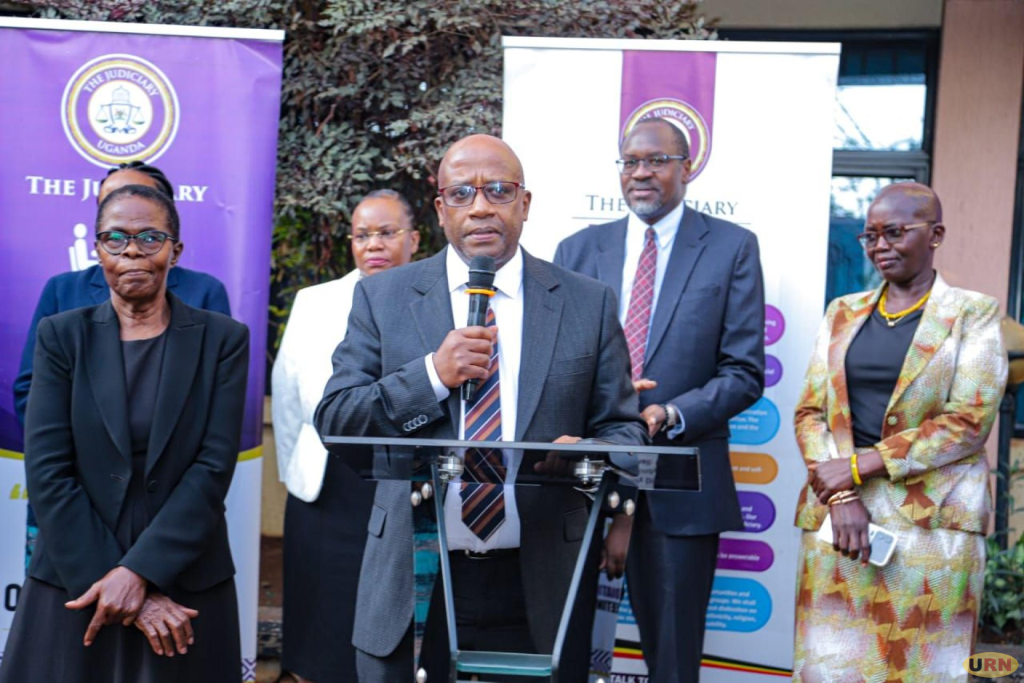
The head of the Family Division of the High Court Justice John Eudes Keitirima
Principal Judge, Lady Justice Jane Frances Abodo has urged judicial officers, lawyers and the public to embrace Alternative Dispute Resolution (ADR) as a faster, less costly and more sustainable approach to justice, as the Judiciary intensifis efforts to promote mediation as the preferred method of resolving family disputes.
Abodo made the call while officiating at the launch of the High Court Family Division’s Case Settlement Fortnight in Kampala, an initiative aimed at increasing the number of disputes resolved through mediation.
She commended the Head of the Family Division, Justice John Eudes Keitirima, judges from other divisions and court staff for supporting the mediation programme, saying the initiative demonstrates the Judiciary’s commitment to improving access to justice.
The Principal Judge said family disputes are often emotional and deeply rooted, making mediation more appropriate than lengthy court battles. She noted that while courts determine legal rights, mediation promotes reconciliation, healing and lasting peace, preventing conflicts from being passed from one generation to another.
Abodo observed that prolonged litigation often leaves families unable to move on with their lives, as some cases last for years and affecting children’s education, access to family resources and relationships among relatives.She urged advocates to advise clients on the benefits of mediation instead of relying solely on litigation and reminded judicial officers that they have a responsibility to explain the advantages of mediation before referring parties to the process.
She has also commended mediators for their professionalism and patience, saying their integrity has contributed significantly to the success of the Family Division’s mediation programme.
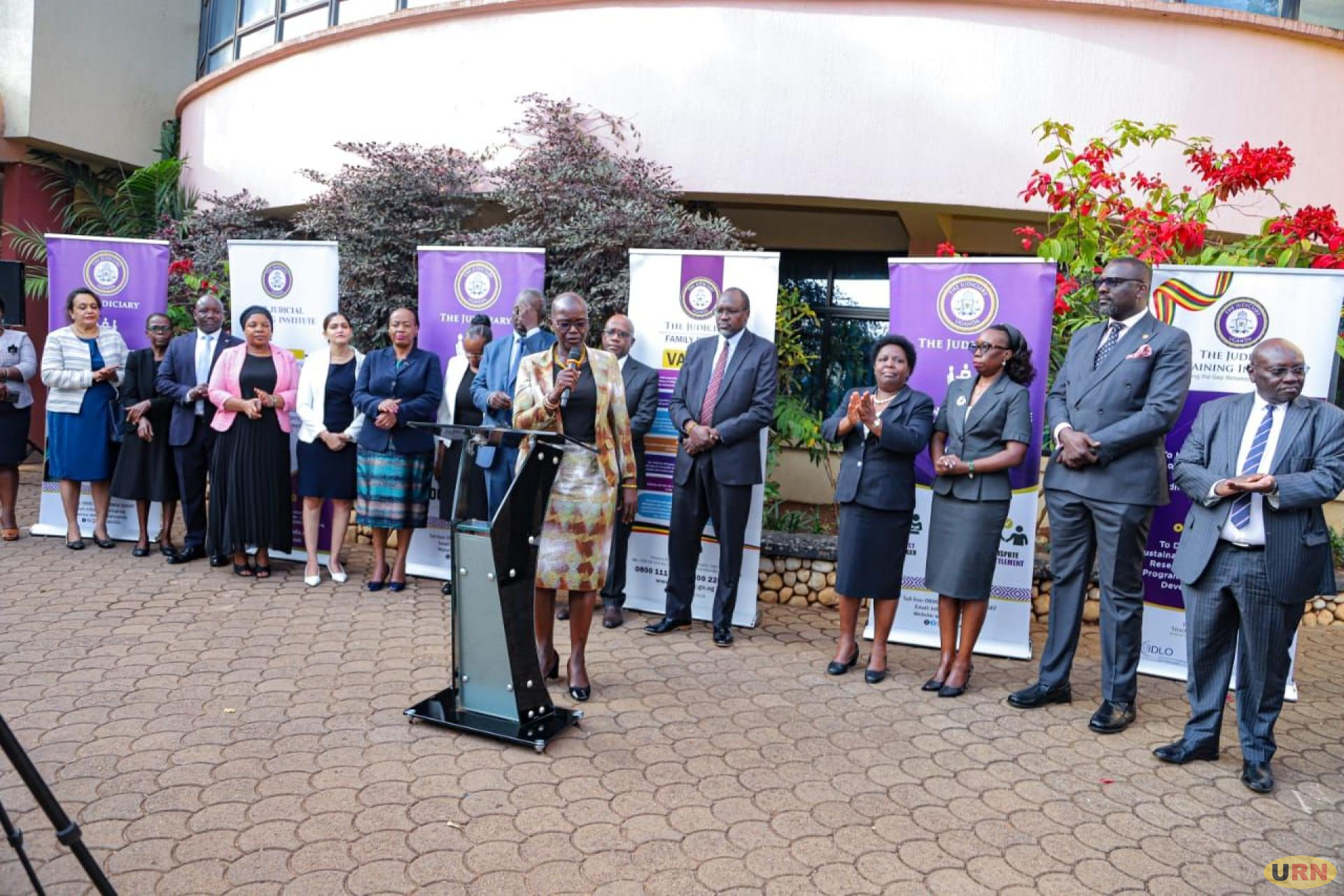
Abodo further appealed to the media to continue educating the public about alternative dispute resolution, noting that the Judiciary cannot rely solely on litigation to serve Uganda’s growing population.
Assistant Registrar Juliet Komugisa, who heads the Mediation Registry at the Family Division, said the current Case Settlement Fortnight began on June 29 and will end on July 10, 2026. The exercise, conducted every quarter, has set aside 400 cases for mediation, targeting to fully settle at least 100 disputes using a team of 10 accredited mediators.
She said during the first week alone, 23 cases were fully settled through mediation while seven were partially resolved, leaving only a few issues for judicial determination. Although about 70 mediation sessions did not end in agreements, Komugisa said they should not be viewed as failures because they helped previously estranged family members begin communicating again.
Komugisa revealed that about 70 percent of cases currently under mediation involve applications to extend letters of administration following amendments to the Succession Act that introduced expiry periods for grants.
She explained that once grants expire, administrators cannot access bank accounts, pay school fees, meet medical expenses or manage estate property, making renewal of applications critical. Many of the disputes arise because family members disagree over whether current administrators have properly managed estates.
She added that about 10 percent of the cases involve divorce proceedings, while the remaining 20 percent relate to fresh succession applications, disputes over estate administration and disagreements regarding wills.
According to Komugisa, the Family Division currently has about 170 backlog cases and intends to prioritise older matters through mediation as part of broader efforts to reduce case backlog and improve access to justice.
The head of the Family Division of the High Court, Justice John Eudes Keitirima said the Family Division had deliberately adopted mediation as its philosophy because family disputes require solutions that preserve relationships rather than deepen divisions.
Quoting an African proverb that “a family is like a tree , it can bend but should not break,” Keitirima said the division believes disputes involving family members are best resolved amicably through mediation. He added that the approach is also consistent with biblical teaching, which encourages reconciliation before resorting to court.
Keitirima thanked the Judiciary’s Mediation Registry and the accredited mediators for supporting the programme, their commitment had enabled the Family Division to emerge among the Judiciary’s best-performing courts in mediation.
Professor Andrew Khauka, the Executive Director of the Judicial Training Institute, attributed the division’s success to strong leadership and commitment despite limited resources. He noted that the Family Division has consistently ranked among the Judiciary’s top-performing courts in mediation and recently received recognition from the Chief Justice for its performance.
Khauka, however, appealed to the Judiciary leadership to strengthen institutional support for ADR, noting that many mediators were still awaiting payment despite continuing to offer their services. He said the Judiciary also needs a stronger governance structure to expand and sustain mediation across the country.
About Post Author