CANCER TIME BOMB! WHO Warns Cases Could Explode to 35 Million a Year by 2050
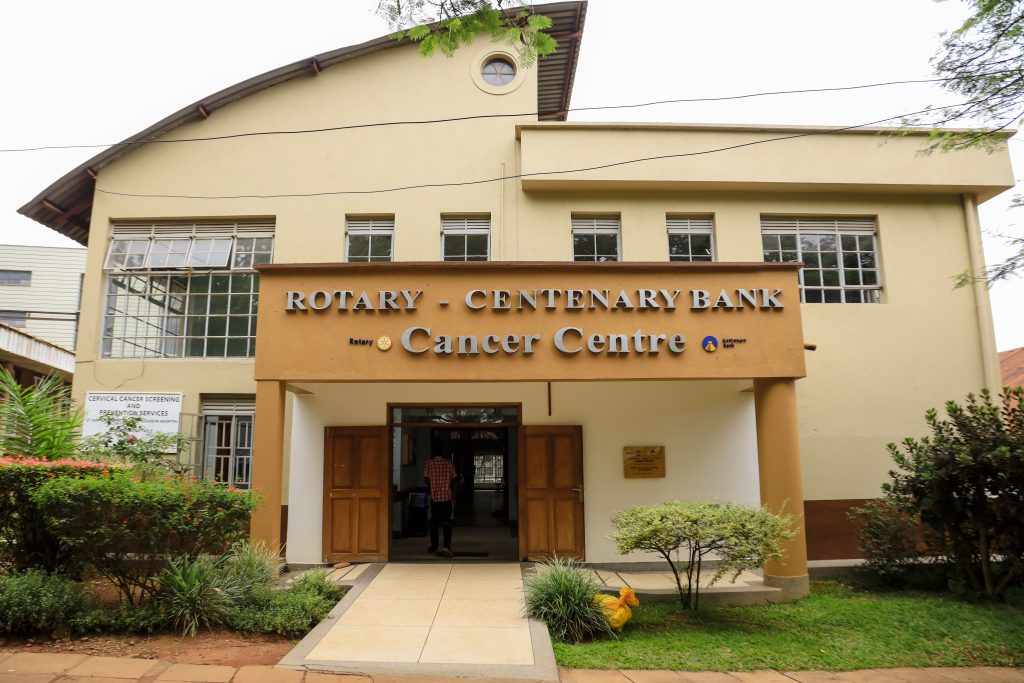
The Rotary-Centenary Bank Cancer Centre at St. Francis Hospital Nsambya
Millions of people around the world continue to bear the physical, emotional and financial burden of cancer, a disease that claims more than 26,000 lives every day, according to a report released on Wednesday by the World Health Organisation.
With an estimated 20.6 million new cancer cases and nearly 10 million deaths each year, cancer remains the world’s second leading cause of death after cardiovascular disease.
The report warns that reversing this trend will require a fundamental shift to a people-centred approach that addresses the health needs and lived experiences of individuals, families and communities affected by cancer. Without urgent action, annual cancer cases are projected to rise to nearly 35 million by 2050.
The WHO Global Status Report on Cancer 2026, produced jointly with the International Agency for Research on Cancer, provides a comprehensive assessment of progress in political commitment, cancer prevention, including tobacco control and vaccination programmes, as well as investment in diagnosis and treatment.
However, the report highlights persistent and widening inequalities in access to prevention, early diagnosis, treatment and supportive care, leaving millions without the services they need. It notes that while 87 per cent of women diagnosed with breast cancer survive for at least five years in high-income countries, the figure drops to about 42 per cent in low-income countries.
Fewer than one in three countries currently include cancer care within their universal health coverage packages.
“Cancer is a deeply personal disease that touches nearly all of us. But whether a person survives cancer should never depend on where they were born or what they earn,” said Tedros Adhanom Ghebreyesus. “The inequities documented in this report are not inevitable; they are the consequence of choices, and they can be reversed through stronger and unified action.”
The report notes that most people will be affected by cancer at some point in their lives, either through their own diagnosis or that of a close family member. Beyond its health consequences, cancer remains one of the most financially and socially devastating challenges households can face.
WHO’s first-ever survey of people affected by cancer found that at least 45% experience financial hardship, more than half report mental health challenges, and nearly all caregivers experience significant strain, including unpaid caregiving responsibilities and social isolation.
The report also shows that the global cancer burden varies significantly by region. In 2024, Asia accounted for the largest share of cases, representing an estimated 50.7 per cent of all new diagnoses and 56.5 per cent of cancer deaths, largely reflecting its population size.
Europe, meanwhile, carried a disproportionately high burden, accounting for 21 per cent of global cancer cases and 20 per cent of deaths despite having only about 9 per cent of the world’s population. In contrast, many countries in Africa and parts of Asia recorded lower cancer incidence but disproportionately higher mortality rates.
Lung cancer remains the leading cause of cancer-related deaths worldwide. Among men, lung, prostate and colorectal cancers are the most commonly diagnosed, while breast, lung and colorectal cancers account for a substantial share of the disease burden among women.
Nearly four in ten cancer cases globally are linked to preventable risk factors, including infections such as human papillomavirus (HPV), hepatitis B and C, and Helicobacter pylori, as well as tobacco use, alcohol consumption, excess body weight and physical inactivity, underscoring the critical importance of prevention.
“While we are seeing reductions in some cancer rates in countries that have implemented prevention policies, progress has been too slow,” said Elisabete Weiderpass. “The cancer profile is evolving, increasingly driven by rising rates of obesity, physical inactivity, unhealthy diets and air pollution. Cancer prevention must remain a political priority.”
Despite the challenges, the report points to notable progress in several areas. Global tobacco use has declined by 27 per cent since 2010, contributing to reductions in lung cancer incidence and mortality in some regions. Infection-related cancers are also decreasing, driven by expanded vaccination programmes, improved water, sanitation and hygiene (WASH), and stronger infection prevention and control measures.
Political commitment has also strengthened. The report shows that 82 per cent of countries now have national cancer control plans, up from 50 per cent in 2010. In high-income countries, early detection programmes identify most breast cancer cases at treatable stages, while 74 per cent of women have been screened for cervical cancer. Scientific innovation is also advancing rapidly, with registered clinical trials increasing at an average annual rate of 7.3 per cent between 2005 and 2021.
However, the report cautions that these gains are not translating into life-saving outcomes quickly enough. Essential cancer medicines remain out of reach for many people, with the availability of the 20 priority cancer medicines ranging from just 9 per cent to 54 per cent in low- and lower-middle-income countries, compared with 68 per cent to 94 per cent in high-income countries. According to WHO, the consequences of these disparities continue to be borne most heavily by people living with cancer and their families.
GOT A HOT STORY? LET US KNOW!
Got breaking news, explosive secrets, or hard evidence?
Email us: redpeppertips@gmail.com
We accept tips, documents, videos, photos, and recordings—the more evidence you have, the better.
CONFIDENTIALITY IS OUR TOP PRIORITY. SOURCES ARE ALWAYS PROTECTED!
About Post Author