RIVER RWIZI IN PERIL! 60% of Catchment Degraded as Authorities Turn to Marathon to Save Mbarara’s Lifeline
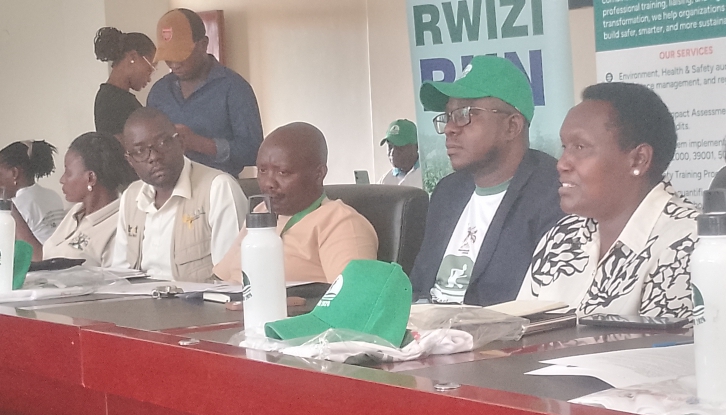
Mbarara City RCC, team leader of Rwizi Run Emory and other guests launching the Rwizi Run 2026
MBARARA — The race to rescue River Rwizi has taken a sporting twist, with the Ministry of Water and Environment and its partners turning to a marathon as part of a renewed campaign to restore the heavily degraded catchment.
Organisers of the River Rwizi Run 2026 say more than 60% of the river’s catchment remains degraded, despite years of interventions aimed at restoring the waterway that serves Mbarara City and several districts in southwestern Uganda.
The fifth edition of the River Rwizi Run was officially launched on Tuesday, August 18, with the main event scheduled for September 5, 2026, in Mbarara City.
The run, held under the theme “Stakeholders Championing the Restoration of River Rwizi,” is intended to use sport to mobilise communities, raise awareness and generate funding for restoration activities.
Stephen Emor, the River Rwizi Run team leader, said although several interventions have been undertaken, the scale of degradation across the catchment remains alarming.
He said large sections of wetlands, forests and riverbanks are still under pressure and require urgent restoration.
Waste management is also a major concern, with some communities lacking adequate systems for disposing of solid waste.
Deforestation, illegal mining and encroachment on wetlands and river buffer zones have further complicated efforts to restore the catchment.
The river is also facing growing pressure from climate change, with reduced rainfall, prolonged dry spells and increasing water scarcity becoming more common across the cattle corridor.
Organisers say the shrinking and degradation of the Rwizi catchment threatens not only the river itself but also the livelihoods of communities that depend on it for agriculture, livestock, domestic use and other economic activities.
River Rwizi is a critical water source for Mbarara City and districts including Mbarara, Lyantonde, Kiruhura and Isingiro.
This year’s Rwizi Run, however, is expected to go beyond simply putting runners on the streets.
Emor said funds raised from the event will be channelled directly into selected restoration activities, including interventions at mining hotspots in Buhweju, solid waste management programmes in Mbarara City and livelihood initiatives for communities living within the river buffer zone.
The organisers say the idea behind the run is to turn public enthusiasm around sport into practical action on environmental conservation.
Since its inception, the event has grown from a local awareness initiative into a wider campaign for the restoration of River Rwizi.
It has also been officially included on the Uganda Athletics Federation calendar, giving the event recognition as both a sporting and environmental platform.
The 2026 edition has attracted a number of partners, including Abahumuza, Nile Breweries, TerraVerse, ACODE and the National Water and Sewerage Corporation, among others.
But as organisers mobilise runners and sponsors, city authorities are also issuing a stern warning to people accused of degrading the catchment.
Mbarara City Resident City Commissioner Catheline Kamwine warned individuals involved in wetland encroachment and illegal dumping that enforcement action would follow.
She particularly targeted people allegedly paying others to facilitate dumping and filling of wetlands.
“For those who have been paying people to allow them dump in the wetland or in River Rwizi, time has come. You are going to clean our wetlands using your own resources,” Kamwine warned.
She said those who have poured soil into wetlands would be required to remove it, while structures constructed in protected wetland areas or river buffer zones could be demolished.
“We shall restore our wetlands, whether you built in the wetland or in the river buffer zones, we shall put that house down as long as it is in the wetland,” she said.
Kamwine urged communities to protect riverbanks, stop dumping waste and take responsibility for maintaining the wider Rwizi catchment.
The authorities say saving River Rwizi cannot be left to government agencies alone.
With more than half of its catchment reportedly degraded, the restoration campaign will require communities, businesses, local authorities and environmental organisations to work together.
For organisers, the September marathon is therefore not simply about medals, fitness and competition—it is a fundraising and mobilisation drive aimed at turning the River Rwizi restoration campaign into a mass movement.
The ultimate goal is to restore the river’s ecological health and secure the water source for the millions of people, farmers, livestock keepers and businesses whose livelihoods depend on it.
GOT A HOT STORY? LET US KNOW!
Got breaking news, explosive secrets, or hard evidence?
Email us: redpeppertips@gmail.com
We accept tips, documents, videos, photos, and recordings—the more evidence you have, the better.
CONFIDENTIALITY IS OUR TOP PRIORITY. SOURCES ARE ALWAYS PROTECTED!
About Post Author