MMU VARSITY PROBE! Sh31.8Bn Land “Missing”, Sh814M Staff Arrears & Sh15.5Bn Contract Raise Red Flags
By Our Reporter
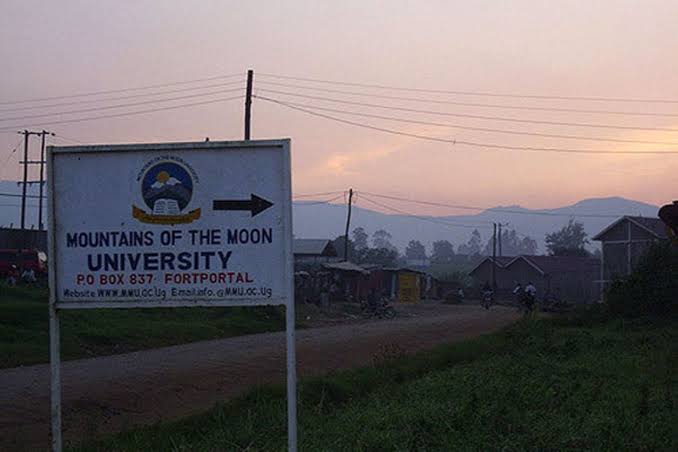
Mountains of the Moon University (MMU) has come under the spotlight after the Auditor General raised a series of financial, administrative and academic concerns, including unrecorded land valued at Sh31.80 billion, employee arrears of Sh814.29 million and a Sh15.49 billion multi-year contract that was awarded without approval from Parliament.
The concerns are contained in the Auditor General’s report for the year ended December 2025, which points to weaknesses in the university’s human capital management, asset records, contracting, strategic planning, academic staffing, research and accreditation of programmes.
According to the audit, the university had accumulated employee arrears amounting to Sh814.29 million, of which Sh721.79 million related to prior years.
The Auditor General warned that the outstanding arrears exposed the university to the risk of litigation, raising concerns about the institution’s ability to meet its obligations to staff.
The audit also uncovered a major gap in the university’s asset management records involving land at Kyembogo.
Land comprised in Plot 11 Kyembogo, Block 79, valued at Sh31.80 billion, had not been recorded in the university’s asset register.
The omission means that an asset carrying a multibillion-shilling value was outside the university’s official asset register at the time of the audit, prompting the Auditor General to flag the matter.
The university was also found to have awarded a multi-year contract worth Sh15.49 billion without authority or approval from Parliament.
The audit finding raises questions about compliance with the required approval processes for major multi-year financial commitments.
SH64.54BN STRATEGIC PLAN FUNDING GAP
The Auditor General further found a significant funding gap in the implementation of the university’s Strategic Plan.
While the Strategic Plan had a cost estimate of Sh196 billion, actual funding over the implementation period amounted to only Sh131.46 billion.
This created a funding variance of Sh64.54 billion, equivalent to 32.9 per cent of the planned requirement.
The funding shortfall was reflected in the university’s ability to achieve the targets set under the Strategic Plan.
Out of 128 target outputs, only 35, representing 27.3 per cent, were fully achieved.
Another 40 outputs, representing 31.25 per cent, were only partially achieved, while 53 outputs, equivalent to 41.4 per cent, were not achieved at all.
The figures mean that less than a third of the university’s targeted outputs were fully delivered, while more than four in every 10 targets were not achieved during the period reviewed.
The audit also examined implementation against funded outputs.
It found that 35 outputs worth Sh7.51 billion were fully implemented, five outputs worth Sh305.41 million were partially implemented and four outputs worth Sh30.84 million were not implemented.
REVENUE TARGET MISSED
The university also fell short of its target for non-tax revenue collections.
It had budgeted to collect Sh5.90 billion in non-tax revenue during the year but managed to collect Sh5.66 billion.
The Auditor General reported the performance at 85.9 per cent.
On expenditure, the university received total warrants amounting to Sh42.11 billion during the financial year and spent Sh39.95 billion, representing an absorption level of 95 per cent.
Despite the relatively high absorption of the funds received, the audit raised wider concerns about the institution’s performance against planned outputs and strategic targets.
13 PROGRAMMES HAD NO STUDENTS
The university’s academic programmes also came under scrutiny.
The Auditor General found that 13 accredited programmes did not attract any student enrolment during the year.
At the same time, two programmes admitted a total of 54 students beyond the maximum limits approved by the National Council for Higher Education (NCHE).
The findings raise questions about programme viability, student recruitment and compliance with approved enrolment limits.
The audit further found that the university had 532 approved teaching positions, but only 312 had been filled.
This left 225 positions vacant, representing 41.4 per cent of the approved teaching establishment.
The staffing gap comes at a time when universities are under increasing pressure to maintain teaching quality, conduct research and expand academic programmes.
RESEARCH PARTICIPATION LOW
The Auditor General also raised concerns over the participation of academic staff in research activities.
Across eight universities reviewed, the audit found low participation in research, with Makerere University and Mbarara University being the exceptions.
At Mountains of the Moon University, only 66 out of 139 academic staff had published research.
This represented 47 per cent participation, meaning more than half of the academic staff covered by the assessment had not published research.
The finding places further focus on the university’s research output and its capacity to meet the expectations associated with higher education institutions.
EXPIRED ACCREDITATION CONTROVERSY
Perhaps one of the most significant academic concerns was the continued admission of students to programmes whose accreditations had expired.
The Auditor General found that Mbarara, Busitema, Kabale, Muni, Mountains of the Moon, Lira and Soroti universities continued admitting students to 64 academic programmes with expired accreditations.
The audit attributed the situation to weak enforcement by NCHE and inadequate internal tracking systems within the affected universities.
The finding raises concerns about whether students were being admitted into programmes whose accreditation status had not been maintained in accordance with regulatory requirements.
For universities, accreditation is critical because it provides assurance that academic programmes meet required standards and that qualifications awarded to students are recognised within the regulatory framework.
At Mountains of the Moon University, the combination of vacant teaching positions, low research participation, programmes with no enrolment and continued admission to programmes with expired accreditation paints a picture of an institution facing significant academic and administrative challenges.
The financial findings add another layer to the concerns, with the Auditor General flagging Sh814.29 million in employee arrears, the unrecorded Sh31.80 billion Kyembogo land and the Sh15.49 billion multi-year contract awarded without Parliamentary approval.
The Strategic Plan performance also remains a major concern, with 53 of 128 target outputs not achieved and another 40 only partially achieved.
The audit findings therefore put MMU’s financial controls, asset management, staffing, academic planning, research performance and compliance with accreditation requirements firmly under scrutiny as the university continues its operations.
The findings contained in the Auditor General’s report are expected to require attention from the university management, its governing structures and relevant Government oversight institutions.
GOT A HOT STORY? LET US KNOW!
Got breaking news, explosive secrets, or hard evidence?
Email us: redpeppertips@gmail.com
We accept tips, documents, videos, photos, and recordings—the more evidence you have, the better.
CONFIDENTIALITY IS OUR TOP PRIORITY. SOURCES ARE ALWAYS PROTECTED!
About Post Author