UNAIDS IN CRISIS! Byanyima-Led HIV Agency Faces Shake-Up, Massive Job Cuts & Possible Closure Amid Whistleblower Claims
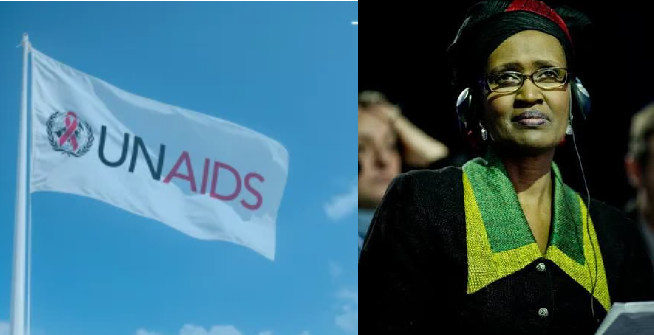
Uganda’s HIV response could face fresh uncertainty as the United Nations pushes sweeping reforms at UNAIDS, the agency headed by Ugandan Winnie Byanyima, amid funding pressures, massive staff cuts and explosive allegations of financial mismanagement.
The agency, established in 1996 to coordinate the global fight against HIV/AIDS, is undergoing a major restructuring that could eventually lead to the closure of its Secretariat in its current form.
The shake-up comes as separate allegations of financial misconduct, whistleblower retaliation and mishandling of a former employee’s medical and employment claims threaten to intensify scrutiny of the agency. The claims remain unproven and require independent investigation.
55% STAFF CUT!
Under a restructuring model approved in June 2025, UNAIDS is reducing Secretariat staff from 661 to 294 positions — a cut of about 55 per cent.
Its country presence is also being reduced from 85 countries to 54, with a lighter footprint planned in another 40 countries. The agency is shifting technical expertise to regional hubs, including Nairobi and Johannesburg, while its Geneva presence is being cut by more than 80 per cent.
UN Secretary-General António Guterres had proposed winding down UNAIDS by the end of 2026. However, a Programme Coordinating Board working group rejected that proposal and recommended a leaner agency focused on leadership, coordination, accountability, advocacy and community engagement.
The board is expected to consider the recommendations at a special session on October 26, 2026.
Further reforms, including transferring some responsibilities to national governments and other UN agencies, are expected to be considered in June 2027.
UGANDA’S HIV RESPONSE AT STAKE
The restructuring has raised concerns about the future of UNAIDS support to Uganda, where the agency has helped the Uganda AIDS Commission plan, cost and finance HIV interventions.
A 2021 technical-support report said UNAIDS helped update the costs of HIV prevention, testing and counselling programmes and supported preparations for Uganda’s National Strategic Plan for 2020–2025.
The work also informed preparations for a Global Fund funding request, which had an allocation of US$289 million at the time.
UNAIDS has also reported that Uganda increased government budget allocations to HIV and universal health coverage by US$165.4 million for 2025–2026, including US$32.5 million for antiretroviral medicines.
Health experts and civil society representatives warn that transferring responsibilities before alternative arrangements are ready could disrupt services, weaken accountability and leave vulnerable communities exposed.
MILLIONS ‘LOST’?
Adding to the pressure are allegations by a whistleblower that UNAIDS improperly applied its operating rules, allegedly resulting in financial losses running into millions of dollars.
The whistleblower also alleges that she faced retaliation after raising concerns about financial management.
According to her account, she was hospitalised following suicide attempts and was eventually dismissed while medically incapacitated. She claims the termination affected her access to health insurance and other support during treatment.
The dispute reportedly also involves a disability pension application and the recognition of an alleged work-related illness.
The whistleblower is demanding an independent investigation into the alleged financial losses, her dismissal and the handling of her medical and employment-related claims.
The allegations have not been independently established, and no conclusion of wrongdoing should be drawn before the relevant investigations.
DUTCH MPs TO PROBE
The controversy is expected to come under scrutiny when Dutch MPs meet on November 5, 2026, to consider alleged misconduct at UNAIDS.
Dutch parliamentary records indicate that the government submitted a response to parliamentary questions on the matter on June 18, 2026.
The debate could bring renewed attention to financial oversight, staff welfare and whistleblower protection as the agency undergoes its transformation.
However, the parliamentary proceedings do not in themselves establish the truth of the allegations.
COMMUNITIES FEAR BEING LEFT OUT
At the World Health Summit in Berlin, Germany, health experts and civil society representatives warned that UNAIDS reforms must not weaken community participation or disrupt HIV services.
Fionula Murphy, Associate Director of Advocacy at Frontline AIDS and co-facilitator of the reform working group, cautioned against transferring responsibilities before the receiving institutions, resources and accountability arrangements are clear.
Christine Stegling, UNAIDS Deputy Executive Director for Policy, Advocacy and Knowledge, said the success of reform should be judged by its impact in countries, not simply by how much money is saved.
Nduku Kilonzo, former chief executive of Kenya’s National AIDS Control Council, warned that poorly planned changes could increase costs and administrative burdens for countries coordinating multiple funding partners.
The panelists also stressed that governments must not sideline marginalised communities, whose organisations often help people overcome stigma and other barriers to healthcare.
HIGH-STAKES DECISIONS
The global HIV response continues to face major challenges, with the panel citing an estimated 1.3 million new infections annually and more than half a million AIDS-related deaths in the previous year.
For Uganda, the central question is whether the restructuring will preserve the technical support, coordination and accountability needed to sustain progress against HIV/AIDS.
The UNAIDS board’s decisions could shape the agency’s future as countries work towards ending AIDS as a public health threat by 2030.
GOT A HOT STORY? LET US KNOW!
Got breaking news, explosive secrets, or hard evidence?
Email us: redpeppertips@gmail.com
We accept tips, documents, videos, photos, and recordings—the more evidence you have, the better.
CONFIDENTIALITY IS OUR TOP PRIORITY. SOURCES ARE ALWAYS PROTECTED!
About Post Author