MoH HYGIENE REPORT SHOCKER! 90% Of Ugandans Fail Handwashing Test As 33 Children Die Daily From Diarrhoea
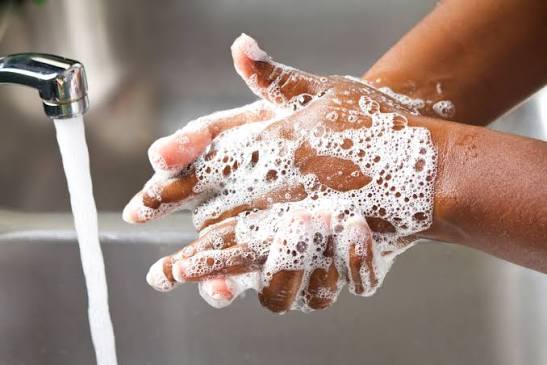
A new report released by the Ministry of Health shows, lives of thirty-three children under the age of five are lost every day due to diarrheal diseases and yet such deaths can be prevented with simple practices such as hand washing.
The report, ‘The cost of inaction on Water, Sanitation and Hygiene’, released at the ongoing Annual Health Promotion and Disease Prevention conference in Kampala shows that only about ten percent of Ugandans practice proper hand washing as prescribed by the World Health Organization to always use soap and clean water after visiting the washrooms and before touching or eating food.
Sharing results of the report, Dr Herbert Nabaasa, the Commissioner for Health Services in charge of Environmental Health said while Ugandans are aware that handing washing is important, 90% still cannot do it, contributing to a high burden of preventable diseases currently estimated at 75 percent.
The ministry quantified implications and consequences estimating how much the country loses and how much it would gain with increased access to safe water and adoption of key hygiene practices. They estimate the country risks losing up to twenty-seven billion dollars in the next ten years if nothing is done about the harm to health caused by the poor state of Water, Sanitation and Hygiene (WASH) facilities in the country.
Nabaasa further reveals that their analysis found over 90 percent of the households do not have consistent access to safe water, a realty being made worse by rapid urbanization where sanitation facilities are not increasing at a matching rate.
Generally, the proportion of the population using safely managed drinking water services in urban, rural, and at national levels was 80.5%, 81%, and 80.8% respectively. About 81% of the households had access to an improved source of drinking water while 18.9% were using unimproved sources of drinking water. In urban areas, 86.6% of households had access to an improved water source compared to 77.4% in rural areas.
Boreholes were found to be the main source of drinking water for 25% of households in urban areas and 48.9% in rural areas with a national average of 39.2%.
Shortly after presenting this report, Dr Diana Atwine, the Permanent Secretary in the Ministry expressed frustration that they have to push people out of their houses to clean their surroundings with the recently launched national cleaning day conducted every last Saturday of the month.
She said, in Kampala, they have established over fifty percent of domestic waste generated is not collected and disposed of promptly and now with the national cleaning days, people have resorted to piling it on the roadsides at the end of the month for government to collect it for them.
Atwine says if such bad practices and attitude don’t change, reducing the disease burden will be difficult and government will continue investing heavily in buying medicines and yet this expenditure can be avoided with more involvement of communities in prevention efforts.
Meanwhile, in this report which the ministry compiled together with researchers at the Economic Policy Research Center, treatment costs for cases of water-borne diseases such as cholera, typhoid, dysentery, and diarrhea were estimated at 1.658 trillion shillings.On the other hand, the benefits of acting by increasing funding for WASH investments over the next five years to levels that reduce the disease burden by 80% would translate into savings on treatment costs by both government and households worth 1.724 trillion shillings.
The researchers recommend ringfencing money for WASH interventions in key affected sectors such health and in the education sector.
GOT A HOT STORY? LET US KNOW!
Got breaking news, explosive secrets, or hard evidence?
Email us: redpeppertips@gmail.com
We accept tips, documents, videos, photos, and recordings—the more evidence you have, the better.
CONFIDENTIALITY IS OUR TOP PRIORITY. SOURCES ARE ALWAYS PROTECTED!
About Post Author