BATTLE TO KICKOUT SENYONYI! Speaker Oboth Orders 45-Day Review Of LoP Election Bill
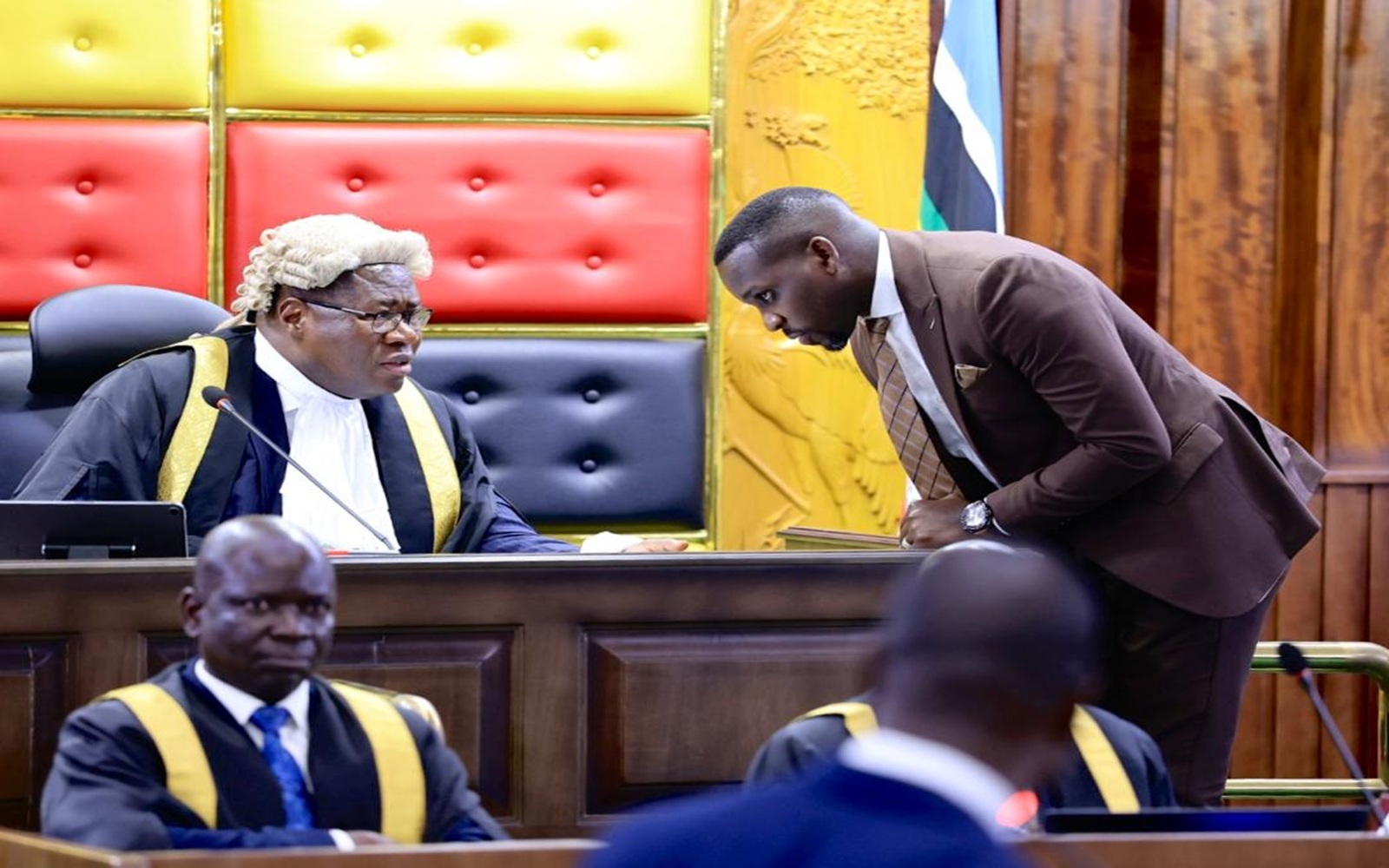
Speaker of Parliament Jacob Marksons Oboth-Oboth has referred a proposed law seeking to overhaul the election and accountability of the Leader of Opposition (LoP) to the Committee on Legal and Parliamentary Affairs, giving it 45 days to examine the Bill and report back to the House.
The referral of the Administration of Parliament (Amendment) Bill, 2026, follows a dispute over whether the proposed legislation has met the financial and constitutional requirements for consideration as a Private Member’s Bill.
The controversy centres on the absence of a Certificate of Financial Implications from the Minister of Finance, Planning and Economic Development, as well as questions about whether the proposed amendments could trigger restrictions under Article 93 of the Constitution.
Moving the Bill during Wednesday’s plenary sitting, its sponsor, Buyaga West County MP Denis Namara, argued that the Finance Minister had failed to respond to a request for the certificate within the statutory 60-day period.
Namara told Parliament that the Clerk to Parliament submitted the request to the Ministry of Finance on August 12, 2026, but no response had been received by October 11, when the statutory deadline expired.
He invoked Section 74(4) of the Public Finance Management Act, 2015, arguing that the certificate should be considered issued by operation of the law. However, the relevant provision is Section 76(4), which provides that a Certificate of Financial Implications is deemed issued if the Minister does not respond within 60 days of receiving a request.
The provision is intended to prevent administrative delays from holding up the legislative process, particularly where the responsible minister fails to act within the prescribed period.
But the argument did not resolve the separate constitutional question raised by James Kakooza, the Older Persons Representative for Central Region, who asked the Attorney General to clarify whether the Bill could lawfully proceed as a Private Member’s Bill under Article 93 of the Constitution.
Article 93 restricts Parliament from proceeding with certain Bills or motions introduced outside government sponsorship where they seek to impose taxation, increase charges on public funds, authorise specified withdrawals from public funds or provide for the composition or remission of government debt.
The concern is whether the proposed changes to the administration and financing of the Leader of the Opposition’s office would create or increase expenditure obligations on public funds.
The existence of a Certificate of Financial Implications, whether issued expressly or deemed issued under the Public Finance Management Act, does not automatically resolve compliance with Article 93. The two provisions address separate legal requirements, which the committee will now have to examine.
Oboth-Oboth declined to put the Bill to a second reading, clarifying that Parliament had not yet reached that stage of consideration. He explained that the Bill had only been presented for first reading and that the committee would investigate the outstanding legal and financial questions before submitting its report to the House.
The committee is expected to seek submissions from the Finance Minister and the Attorney General to establish whether the proposed legislation satisfies the relevant statutory and constitutional requirements.
Beyond the procedural dispute, the Bill seeks to fundamentally change how Uganda’s Leader of the Opposition is selected, supervised and removed. Under Section 8 of the existing Administration of Parliament Act, the Leader of the Opposition is elected by the opposition political party with the greatest numerical strength in Parliament. This effectively gives the largest opposition party the authority to determine who occupies the position.
Namara’s proposed amendments seek to replace this arrangement with an electoral process involving all opposition MPs, including legislators from smaller opposition parties and independent members.
The Bill also proposes requiring opposition MPs to approve the Shadow Cabinet, widening consultations in the appointment of opposition representatives to parliamentary leadership positions and introducing additional grounds for removing the Leader of the Opposition.
The proposed changes would therefore extend beyond the selection of the opposition leader to reshape the internal governance, accountability and organisation of the parliamentary opposition.
The office of the Leader of the Opposition is constitutionally recognised under Article 82A and plays a central role in Uganda’s multiparty parliamentary system. The officeholder leads scrutiny of government policies, coordinates the Shadow Cabinet and provides an alternative voice on legislation, public expenditure and national policy.
The proposed reforms could consequently have far-reaching implications for political party autonomy, opposition cohesion and the effectiveness of parliamentary oversight.
In particular, the proposal to involve all opposition MPs in electing the officeholder raises questions about the balance between broader participation within Parliament and the organisational independence of political parties, especially the largest opposition party, which has traditionally controlled the selection process.
Namara secured parliamentary permission to introduce the Bill in July 2026. It was subsequently published in the Uganda Gazette on October 23, 2026, paving the way for its formal introduction in Parliament.
The 45-day committee review will provide an opportunity to examine the proposed reforms, obtain legal and financial guidance and assess their implications for parliamentary representation and opposition accountability.
GOT A HOT STORY? BLOW THE WHISTLE!
Have breaking news, explosive revelations, juicy leads or evidence of wrongdoing?
WE WANT TO HEAR FROM YOU!
Send your tips, documents, videos, photos and audio recordings to:
redpeppertips@gmail.com
Whether it’s corruption, scandals, abuse of office, injustice or stories others are afraid to tell, help us bring the truth to light.
SOURCES ARE PROTECTED.
CONFIDENTIALITY IS OUR NO.1 PRIORITY!
About Post Author