BEDROOM BOOM! Inside Uganda’s Explosive Black Market for Male “Power” Boosters

In the shadows of Uganda’s booming hustle economy, a different kind of trade is quietly exploding—one that promises not just confidence, but outright transformation between the sheets. From flashy online dealers to backstreet pharmacies, the country is witnessing a surge in the business of male sexual enhancement, where bold claims, quick fixes, and hidden dangers collide.
At the centre of this high-stakes game is Joel Obore, a smooth-talking dealer who has mastered the art of persuasion. For Shs150,000, Obore doesn’t just sell a product—he sells hope, confidence, and what he boldly markets as a “permanent” solution.
His weapon of choice? An Asia-imported product known as AlphaMax M+ Coffee.
But this is no ordinary sales pitch. Obore’s approach is relentless, calculated, and deeply psychological. He doesn’t simply suggest improvement—he diagnoses a problem, whether real or imagined, and then positions his product as the only way out.
“A man is not supposed to perform like that,” Obore declares with conviction, painting a picture of what he calls “short-circuit” bedroom performances. “There must be an issue… infection, cholesterol, or even blockages of the kidneys.”
In one breath, he transforms insecurity into urgency. In the next, he offers a miracle cure.
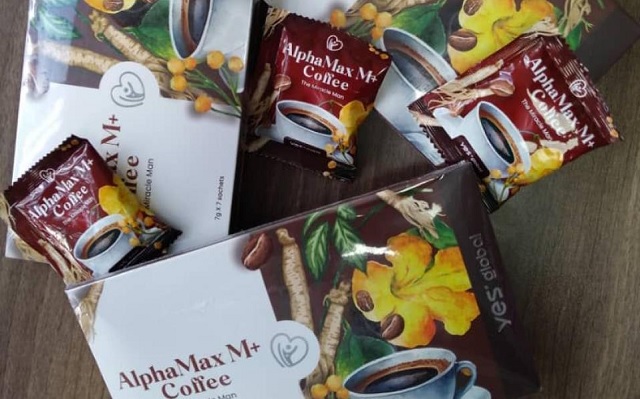
Unlike common quick-fix pills such as Wonder Night, Obore elevates his pitch into something far more dramatic. He claims AlphaMax M+ Coffee clears cholesterol, fixes kidney-related complications, and even boosts sperm count—an all-in-one solution wrapped in slick marketing.
And yet, despite the premium price tag, there are no guarantees. No refunds. No safety net.
When pressed about accountability, Obore boasts of an almost perfect record spanning three years—except for one bizarre case. “There was only one scenario,” he says. “It was witchcraft. And he himself confessed it to us.”
It’s a claim that perfectly captures the strange mix of science, belief, and desperation driving this underground industry.
But Obore is just one face of a much larger, deeply layered market.
In places like Kyebando, the trade has evolved into a tiered system designed to capture every man—rich or poor, desperate or curious. Walk into a small outlet like Pumungu Pharmacy, and the contrast is striking.
Here, the high-priced miracle coffee gives way to cheaper, fast-acting alternatives.
The most sought-after option is Penugra, a tablet containing sildenafil—the same active ingredient found in Viagra. At just Shs1,500 per pill, it has become the go-to solution for men seeking instant results before “the act.” For those willing to spend more, upgraded versions priced at Shs5,000 and Shs8,000 sit neatly on the shelves.
According to a pharmacy attendant who requested anonymity, these products are cleared by the National Drug Authority. But the reality on the ground tells a more complicated story. Most buyers walk in, pay, and walk out—no prescriptions, no consultations, no medical guidance.
It is convenience without caution.
While the market thrives on promises of virility and confidence, medical professionals are increasingly alarmed by what they are seeing behind clinic doors.
Frank Rubabinda Asiimwe, a consultant urologist and President of the Uganda Medical Association, describes the situation as a growing crisis. In his practice, cases of sexual dysfunction have surged dramatically.
Where he once handled one or two cases a week, he now sees nearly two patients every single day.
The cause, he explains, is not always physical—but psychological.
“People are watching too many sexually explicit things,” Dr. Asiimwe reveals. “They think the way people perform in video clips is normal, but that is overrated.”
This “digital baseline,” as he calls it, is distorting expectations and pushing otherwise healthy men into a cycle of anxiety and self-doubt. In an attempt to measure up to unrealistic standards, many turn to enhancement products—often without understanding what they are putting into their bodies.
And that is where the real danger begins.
Behind the labels of “natural” teas, herbal roots, and energy drinks lies a hidden truth. Many of these products are not what they claim to be. Instead, they are “hybrids”—a dangerous mix of traditional ingredients secretly spiked with powerful pharmaceutical compounds.
To combat this growing threat, the Uganda National Bureau of Standards has turned to advanced technology.
Testing Manager Aziz Mukota explains that they now use Liquid Chromatography-Tandem Mass Spectrometry, a sophisticated method capable of detecting hidden substances in products marketed as natural.
“We use this to identify undeclared active pharmaceutical ingredients like Sildenafil or Tadalafil in products labelled as ‘all-natural’ drinks or herbs,” he says.
What they are finding is deeply concerning.
These hidden chemicals can interact unpredictably within the body, creating what experts describe as a “toxic synergy.” The consequences can be severe—ranging from heart complications to what doctors refer to as “cerebral arrest.”
Even more dangerous is the way these products mask underlying health issues. A man may believe he has found a solution, while in reality, he is ignoring symptoms of serious conditions such as advanced prostate disease.
Despite regulatory efforts, enforcement remains a constant challenge.
In March 2025, authorities cracked down on several individuals involved in relabelling expired diagnostic kits and distributing unlicensed medical products. Yet, the trade continues to thrive, adapting faster than the systems meant to control it.
Part of the problem lies in the media landscape.
Innocent Nahabwe, Chair of the National Association of Broadcasters, has openly admitted that many of these advertisers are outright conmen. Still, enforcement from the Uganda Communications Commission has been noticeably absent, allowing radio and television stations to continue airing adverts for questionable products.
For many Ugandans, the line between medicine and marketing has become dangerously blurred.
As Dr. Asiimwe puts it, “If it is a drug, the ingredients and dosage must be known. People will not tell you about the side effects in an advertisement.”
And therein lies the heart of the crisis.
In a country where masculinity is often tied to performance, and silence surrounds personal struggles, the market for quick fixes continues to grow. Men are buying confidence in sachets, tablets, and cups of coffee—often without asking what lies beneath the promise.
About Post Author