DROUGHT RESCUE PROJECT UNDER FIRE! Probe Exposes Funding Crunch, Missed Targets in IGAD’s DRESS-EA Programme
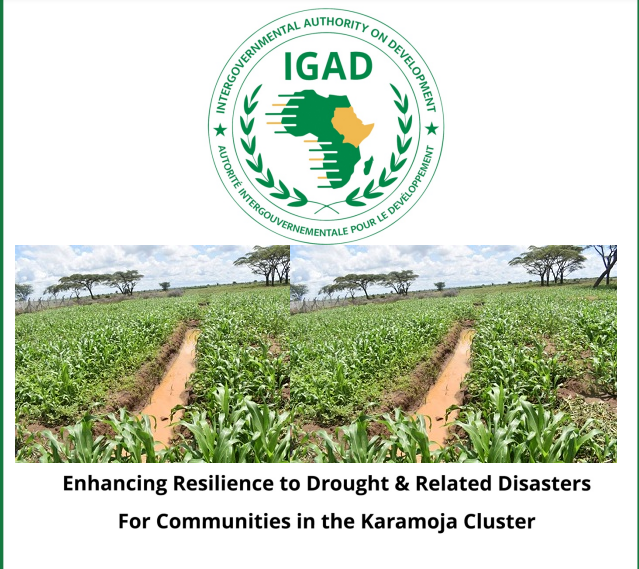
A government project established to strengthen drought resilience among smallholder farmers and pastoralists has run into serious implementation challenges after the Auditor General exposed funding shortfalls, delayed activities and unspent public funds that slowed delivery of key interventions.
The findings are contained in the Auditor General’s report for the Strengthening Drought Resilience of Small Holder Farmers and Pastoralists in the IGAD Region (DRESS-EA) Project for the financial year covered in the December 2025 audit.
Although the project received an unqualified audit opinion, the Auditor General identified significant weaknesses in project financing and implementation that prevented the programme from achieving many of its planned targets.
The DRESS-EA Project was established to strengthen drought resilience in the IGAD region by supporting smallholder farmers and pastoralist communities that continue to face recurring climate shocks, prolonged droughts and declining agricultural productivity.
The programme falls under the Natural Resources, Environment, Climate Change, Water and Land Management sector and is intended to improve resilience through strategic investments aimed at protecting livelihoods and promoting sustainable management of natural resources.
However, the Auditor General’s report shows that implementation was severely constrained by inadequate financing.
According to the audit, the project received only UGX 2.88 billion, representing just 31 percent of the expected cumulative donor disbursements of UGX 9.24 billion, contrary to the financing agreement.
The huge funding gap significantly affected implementation and left project managers struggling to deliver planned interventions.
The Auditor General further examined implementation performance by reviewing 56 project activities valued at UGX 2.65 billion.
The review found that only 22 activities worth UGX 1.63 billion had fully achieved their targets.
The remaining 34 activities, valued at UGX 1.02 billion, had not achieved their intended targets by the time of the audit, pointing to delays in delivering critical interventions meant to strengthen communities against the effects of drought.
The audit also highlights serious budget performance challenges during the reporting period.
For the period running from 1st March 2024 to 28th February 2025, the project had an approved budget of UGX 3.48 billion.
However, only UGX 1.47 billion, representing 42 percent, became available for expenditure.
This left the project with a funding shortfall of UGX 2.01 billion, making it difficult to implement several planned activities.
Despite operating under constrained financing, the project did not fully utilise the funds that were available.
Out of the UGX 1.47 billion released for implementation, only UGX 1.35 billion, representing 92 percent, was spent.
The remaining UGX 120 million, equivalent to 8 percent, remained unspent.
According to the Auditor General, the unspent balance resulted from the non-submission of groundwater assessment reports, which delayed the execution of planned activities and prevented full utilisation of available resources.
The findings suggest that while the project was designed to help vulnerable farming and pastoral communities withstand the growing impacts of climate change and drought, implementation fell short because of inadequate donor financing, delayed activities and incomplete delivery of planned outputs.
Instead of fully delivering interventions intended to strengthen resilience in drought-prone communities, the project closed the audit period with only a fraction of the expected funding, more than half of its assessed activities still falling short of their targets and available funds left unused because essential technical reports had not been submitted.
The Auditor General’s findings are likely to place project management under increased scrutiny as questions emerge over whether stronger planning, faster implementation and better coordination could have reduced delays and ensured that the limited resources available reached vulnerable farmers and pastoralists more effectively.
GOT A HOT STORY? LET US KNOW!
Got breaking news, explosive secrets, or hard evidence?
Email us: redpeppertips@gmail.com
We accept tips, documents, videos, photos, and recordings—the more evidence you have, the better.
CONFIDENTIALITY IS OUR TOP PRIORITY. SOURCES ARE ALWAYS PROTECTED!
About Post Author