FISHING CRACKDOWN! Govt Orders Licensing, Removes Illegal Boats as Stocks Plunge
By Evans Najuna
KAMPALA: The Government has through the Ministry of Agriculture Animal Industry and Fisheries (MAAIF) has unveiled a raft of tough new fisheries regulations aimed at restoring Uganda’s dwindling fish stocks, controlling fishing capacity and cracking down on illegal fishing activities across the country.
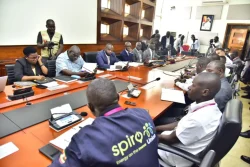
The new measures were announced on Thursday, August 20, by the Minister of State for Fisheries, Hon. Robert Migade Ndugwa, during a media briefing at the Uganda Media Centre in Kampala.
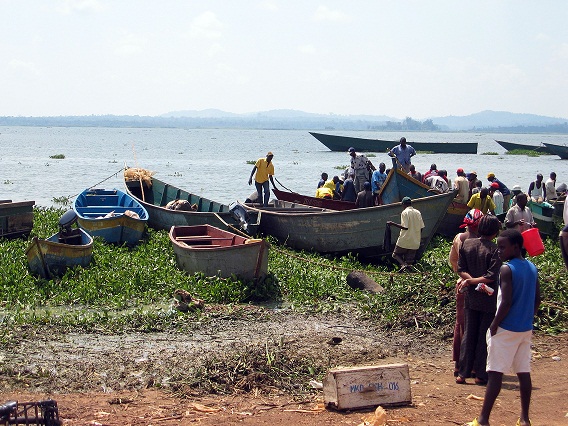
The Minister said Uganda’s fisheries sector is facing a serious threat from overfishing, illegal fishing gear, uncontrolled fishing capacity and the destruction of breeding and nursery grounds.
He warned that the continued pressure on the country’s water bodies was reducing fish production, undermining fish processing industries and cutting foreign exchange earnings.
Uganda is endowed with extensive water resources, with open fresh water and swamps covering about 43,479 square kilometres, equivalent to 18 percent of the country’s surface area.
The country’s major fish species include Nile Perch (Mputa), Nile Tilapia (Ngege), African Catfish (Male), Lungfish (Mamba), Tiger Fish (Ngassa), Mukene, Nkejje and other species.
However, the Minister said several fish species are becoming increasingly scarce because of unsustainable fishing practices.
New Rules, New Fishing Regime
According to Ndugwa, the Ministry has completed the development of new regulations following the enactment of the Fisheries and Aquaculture Act, 2023.
The regulations are designed to provide detailed rules governing fishing, aquaculture, fish trade, conservation, licensing and enforcement.
Among the new regulations is the Fish (Fishing Capacity Management) Regulations, 2026, which will control the number of boats and fishers operating on each water body.
The regulations will also determine the size and type of fishing gear allowed for particular fish species.
For silver fish, commonly known as Mukene, the Minister said fishing will be restricted to scoop nets and lift nets during the dark phase of the moon and at least two kilometres from the shoreline.
The regulations will also restrict silver fish fishing to designated landing sites.
“This regulation therefore ensures that the number of fishers and fishing effort is maintained at the required number,” Ndugwa said.
Fishermen Face September Deadline
In a major warning to fishermen, the Minister ordered all fishers to obtain licences before September 15, 2026, after which enforcement will begin against unlicensed boats.
He said the Government would remove boats operating without licences as part of efforts to reduce fishing pressure on the country’s waters.
The new licences will also be species-specific, meaning a licence for Nile Perch fishing will be different from one for Nile Tilapia fishing.
The licences will be independent for each fishing activity, non-transferable and cannot be shared among fishermen.
Fishing Grounds to Be Protected
Under the Closed Fishing Regulations, 2026, fishing activities will be temporarily or permanently closed in particular areas and periods based on scientific research.
Another set of regulations will specifically protect fish breeding areas, with breeding grounds expected to be demarcated and protected from fishing activities.
The Government has also introduced Quality Assurance Regulations, 2026, to improve the safety of fish and fish products for human consumption.
The Aquaculture Regulations, 2026 will guide the management and development of fish farming, while the Fish Maw Regulations, 2026 will regulate the harvesting and trade in fish maw.
The Fish (Co-management) Regulations, 2026 will also streamline the establishment and operation of fish landing committees, including ensuring that only qualified members participate in fisheries management.
Another regulation will guide the stocking and restocking of fish in natural water bodies.
Illegal Gear Crackdown
The Minister listed the rampant use of monofilament nets, locally manufactured illegal fishing gear, excessive use of lights during Mukene fishing and destructive fishing methods among the major threats to the sector.
He also blamed the harvesting of fish from breeding and nursery grounds and what he described as “hurry-up methods” for contributing to declining fish stocks.
Ndugwa further announced the establishment of a Monitoring, Control and Surveillance Unit at the Ministry to strengthen enforcement against illegal fishing.
He said the Government would also intensify crackdowns on markets dealing in immature fish, as well as importers and distributors of illegal fishing gear.
Uganda Targets 1.7 Million Tonnes
The Minister said Uganda currently produces an estimated 750,000 metric tonnes of fish annually, while the Government has set an ambitious target of increasing production to 1.7 million metric tonnes.
Of this target, about one million metric tonnes is expected to come from aquaculture.
Ndugwa said increased fish production would not only boost food security but also support fish processing, trade and foreign exchange earnings.
He called on fishermen, local governments, civil society organisations and the private sector to support the new regulations.
“I call upon all the fishers to apply for licences before the 15th of September 2026 because after that date, enforcement to reduce fishing capacity, including removal of boats that are not licensed, will start,” he warned.
The Minister urged Ugandans to protect the country’s fisheries resources for future generations, saying the sector has enormous potential if properly managed.
The Government is also expected to issue guidelines to support implementation of the new regulations, while further measures are planned to improve post-harvest handling, fish processing and marketing, develop high-value fish products and introduce species-specific management plans.
GOT A HOT STORY? LET US KNOW!
Got breaking news, explosive secrets, or hard evidence?
Email us: redpeppertips@gmail.com
We accept tips, documents, videos, photos, and recordings—the more evidence you have, the better.
CONFIDENTIALITY IS OUR TOP PRIORITY. SOURCES ARE ALWAYS PROTECTED!
About Post Author