“I am Determined to Keep Building”- Inside the Life and Vision of Baxap’s Founder

Bukenya Aksam
By Fab MC
Behind Baxap Engineering is a businessman, engineer, family man and man of faith who believes in building more than just a successful company. Away from work, he describes himself as friendly, sociable and easy going.
Family, faith and responsibility remain central to his life, while his entrepreneurial journey has taught him difficult lessons about people, money, leadership and perseverance.
In this candid conversation with mighty Red Pepper, he opens up about his upbringing, relationships, heartbreak, entrepreneurship, his vision for Baxap and the legacy he hopes to leave behind.
Before we talk about Baxap Engineering, who is the person behind the company when you’re away from work?
My name is Bukenya Aksam. I’m a businessman, engineer, family man and a person of faith. Beyond Baxap, I’m someone who values family, friendship and my relationship with Allah. I’m friendly, sociable and easy going, and I enjoy spending time with my family, children and close friends. At work, I’m serious and focused because I take responsibility seriously, but away from work, I’m much more relaxed.
What kind of person are you outside the business world?
I would describe myself as straightforward, friendly and sociable. I don’t like pretending. If I think something is wrong, I will say it directly. Outside work, I’m easy-going. I enjoy family gatherings, good company, music, movies and spending time with people I’m comfortable around. I also believe in giving back, but I prefer doing some things quietly without announcing them.
What is something people often get wrong about you when they first meet you?
I think people sometimes underestimate me when they first meet me. Looking at my age and what I have achieved, some may question how much experience I have. But once we start talking and they hear how I think and approach things, their perspective usually changes. You cannot really understand a person until you have a conversation with them.
What drives you personally, especially when things get difficult?
Prayer. My faith keeps me grounded when things become difficult. I pray, ask Allah for guidance and then do my part. I also think about the kind of life and opportunities I want my children to have. When something becomes difficult, I don’t like reacting immediately. I step away, pray and process what has happened. Then I come back with a solution. I believe there is always a way forward.
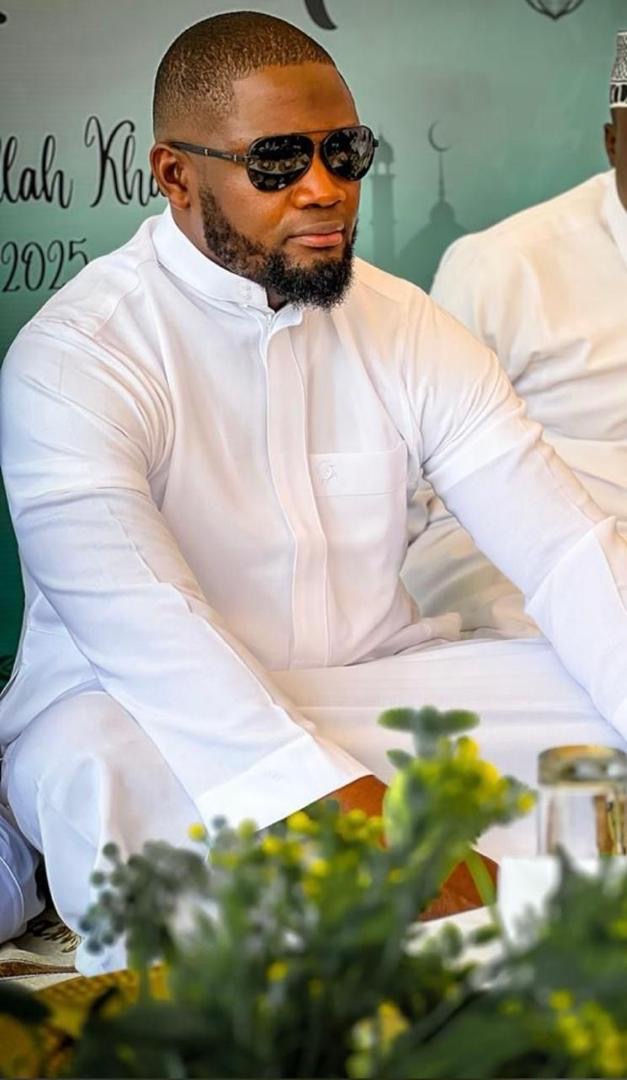
People know you as a businessman, but what are you like when you’re relaxing and having fun?
I’m quite different when I’m relaxing. I enjoy spending time with my family and the children. Sometimes we go swimming, have a family outing or simply get together. I also enjoy spending time with close friends. I love art, music and movies, and I enjoy going out to watch things like Fun Factory. Life cannot always be about work and responsibilities. Sometimes you need to put the phone down, laugh and enjoy the people around you.
How are things going in the love department?
Alhamdulillah, things are going well. I’m happy and grateful for the people I have in my life. As a Muslim man and a believer, my faith is an important part of how I approach relationships. I believe in love, commitment, patience and respect. So yes, the love department is doing well. Hehehe, let’s leave it at that before I tell you too much!
Does running a business make it difficult to maintain a relationship?
Yes, somehow it does. A relationship requires time, and business requires time as well. Sometimes one takes more of your attention than the other, and someone may feel neglected. People think being self-employed means you have more freedom, but it can actually be the opposite. When you run your own business, it can become a 24-hour responsibility. You simply have to be intentional about both.
Are you the romantic type, or does business usually come first?
I would say I’m romantic when the situation calls for it. I put my family first, but business is also a responsibility, and sometimes I have to leave home when something requires my attention. When I’m with my family, though, I try to be present. And yes, I’m romantic, but I wouldn’t say you’ll find me being romantic 24/7. Hehehe. There is a time and place for everything.
What attracts you to someone beyond physical appearance?
For me, it’s more about intelligence, character and cleanliness. I like someone who is clean and takes care of herself. When I say intelligence, I don’t necessarily mean academic qualifications. I’m talking about how someone thinks, understands things and communicates. That matters more to me than appearance.
What’s your biggest relationship red flag?
Dishonesty would definitely be a red flag. You cannot demand honesty from someone while you are not honest yourself. Hygiene is also very important to me.
I’m particular about cleanliness and taking care of yourself. Ultimately, character and honesty matter much more because you cannot build a healthy relationship without openness and trust.
Could you date someone who doesn’t understand your ambition and the demands of your business?
No, I don’t think I could. She doesn’t have to be in the same line of work, but I need someone who understands my ambition and supports what I’m trying to achieve. For me, it goes beyond Baxap. I have other things I’m building, including farming and poultry. She doesn’t have to share every dream exactly as I do, but she has to respect the vision and be willing to grow with me.
Has love ever distracted you from your goals?
Yes, especially when I was younger. There was a time I was badly heartbroken and emotionally in a very difficult place. It affected me, and I came close to making decisions I probably would not have made if I had been thinking clearly.
But my faith gave me something to hold on to. Someone close to me reminded me that no matter what happens, no one loves you more than God, and that I still had a legacy to protect.
My mother also told me something during that period that stayed with me. She said, almost jokingly, “You know what? Just make money. They will look for you.” Those words became a wake-up call. I picked myself up and decided I had to keep moving.
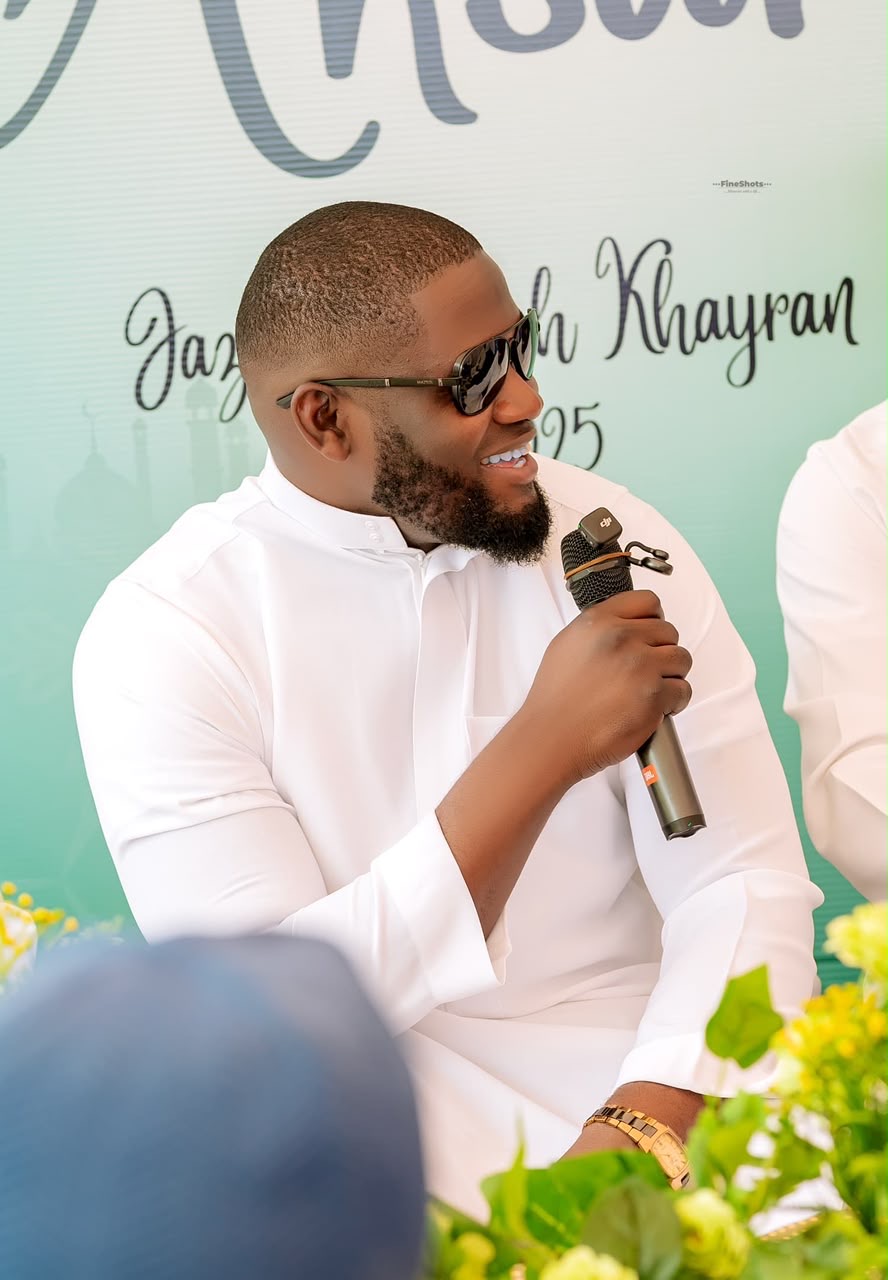
What’s one relationship lesson you’ve learned the hard way?
I’ve learned not to expect too much from people. We are all human, and even people you love deeply can disappoint you. I’ve learned to love people, appreciate them and give my best, but I don’t build my entire existence around another person. Whatever major decision I make in life, I have to take responsibility for it myself.
How important is physical intimacy?
I wouldn’t say it is the most important thing in a relationship, but physical affection does matter. I’ve experienced situations where distance meant physical presence wasn’t always possible, and that taught me that connection is not built on physical presence alone. Trust, patience, communication and understanding can keep two people close. Of course, physical chemistry matters, but intimacy is also about feeling safe, being vulnerable and understanding each other.
Can a relationship survive without physical chemistry?
I think a relationship can survive many challenges, but physical chemistry is also part of compatibility. Emotional connection, trust and understanding can be very strong even when circumstances make physical closeness difficult. But if there is absolutely no attraction or physical connection, that can become difficult over time. What matters is that two people communicate honestly and make an effort.
Apart from looks, what makes someone genuinely attractive?
Intelligence and cleanliness. I like someone who can think, communicate and carry herself well. Intelligence is not necessarily about academic qualifications. It is how you think, understand things and handle yourself. And cleanliness is important to me. You can have the best mind in the world, but if you don’t take care of yourself, that will still matter to me. Hehehe.
What don’t couples communicate about enough when it comes to intimacy?
I think people sometimes fail to communicate their expectations and how they want the relationship to evolve. People change, circumstances change and responsibilities change. If those expectations change, you need to talk about it rather than assuming your partner will understand. Intimacy is also a partnership. Both people have needs and expectations, and both have to make an effort.
Affectionate or business mode at home?
I try not to bring business mode home. When I’m home, I want to be present with my family and the people I love. Of course, business sometimes demands my attention, but generally, I try to separate the two. Business is business. Home is home.
Where did your ambition come from?
I think a lot of it came from my upbringing, particularly from my grandfather. I was raised by him, and although I grew up in a family where I could get many of the things I wanted, he gave me the freedom to work and make my own decisions. At a young age, I decided I wanted to work and even moved out of home quite early. Looking back, that freedom played a big role in shaping my ambition.
What was your upbringing like, and how did it shape you?
I would describe it as quite comfortable. I had what I needed and was fortunate in that sense. But discipline and responsibility were very important in our home. You could have everything you needed, but that did not mean you were allowed to become irresponsible. I had support, but I was also given the freedom to work, make mistakes, learn and become responsible for myself.
Who was your biggest influence?
Definitely my family, but if I had to mention one person, it would be my grandfather. He was my mentor. A lot of what I know about discipline, responsibility and independence came from him. My uncles and aunties also played a role, so my family as a whole has influenced me greatly. May his soul continue to rest in peace.
What did your family teach you about money, hard work and responsibility?
I wouldn’t say my family taught me specifically about money. What they taught me was hard work and responsibility. My mother used to tell me that being a man is not easy. Your responsibilities don’t disappear because you are going through a difficult situation. You could be facing your own problems, but someone still has to provide, pay school fees and take care of the family. Whatever situation you find yourself in, your responsibilities still follow you.
Does your family understand the pressure that comes with running a business?
Yes, and that is one reason I try to involve and train some of them in what I do. I want them to understand what it takes to run a business and be able to step in when necessary. Nobody can run your business exactly the way you do, but knowledge should be shared. If I can teach my family what I know and prepare them to take responsibility, then I have done my part.
What kind of legacy do you want to leave for your family?
For me, legacy is not only about leaving material things. I want to leave knowledge, skills and the ability to create something for themselves. I always pray that Allah gives me the opportunity to train my brothers and pass on what I know. Three of my brothers are already electricians, although they work in different sectors. With the younger ones, you cannot force them to become what you want them to be. When they are ready, you introduce them to business and teach them what you know. Ultimately, I want my family to have the knowledge and capability to stand on their own.
Take us back to 2017. How did Baxap begin?
Baxap Engineering started in 2017 as a joint company between workmates and friends. Initially, there were four of us. The idea was to bring together our different skills and experiences and pursue bigger projects, particularly electrical and government-related projects. As time went on, the others took their own paths, while I continued with Baxap and developed it into the independent company it is today.
What inspired you to venture into engineering, construction and logistics?
What pushed me was the relationship I had already built with clients as an individual. I had clients who trusted me and valued my work. At some point, I started thinking, if I can build this level of trust as an individual, what happens if I turn that into a proper company? I could serve more clients, take on bigger projects and create something that could grow beyond me. Engineering was where I already had the technical foundation, and construction, logistics and other areas naturally became part of the bigger picture.

What was the biggest challenge when you were starting out?
When you establish a company, there are immediate responsibilities such as rent, taxes, employees and other operational costs. Those were some of the realities we faced as we moved from working more informally into operating as an independent company. But I saw those responsibilities as part of building something serious.
Did you ever consider giving up?
No. I’m not someone who gives up easily. There are difficult situations and moments when you have to rethink how you approach something, but I don’t see that as giving up. I see it as finding another way forward.
What would you say is your biggest achievement?
Personally, I think it is how much I’ve grown alongside the company. When I started, I was mainly dealing with clients as an individual. Today, I’m dealing with employees, projects, clients and many different responsibilities. That has developed my leadership skills and changed how I think about business. I’m also proud that we have created employment and brought different people into the organisation.
What has changed the most at Baxap since 2017?
A lot has changed. We now have established offices, employees, our own standards and a more structured way of doing business. We have also embraced social media and other modern ways of reaching clients and presenting the company. When I compare Baxap today with 2017, it is a much more established organisation. We have grown in structure, people, experience and how we present ourselves to the market.
What is the biggest mistake you have made in business?
One of the biggest mistakes was relying on cheap, unskilled labour. When skilled manpower is limited, it can be tempting to bring in cheaper labour because you feel you are saving money. But work that should take five days can end up taking five weeks. The project is delayed, you spend more supervising and correcting the work, and eventually you can make a loss. I’ve learned that with technical work, you cannot simply look at the cheapest option. You have to consider competence, productivity and the overall cost.
What has been your most expensive lesson?
The lesson of cheap labour. You might think you are saving money by paying less, but if the work takes five times longer or has to be redone, you have actually spent more. Cutting costs without considering quality can become much more expensive later.
What do clients often misunderstand about construction costs and projects?
One challenge today is that people sometimes use artificial intelligence generated information as though it were an actual construction quotation. Artificial intelligence may give you a figure, but it is based on assumptions. It may not know the ground conditions, site preparation, materials, labour or logistics. It can be useful for ideas and preliminary information, but construction costing has to be based on the actual project and its conditions.
What makes Baxap different?
One of our strengths is that we don’t look at a project from only one angle. If we are involved in construction and identify something that needs attention in electrical works, plumbing, interior design or another area, we advise on it. Our emergency response background has also shaped us. If a client calls because something has failed and it is safe and practical for us to respond, we try to find a solution. We don’t just want to complete a job. We want our clients to know there is a team behind them.
Why did you choose to bring so many services under one roof?
It goes back to how Baxap started. It began as a joint venture involving people with different technical backgrounds, including electrical, construction and structural engineering. As the company evolved, we expanded those capabilities. Today, we are also developing sound engineering and soundproofing, expanding logistics and looking at incorporating solar more strongly into our electrical solutions. These disciplines are connected, and bringing them together allows us to approach projects more comprehensively.
What role does innovation and technology play in your work?
Technology is very important, particularly in design and planning. With architectural and interior design, we can turn a basic idea into a detailed digital and three dimensional representation, allowing a client to see the finished space before work begins. We also use our website, YouTube and TikTok to showcase our work and educate people. I don’t believe in adopting technology simply because it is fashionable. If it helps us plan better, communicate better or improve efficiency, then it has value.
What role can companies like Baxap play in Uganda’s infrastructure development?
I believe companies like Baxap can work with government and private landowners to develop infrastructure that might otherwise remain underutilised. Someone may own land in a strategic location but lack the capital to develop it. Companies like Baxap can bring technical expertise, construction capacity and, where appropriate, capital under an agreed arrangement. Partnerships like these can unlock land, create better infrastructure and allow private companies to contribute to development alongside the government.
Where do you want Baxap to be in five years?
In five years, I want Baxap Engineering to be one of the outstanding engineering and construction companies in Uganda, but I also want it to have moved beyond Uganda. We are looking at opportunities to partner with people and businesses outside the country and explore contracts in other markets. I don’t just want Baxap to be bigger. I want it to be better, with stronger systems, greater capacity, bigger projects and a reputation that extends beyond Uganda.
Beyond making money, what impact do you want Baxap to have?
Giving back is very important to me. Every year, we want to have what we call a return to player initiative, where we take part of what Baxap has built and give something back to the community. For example, if we identify someone whose house needs work but they cannot afford to complete it, we would like to use our skills and resources to help free of charge. We are still working out the fairest way to select beneficiaries. I believe a company should be able to look beyond profit and ask, “What can we do for someone who genuinely needs our help?”
After everything you’ve experienced in business and life, what is the one thing you are still determined to achieve?
I’m determined to keep building. Sometimes I stop and think about where I started, particularly around 2019 and 2020, and where we are today. There was a time when I was starting with almost nothing. When I look at Baxap today, I see young people who depend on it for work and people who have built their lives through the opportunities the company has created.
That makes it very difficult for me to give up. I want Baxap to become a company people can rely on. Personally, I also want to fulfil my responsibilities as a professional, businessman, husband, father and person of faith.
Ultimately, I want to build something bigger than me, something that creates opportunities for others and can continue long after I’m gone.
Is there anything else you would love to share with us? Any final takeaway for our readers?
Yes. I would simply say: trust us with your work, and we will do our best to have you covered. Baxap was built around responding to problems, particularly emergencies, and that mindset remains part of who we are.
Recently, we had an issue at a public place where we had worked. I was out of town, but the team was there and was able to respond and handle it. For me, that is what makes Baxap different. It should never be about one person.
I may be away, but the company should still be able to respond. That is the company we are building: one that remains there when its clients need it.
How can people reach Baxap Engineering?
Simply search for Baxap Engineering online and on social media.
You will find our platforms and contact details there.
About Post Author