IRAN WAR? STABEX Runs Out of Diesel
There is unease among residents of Lira City and the surrounding areas after taps suddenly ran dry, leaving thousands stranded without water in a shocking crisis that has exposed the fragile lifeline keeping Uganda’s towns running.
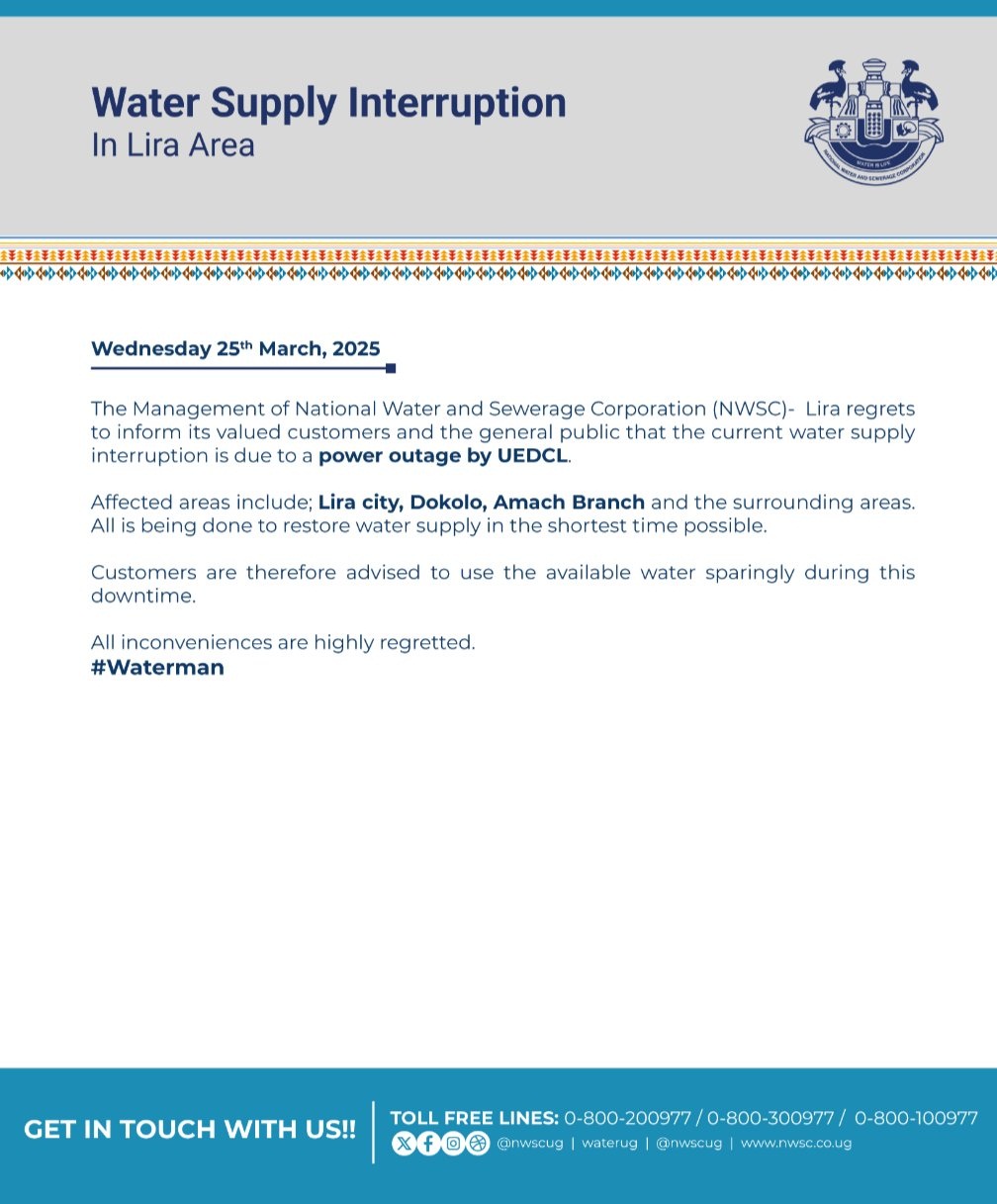
In an urgent communication, the National Water and Sewerage Corporation (NWSC) dropped a bombshell that sent shockwaves across homes, businesses, and institutions in Lira, Dokolo, Amach and neighbouring areas. The water body admitted that the situation was spiraling beyond its control.
“NWSC Lira Area regrets to inform its valued customers… that the current service interruption is due to power outage on UEDCL side,” the statement read, but what followed painted an even grimmer picture.
Even as power went off, the expected backup plan — generators — failed to kick in. Why? There was no fuel.
Yes, no fuel.
In a stunning revelation, NWSC disclosed that it could not run its generators because of a diesel stockout at Stabex International fuel stations — the very supplier responsible for powering water production at the Lira water works.
The result? A full-blown water blackout.
Residents woke up to dry taps, confused and angry. Some rushed to boreholes, others queued at the few remaining water points, while businesses that depend on steady water supply were left counting losses.
“This is a disaster,” one resident lamented. “No power, no fuel, now no water. How are we supposed to survive?”
The crisis has now ignited fears of a deeper problem — one that stretches far beyond Lira.
Whispers are growing louder that the ongoing tensions in the Middle East could be beginning to choke global fuel supply chains, with ripple effects now being felt right here in Uganda. Analysts warn that fuel shortages, even at localized levels, could signal cracks in a system heavily dependent on imports.
If a single supplier runs dry, an entire city goes thirsty.
That is exactly what unfolded in Lira.
Inside NWSC, the mood is said to be tense, with engineers scrambling to find alternatives as pressure mounts from the public. The corporation insists “all is being done to restore water supply in the shortest time possible.”
Meanwhile, customers have been urged to “use the available water sparingly.”
The situation has also raised uncomfortable questions about Uganda’s preparedness for emergencies. How does a major urban centre grind to a halt simply because one fuel supplier runs out of diesel? Why are there no contingency reserves? And what happens if the shortage spreads?
For now, Lira remains on edge.
About Post Author