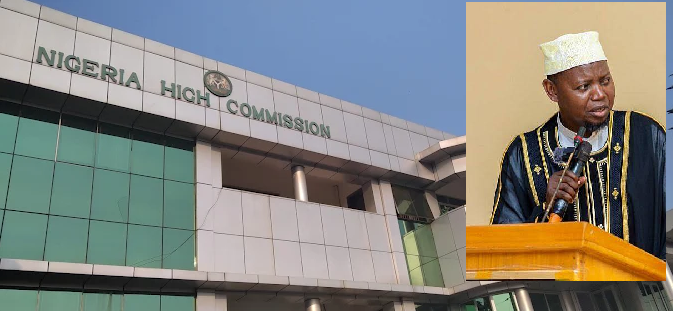
JUST ASKING! With National Mining Firm Company Bosses sacked by IGG, Is Energy Ministry Minerals Commissioner Agnes Alaba Safe?
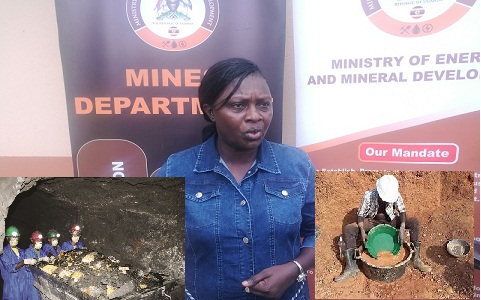
Agnes Alaba, the Commissioner for the Geological Survey and Mines Department (often referred to as Commissioner for Minerals/Mines) at the Ministry of Energy and Mineral Development (MEMD). She oversees mineral development, including managing geological infrastructure and the digital mining cadaster
The axe has fallen on top bosses at the National Mining Company, but as the Inspectorate of Government (IGG) moves in over alleged maladministration, financial mismanagement and abuse of office, attention is turning to another key figure in Uganda’s troubled mining sector: Agnes Alaba.
Alaba, the Commissioner for the Geological Survey and Mines Department at the Ministry of Energy and Mineral Development, oversees critical areas of mineral development, including geological infrastructure and the digital mining cadastre.
With the country’s mineral sector under mounting scrutiny, the question now being raised is whether the latest crackdown on the National Mining Company could trigger tougher scrutiny of the wider regulatory system—and what that could mean for officials responsible for overseeing mineral licensing, compliance and enforcement.
Is Alaba safe as the storm gathers around the sector?
There is no publicly established indication in the material available to Red Pepper that Alaba is personally under investigation or facing removal. However, the new developments, together with findings in the Auditor General’s 2025 report on the Mineral Development Programme have exposed significant weaknesses in the sector she helps oversee, putting the effectiveness of regulatory controls under the spotlight.
The latest developments have intensified questions about who is accountable when illegal dealers operate, licence applications stall, royalties remain unpaid and government-funded projects fail to deliver their intended benefits.
IGG SWINGS AXE ON MINING BOSSES
The latest shock came when the IGG directed the acting board chairperson of the National Mining Company to interdict Chief Executive Officer Dr Gerald Banaga-Baingi and Chief Corporate and Legal Affairs Officer Lelia K. Bwambale to facilitate investigations.
The Inspectorate said the interdictions were intended to facilitate investigations into allegations of maladministration, financial mismanagement and abuse of office.
The directive cited Article 230(2) of the Constitution and Section 13(6) of the Inspectorate of Government Act.
The IGG did not publicly detail the specific acts under investigation in its statement, and the interdictions do not amount to findings of guilt.
But the action has added to a turbulent period for the state-owned company, which has already lost its pioneer board chairperson, James Mukasa Ssebugenyi, and his deputy, James Byakagaba.
Ssebugenyi resigned, while Byakagaba was removed in leadership changes announced by the Ministry of Energy and Mineral Development on September 24, 2026.
Minister Dr Monica Musenero said the changes were part of measures to address governance and management challenges affecting the company. Maria Kiwanuka was subsequently appointed acting board chairperson.
Now, with the CEO and legal affairs chief also interdicted, questions are growing about the systems intended to safeguard government interests in the mining industry.
17 ILLEGAL DEALERS: WHERE WAS ENFORCEMENT?
One of the most striking findings in the Auditor General’s report was the identification of at least 17 mineral traders operating without the required mineral rights or dealer licences.
Section 140(1) of the Mining and Minerals Act prohibits buying and selling minerals without a valid licence.
The discovery raises questions about how unlicensed dealers were able to operate and whether existing monitoring and enforcement arrangements were adequate to stop them.
The Ministry has reported shutting down more than 30 illegal mineral outlets in Kampala in collaboration with the Police Mineral Protection Unit. It has also indicated plans to strengthen controls through integration with the Uganda Revenue Authority’s single window and the establishment of formal mineral markets.
Those measures suggest efforts are being made to address the problem. However, the audit findings underline the scale of the enforcement challenge.
For Alaba’s department, the issue is not simply whether regulations exist, but whether the licensing and monitoring systems are effective enough to ensure that mineral trading takes place within the law.
The report does not establish that Alaba personally authorised, enabled or knew about the activities of the unlicensed dealers. It nevertheless raises institutional questions about how mineral-sector controls performed during the period audited.
LICENSING QUESTIONS THAT DEMAND ANSWERS
The Auditor General also identified irregularities and delays in the licensing process.
Ten mining licences faced delays in conversion, while eight applicants were reportedly granted licences without proper evaluation. Another 114 applications remained pending for more than 100 days.
The report further identified 14 exploration areas where full-scale mining operations were taking place beyond the scope of the licences issued.
Taken together, the findings raise concerns about both sides of the licensing system: legitimate applications facing lengthy delays, and cases where approvals or mining activities reportedly did not comply with expected procedures or licence conditions.
For investors, prolonged delays can create uncertainty. For the government, inadequate evaluation and weak compliance monitoring can undermine confidence in the system designed to regulate the extraction of valuable resources.
These are precisely the kinds of issues that make the performance of the Geological Survey and Mines Department important to the sector’s credibility.
The questions facing the authorities include whether licence applications are being processed within reasonable timelines, whether approvals undergo the required technical scrutiny and whether operators are monitored to ensure they remain within the terms of their licences.
The audit findings do not, on their own, prove personal wrongdoing by the commissioner. But they create a basis for demanding explanations about the systems, resources and corrective measures under the department’s responsibility.
SHS2.82BN ROYALTIES STILL UNPAID
The mining-sector concerns extend beyond licensing.
The Auditor General reported that Shs2.82 billion in assessed mineral royalties remained unpaid beyond the legally prescribed 30-day period.
Although notices of non-compliance had been issued and the Ministry had engaged the Attorney General and URA, the outstanding amount raises questions about the effectiveness of follow-up and enforcement against defaulters.
The report also showed that Shs1.443 billion in mineral royalties remained undistributed from the funds available during the period reviewed.
The royalties are intended to benefit government, local authorities and landowners. Delays in distributing such funds can leave beneficiaries waiting for money due to them and fuel disputes over the management of mineral resources.
The presence of beneficiaries recorded as unknown also raised questions about the completeness of records and the systems used to identify those entitled to payments.
For a sector expected to generate revenue and support local development, weaknesses in collection, record-keeping and disbursement are significant accountability concerns.
The question for the responsible authorities is whether existing mechanisms can ensure that royalties are collected on time, accounted for properly and delivered to the rightful beneficiaries.
BILLIONS SPENT, MINERAL CENTRES IDLE
The audit also exposed problems with two mineral beneficiation centres constructed in 2023 in Ntungamo and Fort Portal.
The facilities, intended to support mineral processing and value addition, were reportedly non-operational because they lacked essential equipment.
Equipment was expected to arrive in March 2026, but Red Pepper could not independently establish by press time whether it had been delivered.
The centres were intended to help communities earn more from mineral resources by supporting processing before minerals reach the market. Their reported inability to operate highlights the gap that can emerge between constructing infrastructure and making it functional.
The report also pointed to a lack of clear value-addition requirements for many mineral commodities. While some minerals have prescribed purity levels, others—including tungsten and tantalum—lack clearly defined thresholds despite active mining and exports.
The Ministry has commissioned a Mineral Value Chain Analysis study to address the gap.
But the wider question remains: how quickly can the responsible institutions translate such initiatives into practical standards, functioning facilities and stronger returns for Uganda?
IS ALABA NEXT?
Alaba’s name enters the debate because of her role in the ministry’s mineral-sector administration and the regulatory issues highlighted by the Auditor General—not because the supplied findings establish that she personally committed an offence.
The IGG’s latest action specifically targets Banaga-Baingi and Bwambale at the National Mining Company. The company’s governance and management problems are distinct from the broader regulatory shortcomings identified in the audit.
However, the two developments have placed the mining sector’s leadership, oversight and accountability arrangements under renewed scrutiny.
The Ministry has already acknowledged governance and management challenges at the National Mining Company through its September leadership changes. The latest interdictions now create pressure for the investigations to establish what went wrong within the company.
Separately, the Auditor General’s findings leave the relevant ministry departments facing questions about unlicensed mineral trading, licensing delays, operations beyond licence conditions, unpaid royalties and idle beneficiation facilities.
Will the Ministry review the performance of the systems responsible for these functions? Will the authorities take further administrative action if investigations uncover individual responsibility? And what concrete measures will be introduced to close the gaps identified in the audit?
Those are questions that can be answered only through documented findings, official explanations and any subsequent decisions by the responsible authorities.
For now, there is no confirmed announcement that Alaba has been suspended, interdicted or named as a suspect in the IGG’s National Mining Company investigation.
But with top executives already facing interdiction and the wider mining sector under scrutiny, the effectiveness of the regulatory system—and the accountability of those charged with running it—will remain under the spotlight.
GOT A HOT STORY? LET US KNOW!
Got breaking news, explosive secrets, or hard evidence?
Email us: redpeppertips@gmail.com
We accept tips, documents, videos, photos, and recordings—the more evidence you have, the better.
CONFIDENTIALITY IS OUR TOP PRIORITY. SOURCES ARE ALWAYS PROTECTED!
About Post Author