NATIONAL ROAD CRISIS! Bitumen Shortage Hits Uganda, Threatens Key Road Projects
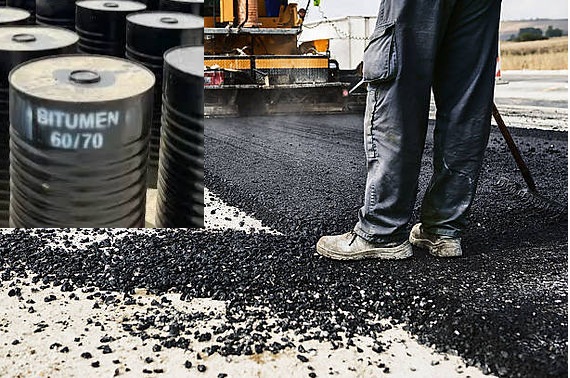
KAMPALA — Uganda’s ambitious road construction programme is facing fresh uncertainty after a shortage of bitumen is threatening to slow ongoing projects, raising concerns about the delivery of major highways, urban roads and regional transport links.
The supply squeeze comes as the Government rolls out a massive infrastructure programme backed by Shs8.79 trillion allocated to transport infrastructure for the 2026/27 financial year, covering roads, bridges, railways, airports and other transport systems.
From the Muyembe–Nakapiripirit highway in eastern Uganda to the Apac–Lira–Puranga corridor in the north, the Kira–Kasangati–Matugga road in Greater Kampala and several urban roads under construction, the country has numerous projects that depend on the availability of construction materials to progress.
The shortage has already emerged as a concern in Kampala, where contractors working on roads under the Kampala Capital City Authority (KCCA) say they are struggling to secure bitumen needed to complete asphalt surfacing.
Engineer Patrick Batumbya, a project manager with MBW Consultants working on behalf of KCCA, estimates overall progress across ongoing projects in Nakawa, Makindye, Kawempe and Lubaga divisions at between 68 and 70 per cent.
He says some contractors have already prepared road sections for surfacing but cannot proceed because they are waiting for fresh supplies of bitumen.
“I don’t think there is a contractor who has imported bitumen in the last three months. It’s not there, and it is our worry. It should be your worry. It should be the national worry,” Batumbya said.
He attributed the supply difficulties partly to global economic developments, including the Iran-USA-Israel conflict, which he said had disrupted imports and affected contractors’ ability to obtain the material.
Batumbya added that some contractors still had stocks that could sustain construction in the short term, but warned that prolonged supply disruptions could complicate delivery of the projects.
The shortage is particularly concerning because bitumen is essential for asphalt surfacing, one of the final stages of many road construction projects.
SHs8.79 TRILLION ROAD PROGRAMME AT STAKE
The Government’s infrastructure spending plan includes several major highway projects intended to improve connectivity, reduce transport costs and strengthen links between regions.
Among the priority projects is the 92-kilometre Muyembe–Nakapiripirit road, linking the Bugisu and Karamoja sub-regions, as well as the Apac–Lira–Puranga road in northern Uganda.
The Government has also prioritised the Kira–Kasangati–Matugga road, a major Greater Kampala corridor whose completion has been delayed for years. Other projects targeted for completion include the Tororo–Busia and Mayuge–Busia Town roads.
Under the wider programme, the Ministry of Works and Transport has also outlined plans to commence construction or upgrading of additional roads while addressing a backlog of stalled and delayed projects.
The extent to which the bitumen shortage affects individual projects will depend on their construction methods, existing stocks, procurement arrangements and the stage each project has reached.
However, continued difficulty obtaining supplies could disrupt contractors’ work schedules, increase costs and delay the completion of road sections awaiting asphalt.
WHY BITUMEN IS A BIG DEAL
Bitumen is a black, sticky petroleum-based material used as a binding agent in asphalt. It holds together crushed stone, sand and other aggregates to create the paved surface used on many modern roads.
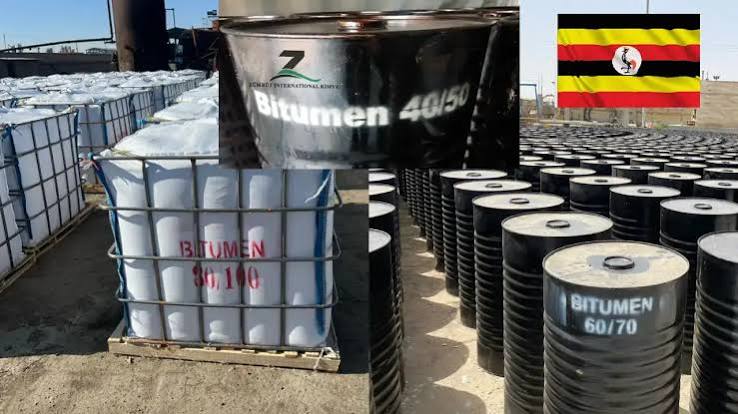
In simple terms, bitumen is the glue that binds the materials making up an asphalt road surface.
Without adequate supplies, contractors cannot complete asphalt surfacing on roads designed to receive it, even when earthworks, drainage installations and foundation layers have been completed.
Bitumen also helps seal the road against water penetration, protecting underlying layers from damage. Combined with proper drainage, sound engineering and regular maintenance, it helps roads withstand traffic loads and changing weather conditions.
A shortage can therefore leave roads partially completed, delay the opening of improved routes and increase the risk of deterioration if unfinished sections are not adequately protected.
KAMPALA’S ROAD WORKS FEEL THE PRESSURE
KCCA is implementing a major road improvement programme involving asphalt paving, drainage upgrades, street lighting, pedestrian facilities and improvements to traffic junctions.
In July 2025, the authority announced a Shs550 billion Government-funded programme to upgrade 87 kilometres of roads across Kampala over three years. The works are intended to improve mobility, drainage and road safety across the city.
Separately, the Kampala City Roads Rehabilitation Project, supported by the African Development Bank and African Development Fund, includes road construction, drainage works, junction improvements and pedestrian infrastructure.
Batumbya said overall construction progress across the projects he supervises in Nakawa, Makindye, Kawempe and Lubaga stood at between 68 and 70 per cent.
He said some road sections were ready for surfacing but could not proceed until contractors obtained additional bitumen.
KCCA Executive Director Hajjat Sharifah Buzeki has also been inspecting road works to assess progress and identify construction bottlenecks.
During weekend inspection, Mukalazi Road had reached approximately 70 per cent completion, while Muganzirwaza Road stood at 35 per cent. Nsamba Road in Kawempe was also about 70 per cent complete.
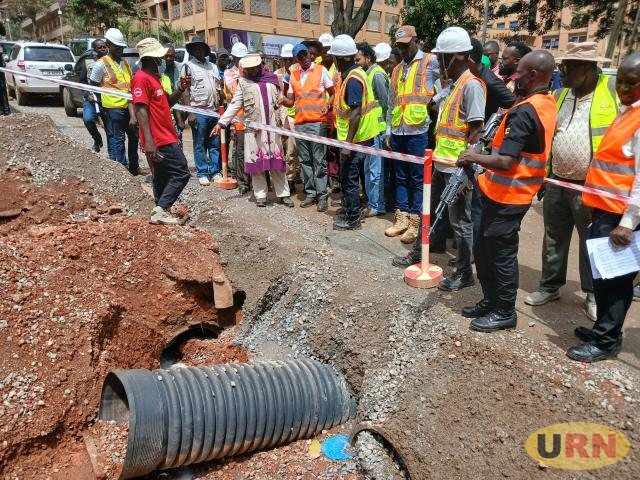
At Square One Road in Kampala Central, being constructed by Dott Services, progress stood at approximately 42 per cent, with drainage crossings and the relocation of utility services among the challenges affecting construction.
Buzeki has urged contractors to maintain clean and safe worksites, clear blocked drainage channels and ensure that construction activities meet the required standards.
The combination of material shortages, utility relocation and other construction challenges highlights the difficulties facing road authorities as they seek to deliver infrastructure improvements.
WAKISO ALSO EMBARKS ON MAJOR ROAD PROJECTS
The Greater Kampala Metropolitan Area is also witnessing major road construction beyond the capital’s administrative boundaries.
In March 2026, Wakiso District Local Government announced the commencement of civil works worth about Shs110 billion under the Greater Kampala Metropolitan Area Urban Development Programme.
The projects include the 8.9-kilometre Seguku–Nalumunye–Bandwe–Kinaawa–Kyengera road and the 7.5-kilometre Namulanda–Bweya–Kajjansi road, alongside a link road. The routes are being upgraded to bitumen standard, with planned drainage systems, street lighting and pedestrian walkways.
These works are intended to improve connectivity in rapidly growing communities around Kampala, where expanding settlements and increasing traffic have placed pressure on existing roads.
The road projects illustrate the wider demand for construction materials across the metropolitan area, where multiple contractors may require bitumen for asphalt works at the same time.
NATIONAL SUPPLY CHALLENGE
The bitumen concern has also been reported on projects outside central Uganda.
In West Nile, supply difficulties have been cited among the challenges affecting asphalt works on the Koboko–Yumbe–Moyo road, a key regional transport corridor.
The reports point to a vulnerability in Uganda’s road construction programme: while government agencies allocate substantial resources to infrastructure, delivery also depends on the timely availability of essential materials and the ability of contractors to procure them at manageable prices.
The Government’s transport infrastructure programme covers far more than asphalt roads, but delays to road surfacing can affect the wider benefits expected from investments in highways, urban mobility and regional connectivity.
GOT A HOT STORY? LET US KNOW!
Got breaking news, explosive secrets, or hard evidence?
Email us: redpeppertips@gmail.com
We accept tips, documents, videos, photos, and recordings—the more evidence you have, the better.
CONFIDENTIALITY IS OUR TOP PRIORITY. SOURCES ARE ALWAYS PROTECTED!
About Post Author