NOT JUST A TELCO! How MTN Is Building Uganda’s Digital Backbone
By Amos Tayebwa
Uganda’s digital future is increasingly being built through the networks, fibre routes, cloud systems, enterprise platforms and partnerships that determine how the country connects, trades, delivers public services and participates in the global digital economy.At the centre of this transformation is a changing role for telecommunications companies.
MTN Uganda remains one of the country’s largest connectivity providers, but its ambitions now extend beyond mobile calls and data.
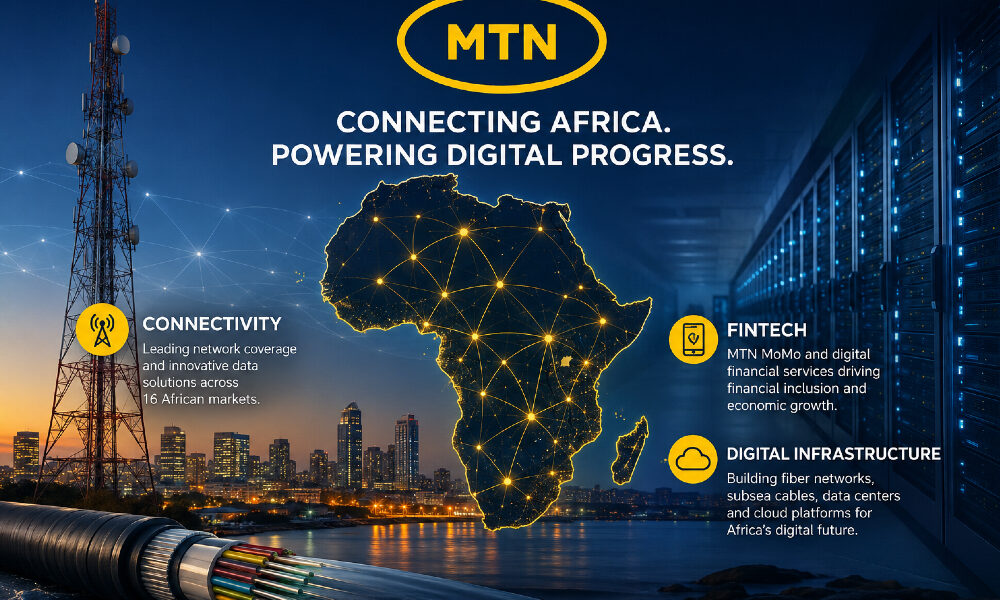
Through fibre infrastructure, 5G, cloud, enterprise technology, cybersecurity, government partnerships and universal-access investments, MTN is positioning itself as part of the digital backbone supporting Uganda’s economic transformation.
At last year’s Middle East and Africa Digital Transformation Summit in Kampala, Ibrahim Senyonga, MTN Uganda’s General Manager for Enterprise Business, described the shift.“Connectivity is no longer a finish line; it is merely the runway,” Senyonga said.
“Our task is to build secure, scalable, and intelligent solutions that let Uganda’s enterprises, public institutions and citizens take off in the digital economy.”
That transition reflects MTN’s Ambition 2025 strategy and its broader evolution towards a technology company.
THE CONNECTIVITY LAYER
MTN has invested in its mobile network and fibre backbone while expanding access to high-speed connectivity.
The company launched Uganda’s first 5G network, offering ultra-low latency of about five milliseconds and speeds that can be up to 100 times faster than 4G under suitable conditions.
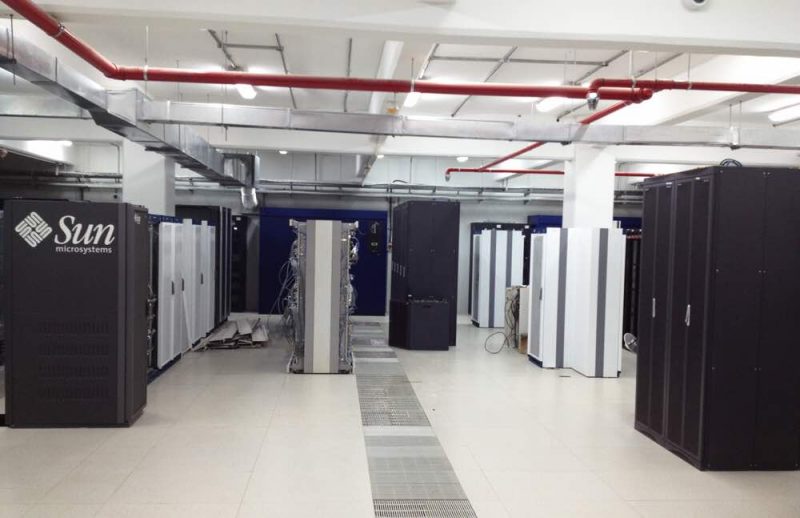
Beyond faster smartphone browsing, 5G can support industrial automation, connected devices, remote monitoring and advanced enterprise applications.
MTN has also upgraded its core network and fibre backbone, including capacity of up to 400 Gbps. In June 2025, it conducted East Africa’s first 5.5G, or 5G-Advanced, showcase at its Kampala headquarters.
The company is also working to expand high-speed connectivity into remote and strategic areas, including West Nile.
THE FIBRE LAYER
Behind every cloud application, video call, mobile payment and online public service are fibre networks carrying large volumes of data.Bayobab Uganda, MTN Group’s digital infrastructure arm, unveiled a 260-kilometre fibre route linking Kampala to Tororo and Malaba at the Kenyan border.
Built along the Uganda Railways corridor, the route connects Uganda to Bayobab’s fibre network in Kenya and onward to subsea cable landing stations in Mombasa.
The route provides access to international capacity, improves latency and adds redundancy to Uganda’s fibre systems. It supports more than one terabyte of capacity and connects key Kampala data centres.

Bayobab Uganda Managing Director Juliet Nsubuga said the company leveraged the existing rail network to deploy fibre and improve connectivity.
For a landlocked country, route diversity is strategically important because alternative paths can help maintain service continuity when disruptions occur.
THE ENTERPRISE TECHNOLOGY LAYER
MTN’s enterprise portfolio includes cloud and colocation, Internet of Things, big data, cybersecurity, unified communications and platform services.
Through its partnership with Microsoft, MTN Uganda supports digital and cloud transformation for businesses and institutions, including Microsoft Teams, Modern Work tools, data analytics and localised enterprise cloud infrastructure.

“Our strategic alliance with Microsoft is a testament to our commitment to providing cutting-edge technology solutions that drive progress and innovation in Uganda,” Senyonga said.
MTN also offers software-defined wide-area networking, or SD-WAN, which allows organisations to manage multiple connections through a centralised software layer while providing traffic analytics, intelligent routing and security.
The company is also applying artificial intelligence and machine learning through the MTN Genova transformation framework to support network optimisation, energy management and automated customer operations.
THE CLOUD, DATA AND SECURITY LAYER
As more organisations digitise, the ability to store, process and secure data becomes increasingly important.Cloud infrastructure allows businesses and institutions to access computing resources without building and maintaining every component themselves.
MTN’s enterprise technology offering is therefore increasingly linked to cybersecurity and data protection, as more transactions and records move online.Through its partnership with Infobip, MTN also provides businesses with digital communication tools across SMS, WhatsApp, voice, email and chat.
THE PUBLIC-SERVICE LAYER
Government institutions increasingly require reliable connectivity and technology platforms to deliver services, manage information and communicate with citizens.
Last year, MTN co-hosted a Government ICT Round Table with the Ministry of ICT and National Guidance to discuss modernising service delivery, expanding broadband access and developing digital public infrastructure.
The collaboration aligns with Uganda’s Digital Transformation Roadmap and priorities around digital infrastructure, digital services, cybersecurity, data protection and digital skills.
MTN also this year remitted Shs54.27 billion to the Uganda Communications Commission’s Universal Service and Access Fund, which finances communications infrastructure, internet access and digital-literacy initiatives in rural and underserved communities.
UCC Executive Director Nyombi Thembo described the contribution as a shared investment in Uganda’s future.

THE DIGITAL-PAYMENTS LAYER
Mobile Money has become another important component of Uganda’s digital economy, providing infrastructure for payments and transfers.
The broader significance is that established digital payment platforms can provide transaction rails for businesses and other digital services as commerce moves online.
A BACKBONE FOR TRANSFORMATION
MTN’s transformation is therefore visible across several interconnected layers.Fibre and mobile networks provide connectivity. 5G increases capacity and supports new applications. Cloud and enterprise platforms provide computing and business tools.
Cybersecurity protects digital operations. Payment systems support commerce, while government partnerships and universal-access investments extend the benefits of digitalisation.
The challenge is ensuring that these capabilities reach beyond Kampala and are supported by affordable devices, reliable electricity, digital literacy and appropriate policy.
No single company can build Uganda’s digital future alone. Spectrum policy, data protection, last-mile infrastructure and affordability require coordinated action between government and the private sector.
But MTN’s expanding role demonstrates how a telecommunications company can become an important technology and infrastructure partner.
Uganda’s digital economy will ultimately depend on the strength of the networks beneath it, the platforms running on those networks, the security protecting them and the partnerships extending their reach.
As Senyonga put it, “Building the digital state requires spectrum policy, data protection laws, last-mile power, and affordable devices, none of which any single actor controls.”
About Post Author