OIL SWEET OIL! M7 Unveils ‘Pearl Sweet’ Crude, Says ‘No Sugar’ In Uganda’s Black Gold
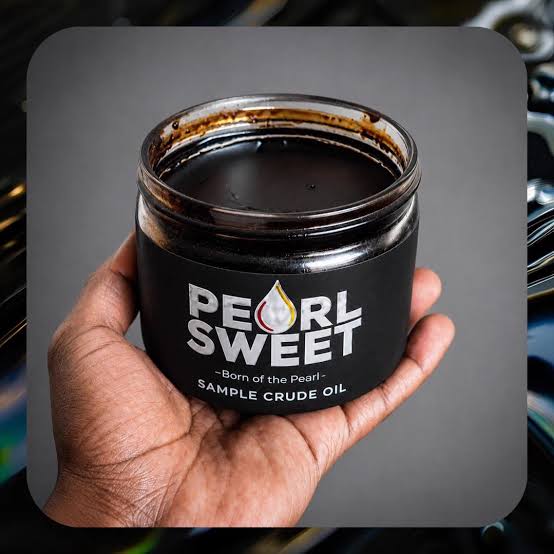
Uganda’s long-awaited oil has finally got a name — and President Yoweri Museveni wants everyone to know that despite being called **“Pearl Sweet,” there is no sugar in the black gold!
Museveni on Wednesday unveiled “Pearl Sweet” as the official name for Uganda’s crude oil, complete with the slogan “Born of the Pearl,” turning the country’s latest petroleum milestone into a moment of national pride — and plenty of laughter.
The President unveiled the name at the Kingfisher Development Area in Kikuube District as Uganda inches closer to commercial oil production, expected by the end of September 2026.
Museveni joked about the word “sweet” before explaining its petroleum meaning.
“I asked my people, ‘Is there sugar in the petroleum? Why do you call it sweet?’” Museveni said, drawing laughter.
He then explained: “The Pearl is Uganda.”
The name cleverly combines Uganda’s famous tourism identity as the “Pearl of Africa” with the technical characteristics of the country’s crude.
In petroleum language, “sweet crude” refers to oil with relatively low sulphur content, which generally makes it easier and less costly to refine compared to higher-sulphur “sour” crude.
So, while Pearl Sweet may sound like something that belongs on a breakfast table, Uganda’s latest “sweet” product is firmly destined for the energy and petroleum industry.
BLACK GOLD GETS A BRAND
The unveiling comes as Uganda prepares to cross the biggest milestone in its more than two-decade petroleum journey — moving from exploration and development into actual production.
Commercial discoveries in the Albertine Graben began taking shape in 2006, with Government saying exploration has established approximately 6.5 billion barrels of oil initially in place, of which about 1.4 billion barrels are currently considered recoverable.
The country also has nearly 500 billion cubic feet of natural gas.
At Kingfisher, operated by CNOOC Uganda Limited, the oil dream is already taking physical shape.
The development comprises four well pads and 31 development wells and is designed to produce approximately 40,000 barrels of crude per day at peak, according to Energy Ministry Permanent Secretary Irene Bateebe.
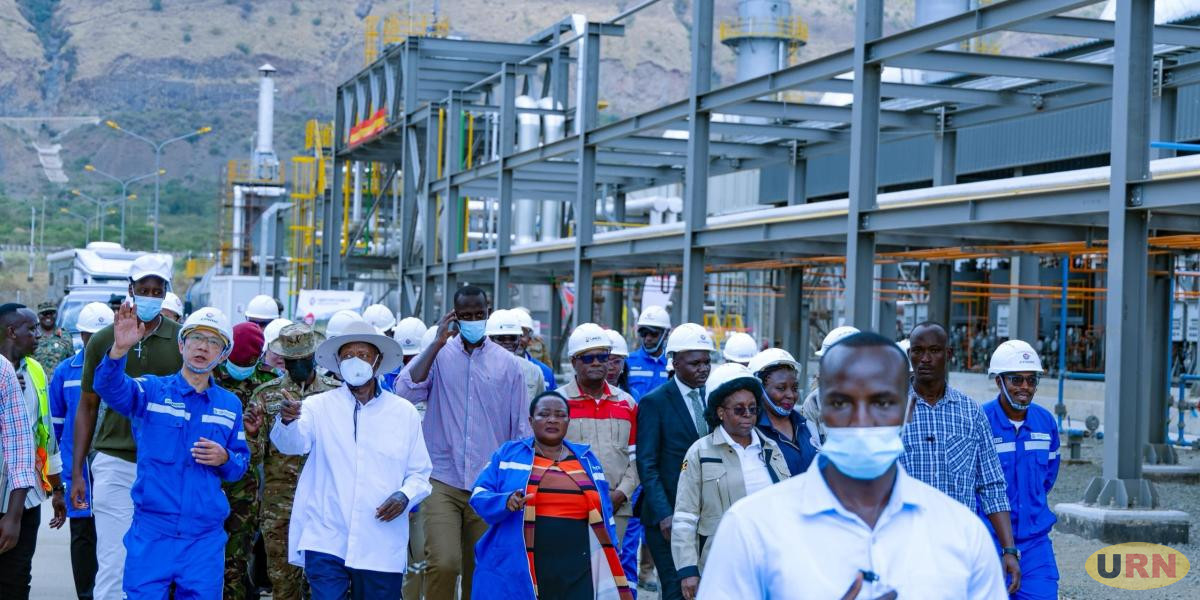
CNOOC President Dr Liu Xiangdong said the project’s Central Processing Facility achieved mechanical completion on August 24, with 22 wells already drilled.
Liu recalled CNOOC’s entry into the project in 2012 and the subsequent efforts that have pushed Kingfisher towards production.
TILENGA TO ADD THE BIG BITE
Kingfisher, however, is only one half of Uganda’s planned oil production machine.
The larger Tilenga project, operated by TotalEnergies EP Uganda, is designed to produce approximately 190,000 barrels per day at peak.
Together, Kingfisher and Tilenga are expected to deliver about 230,000 barrels of crude per day at peak production.
But because Uganda is landlocked, getting the Pearl Sweet out of the country will require a long journey.
Enter the 1,443-kilometre East African Crude Oil Pipeline (EACOP), which will transport the crude from Kabaale in Hoima to the Chongoleani Peninsula near Tanzania’s Tanga port.
The insulated pipeline is designed to transport up to 246,000 barrels per day.
As of September 1, EACOP had reached 92.7% overall completion, putting Uganda’s export infrastructure in the final stretch towards first oil.
MUSEVENI WANTS MORE THAN CRUDE
Museveni said EACOP remains central to the economics of Uganda’s petroleum strategy.
He said transporting crude through the pipeline would cost about US$12.77 per barrel, while domestic refining could eliminate the cost of transporting crude for oil processed inside Uganda.
Government plans to establish a 60,000-barrel-per-day refinery at Kabaale, alongside a multi-products pipeline and petroleum storage facilities.
The refinery is currently at the pre-final-investment-decision stage following the effectiveness of an implementation agreement with Alpha MBM International LLC-FZ.
Museveni also stressed that Uganda’s oil strategy is not simply about pumping crude and sending it abroad.
He said associated gas from Kingfisher that might otherwise have been flared will instead be used to generate electricity, with officials putting the planned generation capacity at about 80 megawatts.
Additional gas will be processed into liquefied petroleum gas for cooking.
“No flaring of gas,” Museveni declared.
PEARL OF AFRICA, NOW PEARL SWEET
The Government says the petroleum sector is being developed under laws requiring sustainable development, environmental protection, public safety, transparency, accountability and national participation.
Uganda’s Constitution vests petroleum in Government on behalf of the people, while the Petroleum (Exploration, Development and Production) Act provides the framework for responsible development of the resource.
The Public Finance Management Act provides mechanisms for managing petroleum revenues, including the Petroleum Fund.
Uganda has also been a member of the Extractive Industries Transparency Initiative since 2020, although the initiative has called for further work in areas including contract and beneficial-ownership disclosure and civic participation.
For now, however, Uganda has officially entered the “sweet” chapter of its oil story.
And as the country waits for the first commercial barrel, one thing is clear: Pearl Sweet may have a sweet name, but Uganda’s black gold is expected to generate serious money.
GOT A HOT STORY? LET US KNOW!
Got breaking news, explosive secrets, or hard evidence?
Email us: redpeppertips@gmail.com
We accept tips, documents, videos, photos, and recordings—the more evidence you have, the better.
CONFIDENTIALITY IS OUR TOP PRIORITY. SOURCES ARE ALWAYS PROTECTED!
About Post Author