Opinion: Ending Drug Theft in Uganda Requires a United Front
By Martha Asinguza
The theft and diversion of government-supplied medicines in Uganda is more than a logistical failure—it is a breach of public trust and a threat to the health and dignity of every citizen.
While the National Medical Stores (NMS) has significantly improved drug delivery through its Last-Mile Delivery system, challenges remain at the point of use.
Stockouts, informal charges, and missing supplies continue to frustrate patients. These challenges cannot be solved by one institution alone.
To truly protect medicines and ensure they serve the intended beneficiaries, Uganda must build a united front across all levels of leadership and society.
Doctors, nurses, pharmacists, and storekeepers are at the heart of the system. Their prescribing habits, inventory management, and ethical conduct directly influence whether medicines are used effectively or lost to misuse.
Responsible prescribing, proper documentation, and strict stock control are essential. So is the courage to report internal malpractice—because protecting public resources is part of professional duty.
Oversight and Engagement
District Health Officers (DHOs), LC5 Chairpersons, MPs, and Resident District Commissioners (RDCs) must collaborate regularly to ensure transparency around drug deliveries. Public awareness campaigns, barazas, and audits should be standard.
Local leaders must not wait for national scandals—they must act on community concerns, verify NMS deliveries, and protect whistleblowers.
Law enforcement must treat drug theft as a serious crime, not a minor workplace dispute. Investigations should be thorough, and prosecutions pursued promptly. Judicial officers must apply relevant laws fairly and decisively, sending a clear message that medicine theft is a public offense with serious consequences.
Patients and community members have a right to free medicine in public facilities. They also have a role in protecting that right.
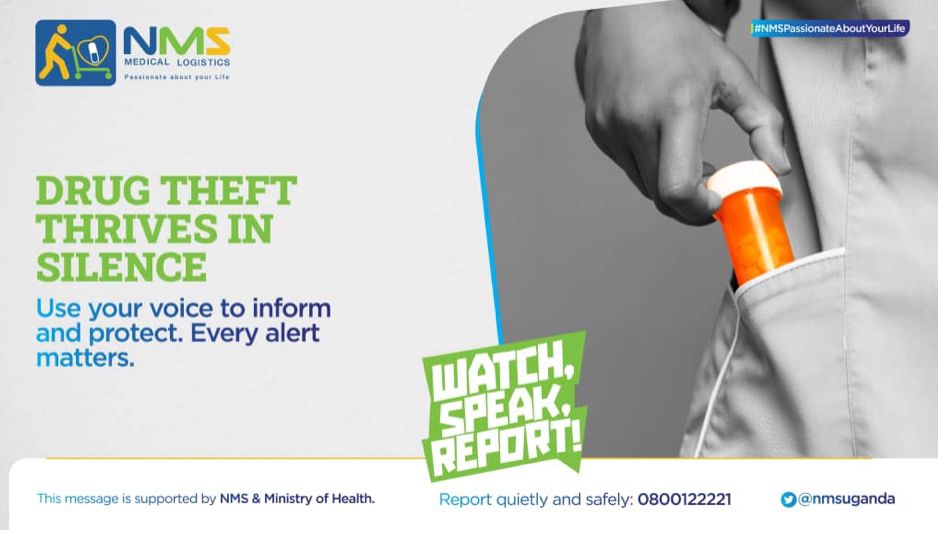
By learning how to identify government drugs (clearly marked “Government of Uganda – Not for Sale”), reporting suspicious sales, and holding local leaders accountable, communities become active defenders of health services.
No medicine should go missing in a country that has paid for it. No mother should be turned away for lack of gloves or charged for a Mama Kit meant to be free.
Ending drug theft is not just about systems—it’s about shared responsibility. When every stakeholder plays their part, Uganda can build a health system rooted in trust, integrity, and service.
Because in the end, every medicine counts—and every action matters.
The author is a student at Makerere University.
About Post Author