RAILWAY ROT! Investigation Reveals Billions Waste, Defaulting Tenants, Missing Land Titles, Ghost Wagons & Stalled Projects
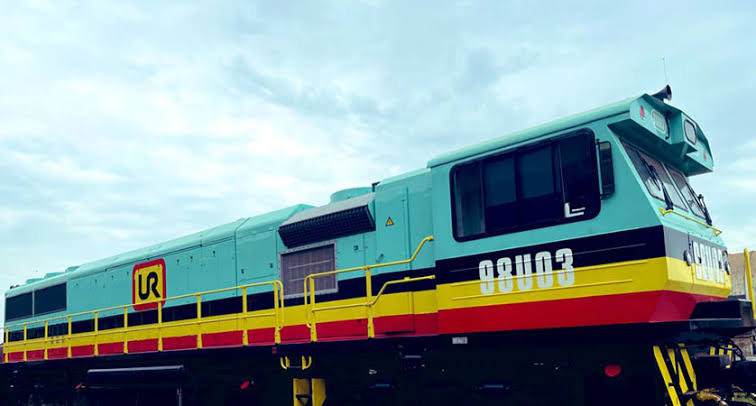
There is trouble on the tracks at Uganda Railways Corporation after a damning Auditor General’s 2025 report laid bare a trail of financial chaos, stalled projects, and shocking asset mismanagement that has left the once-strategic corporation limping.
The report paints a grim picture of an institution derailed from its mandate, bleeding money and staggering under the weight of unresolved liabilities, weak controls, and glaring operational failures. URC posted a staggering net loss of UGX 32.810 billion in the financial year 2024/2025, raising serious questions about leadership oversight and accountability at the top.
Even more alarming is the unresolved burden of contingent liabilities amounting to UGX 31.579 billion linked to government loans dating as far back as 1987. The absence of supporting documentation has left the corporation’s true financial position hanging in uncertainty, with auditors warning that this gap creates a dangerous blind spot. “There is uncertainty over the Corporation’s financial position,” the report notes, in what insiders describe as a ticking financial time bomb.
Land, one of URC’s most valuable assets, is also slipping through its fingers. A total of 62 land titles measuring 17.407 acres remain unreleased by the Privatisation Unit, exposing prime railway property to encroachment, loss, and outright undervaluation. These are not just any plots — they include high-value station reserves originally earmarked for expansion, some exceeding 10 acres. Today, instead of fueling growth, they are sitting in limbo, vulnerable and unprotected.
Meanwhile, a UGX 12.418 billion contract for MV Pamba has turned into a risky gamble. The contractor failed to provide the mandatory performance security of UGX 620.936 million and did not submit annual financial statements, yet the contract was not fully enforced. Auditors warn this laxity “increases the risk of revenue loss,” pointing to glaring weaknesses in contract supervision.
At the same time, URC is sitting on unpaid rent worth UGX 2.365 billion from five tenants occupying its properties under expired agreements. It is not clear whether Uganda Driving Licensing System (UDLS), which operates from the URC building on Nasser Road in Kampala is among the defaulting tenants. Despite the prime commercial value of these properties, management has failed to collect dues or regularize tenancy agreements, effectively allowing millions to slip through the cracks.
The situation at the Kampala Goods Shed is equally baffling. The Internal Container Depot, a facility with the capacity to handle 96 wagons and positioned as a key logistics hub for imports and exports, remains non-functional. The reasons? Failure to rehabilitate it and lack of a URA licence. This is despite the presence of URA offices, security personnel, and trained staff on site. What should be a revenue-generating powerhouse has instead become a symbol of missed opportunity.
In procurement, the corporation’s performance is nothing short of dismal. Out of a planned UGX 213.467 billion in procurements, only UGX 18.834 billion — a mere 9 percent — was actually awarded. The legally mandated 15 percent reservation for women, youth, and persons with disabilities was completely ignored, with not a single contract going to these groups. This raises serious compliance and inclusivity concerns.
Even where contracts were awarded, management faltered. While contracts worth UGX 17.598 billion were completed, others valued at UGX 936.694 million were delayed or terminated, crippling service delivery. A particularly glaring case involved the rehabilitation of passenger coaches worth UGX 107.706 million, which was delayed by 133 days without approved extensions. Despite this, no liquidated damages were enforced. “This indicates weak contract management controls,” the report states bluntly.
The corporation is also choking on obsolete assets. Planned disposals worth UGX 4.798 billion were never executed, leading to accumulation of unusable equipment. Worse still, assets valued at UGX 4.583 billion are lying idle or underutilised, with no performance reports to justify their existence.
Shockingly, URC operates without an Asset Management Policy, and internal audits have failed to address monitoring of asset utilisation. This has created fertile ground for inefficiency and misuse. Non-current assets worth UGX 77.037 billion have no maintenance schedules, leading to visible deterioration. Among the casualties are non-functional marine equipment valued at UGX 14.652 billion and an underutilised floating dry dock worth UGX 18.728 billion.
The rot runs even deeper. Assets worth an eye-watering UGX 3.438 trillion — including land, locomotives, railway lines, and telecom masts — are poorly safeguarded, with some uninsured and unsecured. Cases of outright loss have also been recorded, including theft of 46 rails at Jinja Goods Shed and a staggering 394 untraceable wagons under the Nyahururu Virtual Station. “This increases the risk of continued asset loss and misappropriation,” auditors warned.
Financially, the corporation is barely staying afloat. Out of an approved budget of UGX 285.690 billion, only UGX 162.021 billion was realised, severely constraining operations. Internally generated revenue also fell short, with only UGX 20.176 billion collected against a target of UGX 32.580 billion. The UGX 12.412 billion shortfall was largely driven by underperformance in freight services — the core business of URC — which alone accounted for UGX 11.067 billion of the gap.
Performance across planned outputs was equally disappointing. Only outputs worth UGX 1.292 billion were fully implemented, while UGX 32.375 billion worth were partially done. Fourteen outputs, representing UGX 46.358 billion, were not implemented at all. To make matters worse, outputs worth UGX 1.446 billion could not even be assessed due to lack of clear indicators.
The East African Railway Rehabilitation Support Project, meant to revive the sector, is another story of missed opportunity. Out of expected financing of USD 412.8 million, only USD 75.8 million had been disbursed by June 2025, leaving a massive USD 337 million idle. No funds were received from key financiers like the African Development Bank and African Development Fund, yet the government continued to incur commitment fees, which rose to USD 1.528 million over two financial years.
During FY 2024/2025, only UGX 8.926 billion — just 4 percent of the approved project budget — was received, leaving a massive funding gap of UGX 190.720 billion. Of the little that came in, only UGX 7.901 billion was spent, reflecting a weak absorption rate that has crippled implementation. Out of 53 planned project activities, only five had been partially implemented by June 2025.
GOT A HOT STORY? EMAIL: redpeppertips@gmail.
SOURCE PROTECTION/CONFIDENTIALITY IS OUR NO.1 PRIORITY.
About Post Author