SCHOOL FUNDING! Gov’t Dumps Pupil Numbers Model, Targets Real Running Costs
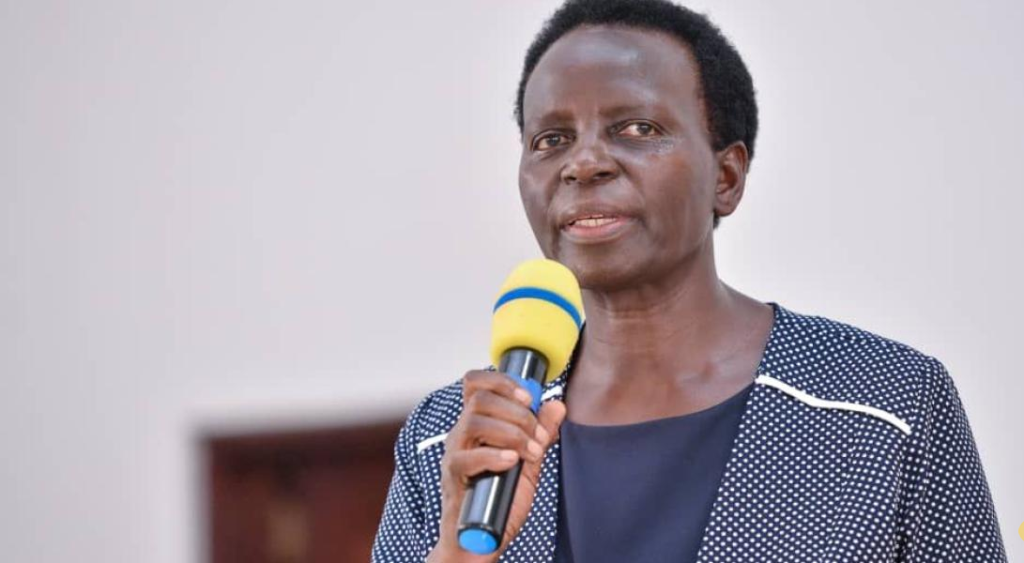
Dr. Kedrace Turyagenda, the Permanent Secretary at the Ministry of Education
The government is set to overhaul its public education funding framework, scrapping the long-standing per-pupil capitation grant system in favour of a cost-based model. Under the new funding model, funding for all public education institutions, spanning primary, secondary, and tertiary levels, will no longer be determined solely by student numbers.
The development was confirmed by Dr Kedrace Turyagenda, the Permanent Secretary of the Ministry of Education and Sports, who stressed that the plan is still a proposal under development. “The current model has its own issues, and we think what is being proposed is better. We will be updating the public and stakeholders as time goes on. We are still in discussion, but it will be happening,” she said.
Ivan Ogwang, the Acting Principal Economist for Strategic Planning and Project Formulation at the Ministry of Education and Sports, said that if the new model is adopted, future budgetary allocations will directly target the actual running costs, geographic locations (urban, peri-urban, rural and hard-to-reach areas), and structural needs of individual institutions.
Ogwang added that the ministry is already conducting a study to establish the real cost of operating schools and that the transition will eliminate the financial incentives behind institutional headcount fraud while shielding vulnerable, underfunded institutions from structural deficits.
“The study is already underway, and it will soon be done. I think the model will start soon. The existing school budgeting, procurement and accountability arrangements will not be affected,” he said, adding that the ministry will also consult different stakeholders.
Under the current arrangement, every government-aided school receives a fixed baseline of 1.35 million shillings. Additional funds are then allocated according to the number of learners reported. Primary school pupils under Universal Primary Education (UPE) attract 20,000 shillings per year, or about 6,667 shillings per term.
Ordinary-level secondary students under Universal Secondary Education (USE) receive about 175,000 shillings annually, while Advanced-level students under UPOLET get around 270,000 shillings. These figures have remained largely unchanged for years despite rising costs.
Over the years, education analysts have maintained that the per-head system has several weaknesses. One major problem is that the enrolment data used to decide funding for the next financial year is usually collected in November. By the time the new school year begins in January, many children have transferred, dropped out, or newly enrolled, making the November figures unreliable for accurate budgeting.
The system has also been heavily affected by ghost learners, students who exist only on paper. Schools and some officials inflate numbers to claim more money. A surprise headcount conducted in December 2024 across 236 primary schools in Ntungamo District uncovered about 43,000 ghost pupils. Capitation grants had been paid for 124,817 learners, yet verified enrolment stood at only about 80,000, a discrepancy of more than 36 percent that cost the district an estimated 1 billion shillings.
Later clean-up exercises in the same district identified as many as 140,000 ghost names on registers and recovered 600 million shillings. Similar problems have been reported elsewhere. In Kitgum, 38 percent of listed USE learners could not be traced. Audits in several West Nile districts found more than 1,600 ghost pupils linked to about 480 million shillings in misallocated funds. Headcounts in Busia also revealed thousands of unaccounted-for learners.
The Ministry of Finance estimates that ghost pupils cost the country about 41 billion shillings every year. That money is equivalent to supporting more than two million real primary learners with their full capitation grants, employing nearly 5,000 primary teachers for a year, or constructing more than 200 new classroom blocks.
Grants “too low”
The National Planning Authority (NPA) has repeatedly described the current grants as inadequate. It recommends raising the primary per-pupil allocation to between 59,000 and 63,500 shillings a year, with higher amounts for urban schools, and much larger increases for secondary schools, so they can cover teaching materials, co-curricular activities, administration and maintenance.
In an analysis titled Free But Not Free: Why Uganda’s Education Still Drains Parents’ Pockets, Hellen Zawedde of the Economic Policy Research Centre notes that the capitation grant is meant to cover instructional materials, co-curricular activities, school management, administration and contingencies, but is far too small. As a result, many schools, especially in urban areas, still charge parents extra for lunch, development and teacher allowances.
Results-based component
Beyond the cost of running a school, the ministry will build a results-based component into the funding model. High-performing schools will receive additional resources above the baseline.
Frances Atima, the Chief Education Officer in charge of Standards and Quality Assurance, said inspection reports will award points for the quality of teaching and learning, the learning environment and safety, community participation, and school management and leadership. Management and leadership will carry the highest weight.
“The change will make the work of inspectors more consequential because their reports will now directly influence school budgets. This will require that all schools are inspected,” she said while addressing inspectors from the central region on Tuesday evening.
Atima warned inspectors to perform their duties diligently. However, inspection coverage remains thin. Updated reports show only about 45 to 50 percent of schools nationwide were inspected in the first and second terms this year. Low staffing, underfunding and lack of transport continue to hamper the inspectorate, and in some areas one inspector is responsible for well over 100 schools.
Ogwang said the basic fund for running a school is expected to cover 75 percent of the funding allocated to a school, while the remaining 25 percent will be determined by a school performance assessment model. “The exercise will be based on verifiable evidence and will follow due process. Approval of funds will be by the Ministry of Education and other entities such as the Office of the Prime Minister and the Ministry of Finance,” he added.
Ogwang further noted that school leaders should understand that the new model is about improvement, not penalising anyone, and that several other sectors, including the Ministry of Health, have already rolled out similar models. He added that the ministry is currently seeking feedback and opinions from stakeholders, including local government education officers and headteachers.
Dr Turyagenda said the results-based component is one of the ways the ministry intends to improve education outcomes, and that it should serve as a wake-up call for headteachers and school foundation bodies. “It is a kind of motivation strategy, but it is also an accountability aspect. If a headteacher does not get money and the school is collapsing, the foundation body and school management will put them to task,” she said.
Comparative experience
The ministry’s pivot aligns with a growing regional and global trend. A comparative review by this publication shows that several countries have successfully moved beyond pure per-pupil funding toward models that factor in actual running costs, location, and specific school characteristics and needs.
In Eastern Europe, for instance, nations such as Estonia and Lithuania revised their earlier headcount formulas after discovering that simple flat-rate grants left small and rural schools severely underfunded. By introducing accurate data tracking and clear “cost weights”, which add extra funding for remote or smaller institutions, these adjusted systems significantly improved equity and spending transparency.
Global reviews similarly note that most high-performing education systems now use formulas that start with basic pupil numbers but automatically scale upward based on remoteness, school size, and student needs. In Africa, results-based pilots in Sierra Leone, Cameroon, and Ethiopia linked part of school grants to verified improvements in attendance, management, and learning conditions, producing measurable gains where inspection and data systems were reasonably strong.
Warning to DEOs
Meanwhile, before the new model is rolled out, Dr Turyagenda directed district education officers (DEOs) to ensure there is no misuse of funds, and to confirm enrolment numbers before releasing capitation grants.
She said the ministry has received information that corruption also involves some DEOs and other local government officials, and warned them to be cautious if they do not want to be caught up in the ongoing crackdown. “The DEOs need to verify the number of learners before sending the capitation, or else they might be seen as part of the group if we find any wrongs,” she said.
GOT A HOT STORY? LET US KNOW!
Got breaking news, explosive secrets, or hard evidence?
Email us: redpeppertips@gmail.com
We accept tips, documents, videos, photos, and recordings—the more evidence you have, the better.
CONFIDENTIALITY IS OUR TOP PRIORITY. SOURCES ARE ALWAYS PROTECTED!
About Post Author