SH41BN SILK PROJECT BOMBSHELL! MPs, Sheema Officials Clash Over Stalled TRIDI Investment as Questions Mount Over Impromptu Sunday Visit
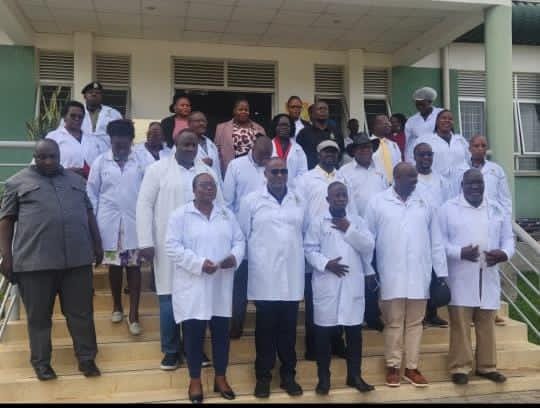
Members of the Parliamentary Committee on Science, Technology and Innovation visited the government-funded sericulture projects in Sheema and Kiruhura over the weekend as part of their oversight duties
A Sh41 billion government investment meant to turn Uganda into a silk-producing powerhouse has been plunged into fresh controversy, with Parliament probing stalled projects amid questions over the motive and timing of its Sheema visit, who knew the MPs were coming and who actually organised the controversial Sunday inspection.
Members of the Parliamentary Committee on Science, Technology and Innovation visited government-funded sericulture projects in Sheema and Kiruhura over the weekend as part of their oversight duties.
But in Sheema, the inspection quickly turned into a confrontation of accounts, with the legislators failing to access the factory and district officials subsequently challenging the manner in which the visit was organised.
WHO ACTUALLY INVITED WHOM?
Sheema District officials maintain that they were never properly informed about the parliamentary inspection and, more importantly, question why TRIDI, an entity at the centre of the project’s accountability questions, was the one communicating the planned visit to the district.
Committee chairperson Patrick Musinguzi, the Kashari North MP, told RedPepper otherwise.
“First of all for Kiruhura, all stakeholders including DLG and all officials were present which means they knew of our coming and they all attended,” he said.
“In Sheema, we have an acknowledgment letter from the district which clarifies that they received the letter.”
Musinguzi also said he personally spoke to Chief Administrative Officer Huddu Nsubuga, who told him that he had delegated one of his staff, the entomologist, to represent him.
“The CAO that you are referring to I personally talked to him and he said he had delegated one of his staff the entomologist,” he said.
But documents obtained by RedPepper now add another twist to the dispute.
The communication received by Sheema District was not a letter directly from the parliamentary committee to the district leadership.
Instead, it was a letter from TRIDI Executive Director and Sericulture Project Principal Investigator Dr Clet Wandui Masiga, inviting district officials to participate in the parliamentary visit.
The letter, dated September 3, 2026, was addressed to a wide range of Sheema stakeholders, including the District Chairperson, Sheema Woman MP, Sheema Municipality MP, Chief Administrative Officer, District Police Commander, District Internal Security Officer, District Operation Wealth Creation Coordinator, District Production Officer, District Planner, District Entomology Officer and other local officials.
It also copied the TRIDI Board of Directors and legal team.
Its subject read:
“MEMBERS OF THE COMMITTEE OF SCIENCE TECHNOLOGY AND INNOVATION OF THE PARLIAMENT OF UGANDA VISIT TO THE COMMERCIALISATION OF SERICULTURE TECHNOLOGIES AND INNOVATION PROJECT.”
In the letter, Masiga stated that TRIDI had received a communication from Members of Parliament on the Committee on Science and Technology informing the institute that they would visit the Commercialisation of Sericulture Technologies and Innovations in Uganda at Rubare Sericulture Research and Development Centre, Sheema District, on Sunday, September 6, 2026 at 2:00pm to assess its progress.
The letter explained that the project was partly funded as a Presidential Initiative by the Government of Uganda through Science, Technology and Innovations, Office of the President.
Masiga then invited the listed district officials to participate in the visit, saying the purpose was to update themselves about the project and learn about TRIDI’s model of sericulture development in Uganda.
That letter has now become central to the dispute because the Sheema District Chairperson responded two days later by rejecting the proposed visit.
SHEEMA CHAIRPERSON FIRES BACK
In a letter dated September 4, 2026, Sheema District Chairperson Tumwijukye Jemimah Buhanda acknowledged receipt of TRIDI’s communication.
But rather than welcoming the parliamentary team, she told TRIDI that the district leadership had objected to the station visit until proper procedures were followed and outstanding issues addressed.
The letter was titled:
“CALL OFF OF THE COMMITTEE OF SCIENCE, TECHNOLOGY AND INNOVATION OF PARLIAMENT VISIT TO RUBARE SERICULTURE STATION ON 6/9/2026.”
The District Chairperson stated that Rubare Sericulture Centre is a joint venture between UNCST and Sheema District Local Government, which she said are the shareholders, and therefore argued that the facility was not part of the TRIDI model.
She further pointed to unresolved issues and recommendations contained in the 11th Parliament committee report of May 2023, which she said had also been adopted by the district council but had never been acted upon.
The letter raised an even stronger objection to TRIDI’s involvement.
The Chairperson stated that TRIDI was one of the respondents in a petition that had been handled, and questioned its authority to invite the district leadership to participate in the parliamentary visit.
She argued that the main stakeholder in the matter was the district council, which she described as the custodian of district assets on behalf of the public.
The Chairperson also objected to the timing of the inspection, pointing out that Sunday is not a working day and therefore the district leadership would not be in a position to participate.
She consequently informed TRIDI that the district leadership had objected to the visit until proper procedures were followed and the issues raised were handled.
She then directed the Chief Administrative Officer to take charge and ensure that the station property was “heavily guarded and protected.”
Copies of the letter were sent to the CAO, Resident District Commissioner, District Police Commander and District Internal Security Officer.
The exchange leaves a significant contradiction.
While Musinguzi says the district had been informed and had acknowledged the communication, the District Chairperson’s written response shows that, after receiving TRIDI’s invitation, the district leadership objected to the proposed visit.
‘HOW DID TRIDI GET TO MPs?’
A prominent member of Sheema District Local Government, who asked not to be named because he is not authorised to speak on behalf of the district, has now questioned the committee’s conduct, accusing it of seeking publicity rather than solutions.
He said the committee’s visit was not properly organised and that established procedures should have been followed.
“They are gathering popularism instead of looking for solutions. Their colleagues, our MPs, should guide them on how to conduct themselves when they are executing their oversight role. Their visit was not properly organized,” he said.
According to the official, when a parliamentary committee intends to inspect a project, it should communicate with the relevant stakeholders and allow them to organise the visit.
He argued that in the case of the Rubare silk factory, the principal stakeholder is Sheema District Local Government, and therefore the committee chairperson, Patrick Musinguzi, should have formally written to the District Chairperson, who would then invite the relevant district officials and other stakeholders, including TRIDI.
But, he claimed, that is not what happened.
“What happened? It’s TRIDI which invited the district leadership. How did the contractor get in touch with MPs committee to invite them?” he asked.
The official questioned how a contractor facing accountability questions over a stalled project could effectively become the channel through which the district was invited to a parliamentary inspection of that same project.
“TRIDI was given UGX41bn and they have a lot of accountability issues. The factory has been closed since many years ago,” he said.
He further questioned why the committee did not first consult Prime Minister Rt Hon Robinah Nabbanja, whom he said is already handling the silk factory matter.
“Secondly, the PM, Rt Hon Robinah Nabanja is handling this matter. Why didn’t these MPs seek the attention of PM first; find out where she is with the project and inform themselves?” he asked.
Instead, he accused the committee of allowing itself to be led into the matter by an entity he described as a contractor culpable of having failed the project.
“Instead, they are being led by a contractor who is culpable of having failed the project,” he said.
AREA MPs WERE NOT TOLD
The official also complained that none of the area’s MPs, including the municipality MP where the project is located, had been informed about the committee’s visit.
He said that although Parliament was on recess, basic courtesy and teamwork would have required the visiting MPs to alert their colleagues.
“To make matters worse, none of our MPs or even our municipality MP where the project is located was/were aware of their visit. Parliament is now on recess. Team work, comradeship, courtesy would require that you inform your MPs colleagues when you are visiting their constituencies or district. None of the above,” he said.
He accused the committee of being more interested in publicity than solving the underlying problems.
“Instead they were looking for camera and cheap popularism. Therefore, accordingly, their visit was not properly sanctioned,” he said.
He argued that TRIDI, as a contractor, had no mandate to invite MPs into the district and then invite the district administration to a project inspection.
“TRIDI, a contractor has no mandate to invite MPs into a district and invite the district administration. Can you imagine your contractor engineer inviting you and guests to your project?” he asked.
Musinguzi, however, rejected the suggestion that area MPs had to be informed before the inspection.
“All members of Parliament fall under committees and at the moment they are all busy doing committee work, so we are not mandated to inform them,” Musinguzi said.
He added that the committee visited the area MP, Dickens Kateshumbwa, after the inspection.
WHY A SUNDAY INSPECTION?
The timing of the visit has also attracted attention.
The committee arrived on a Sunday, when district offices would ordinarily not have their full administration in place.
Questions have therefore been raised over why the inspection was conducted over the weekend and whether the timing made it more difficult for district officials and other stakeholders to participate.
Musinguzi dismissed the concern, telling RedPepper that Parliament’s oversight mandate does not prescribe the day or time when committees should inspect government-funded projects.
“When we are doing oversights as mandated by Rules of Procedure Article 193, there is nowhere it’s stipulated that we should visit at such a day or time, so that does not suffice,” he said.
He said the absence of a particular district official could not stop Parliament from carrying out its mandate.
“When the leadership is not around they don’t move with the office…” he said.
But the Sheema official insists the issue goes beyond the choice of Sunday.
He argues that the fundamental question is who organised the visit, who authorised it and whether the relevant district authorities were given an opportunity to participate in an oversight exercise concerning an asset they consider theirs.
DID TRIDI ‘PAY’ MPs FOR THE PROBE?
Questions are now emerging over who actually initiated the parliamentary inspection — whether the Committee on Science, Technology and Innovation independently planned the visit as part of its oversight mandate, or whether TRIDI invited or facilitated the MPs’ inspection.
The questions have been fuelled by allegations that TRIDI may have sought to use the parliamentary probe to revive its stalled project and potentially secure fresh government funding for the same Sh41 billion investment.
Musinguzi, however, dismissed allegations that TRIDI “facilitated” the committee’s trip, saying Parliament, not TRIDI, facilitated the MPs’ travel.
“About TRIDI of course they are funded by the government so we knew how much funding they had received from Government and that’s the reason we had come to assess and find out on what was happening,” he said.
He added: “How can TRIDI facilitate us when we had come to audit them and assess what they have done with the fund!!?”
According to Musinguzi, Parliament facilitated the committee’s travel.
“Parliament facilitated our travel and we are moving all over the country to assess all funded projects not TRIDI alone,” he said.
He said committees write to funded projects before conducting oversight visits and that, where such projects have a relationship with a district, the project is expected to notify the district.
“For us when we are to assess projects we write to the funded projects and if they have any relationship with the district they are the ones that notify them and TRIDI informed Sheema,” he said.
The TRIDI letter now confirms that TRIDI did communicate with Sheema District about the planned parliamentary visit.
However, the District Chairperson’s response shows that the district leadership did not simply accept the invitation. It expressly objected to the visit, citing ownership, unresolved accountability issues and the fact that the inspection was scheduled for a Sunday.
That leaves the central questions hanging: How did TRIDI become the link between the parliamentary committee and the district? Who initiated the contact? Did TRIDI merely pass on information from Parliament, or did it play a larger role in organising the inspection? And could the parliamentary scrutiny ultimately become a route for renewed government funding to TRIDI?
Those questions remain allegations and are not established by the documents or statements so far.
SH41BN INVESTMENT UNDER SCRUTINY
Beyond the dispute over the visit, the bigger concern is what happened to the money and why the projects have not become operational.
In 2022, government planned to invest Sh756 billion over five financial years to promote sericulture across 50 districts.
The Sh41 billion TRIDI project was intended to promote silk production and commercialisation in Sheema, Kiruhura, Bulambuli, Kween, Kamuli, Mubende, Mukono, Iganga, Luwero, Kayunga, Nakaseke, Bukedea, Zombo, Nwoya, Buikwe, Pallisa, Busia, Amolatar, Otuke, Lira, Agago and Pader.
The ambition was to create employment, increase household incomes, support rural communities and generate revenue for Uganda.
Instead, Parliament is now examining why the initiative has remained stalled for more than three years.
TRIDI Executive Director is Dr Clet Wandui Masiga.
KIRUHURA: 25 ACRES BUT NO PROJECT
In Kiruhura, District Chairperson Dan Mukago Rutetebya said the district allocated 25 acres of land for the project.
According to Rutetebya, however, the initiative failed after the contractor allegedly invested the funds allocated for the project in other projects across different districts.
The district eventually lost hope of benefiting from the project, he said.
Rutetebya said the district later wrote to the contractor seeking an explanation but had not received a response.
The allegation is expected to feature prominently when the contractor appears before Parliament.
CONTRACTOR TO EXPLAIN
Tororo Municipality MP Shyam Jay Tanna said the committee had identified several gaps in the implementation of the project.
He said the contractor would be summoned to Parliament to provide a detailed account of the project’s implementation and explain why it stalled.
The committee is therefore expected to seek answers on the money released, what was delivered, what remains incomplete and why the facilities have failed to become operational.
Musinguzi said the committee’s findings on the utilisation of funds are already contained in its report.
“About utilization of funds it’s in our report and it shall become a public document after presentation on floor of Parliament,” he said.
The public will therefore have to wait for the report before the committee’s full findings on the Sh41 billion investment become known.
Musinguzi said Parliament is interested not only in establishing what went wrong but also in finding ways to revive the initiative.
He said the project could create jobs, improve household incomes, support rural communities and generate revenue if adequately funded, properly managed and developed on a commercial scale.
‘WE ARE FOLLOWING THIS MATTER WITH THE PM’
The prominent Sheema District Local Government member said the district is already pursuing the silk factory issue through the Prime Minister’s office and does not want the matter turned into a political spectacle.
“We are following this Silk factory issue with PM. We don’t want to be diverted by camera hungry committees. Ours, is to bring strategic employment through this factory functionality and we don’t need stupid politics,” he said.
He linked the district’s position to the wider NRM government agenda of industrialisation and job creation.
“Remember, as NRM party, we pledged in our manifesto that we shall industrialise our country and create employment. This is part of NRM historical mission. Therefore, our efforts are aimed at making this factory work,” he said.
He insisted that the district’s priority was to get the facility functioning rather than engage in political exchanges.
“Not going around shouting with defamatory stories which don’t make sense or even help our society,” he said.
For now, the Sh41 billion silk project remains caught between parliamentary scrutiny, district objections and questions over what happened to the investment.
And as the contractor prepares to face Parliament, the biggest question remains: where did the Sh41 billion go, why is the silk project still stalled, and who stands to benefit if government decides to pump more money into it?
Watch this space!
GOT A HOT STORY? LET US KNOW!
Got breaking news, explosive secrets, or hard evidence?
Email us: redpeppertips@gmail.com
We accept tips, documents, videos, photos, and recordings—the more evidence you have, the better.
CONFIDENTIALITY IS OUR TOP PRIORITY. SOURCES ARE ALWAYS PROTECTED!
About Post Author