SUPER ANKOLE COWS! NAGRC’s Nshaara Ranch Breeding Programme Eyes New Generation of High-Yield Indigenous Herd
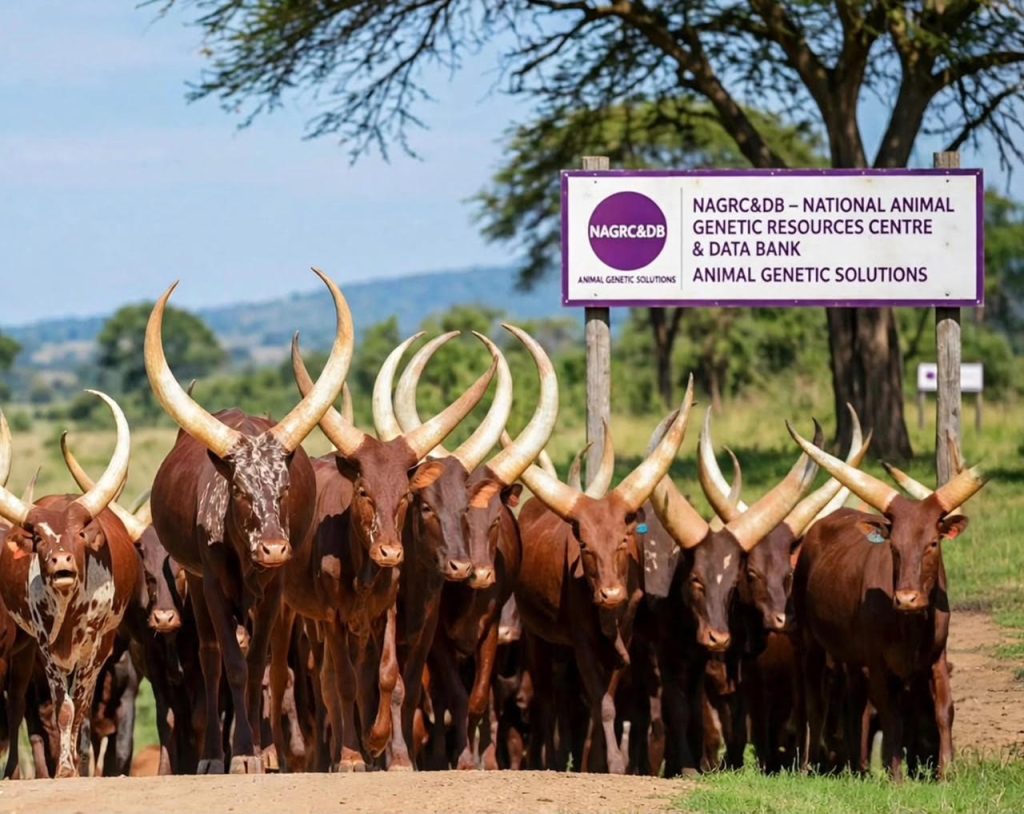
The National Animal Genetic Resources Centre and Data Bank (NAGRC&DB) is entering a new phase of its Ankole Longhorn improvement programme at Nshaara Conservation Ranch, with the focus shifting from identifying exceptional milk-producing cows to establishing a genetically stable population capable of consistently delivering higher yields.
The programme, launched approximately three years ago in Kiruhura District, seeks to develop a high-milk-yielding pure Ankole dairy population by concentrating desirable traits already present within the indigenous breed.
Having recorded substantial improvements in average milk productivity, the ranch is now prioritising the reproduction of superior characteristics across maternal families and successive generations.
Dr Innocent Tuwangye, manager of Nshaara Conservation Ranch, said the programme was designed to increase the productive potential of the Ankole without compromising its genetic identity, adaptability and resilience.
The initiative began by screening the available Ankole population for desirable dairy characteristics and incorporating superior genetics from recognised sources, including the Kisozi Ankole Longhorn conservation and improvement herd.
The selection process prioritises milk yield, lactation length, udder conformation and calving interval. Other important characteristics include growth, body structure, fertility and temperament.
As superior female lines became identifiable, the breeding team increased its focus on selecting bulls from high-performing maternal families.
This is because bulls can transmit desirable genetic traits to their daughters, making the performance of their mothers an important consideration in breeding decisions.
The ranch also maintains individual animal records, including milk production, reproductive events and health information, through physical farm records and the Integrated Livestock Management Information System.
The records provide a basis for evaluating the performance of animals across successive lactations and tracing desirable characteristics through maternal and sire lines.
The programme has already registered notable improvements in milk production.
Average productivity increased from 5.2 litres per active cow per day in 2023 to seven litres in 2024 and 8.6 litres in 2025.
Annual recorded milk production rose from approximately 56,040 litres in 2023 to 168,285 litres in 2025.
The milking population also expanded to 60 cows by December 2025.
Selected cows are now regularly producing between five and 10 litres during morning milking, with exceptional animals achieving even higher yields.
The ranch has complemented genetic selection with improved nutrition, including supplementary hay and silage, to enable animals to express their productive potential.
NAGRC&DB Executive Director Dr Peter Beine said the next phase would be critical in determining whether superior performance could be consistently reproduced across the population.
“Our real measure of success will not simply be one exceptional cow. The breeding objective is to establish a population in which superior milk production can be consistently reproduced from one generation to another,” Beine said.
The next phase will involve continued identification of elite cows, selection of replacement heifers from proven maternal lines, use of bulls from superior dams and systematic evaluation of the resulting offspring.
The programme will also continue to refine feeding and management practices using production data collected from individual animals.
This approach is intended to ensure that improved productivity is accompanied by reproductive efficiency, functional soundness and the retention of the Ankole’s indigenous characteristics.
The breeding initiative is therefore evolving from a programme focused on identifying high-performing animals into a structured, long-term genetic improvement effort.
By establishing a population in which desirable characteristics can be reliably passed from parents to offspring, Nshaara aims to strengthen the role of Uganda’s indigenous cattle in future livestock production.
The programme places the Ankole Longhorn at the centre of an effort to combine genetic conservation with increased agricultural productivity, demonstrating how indigenous resources can be developed through sustained scientific breeding and improved animal management.
GOT A HOT STORY? LET US KNOW!
Got breaking news, explosive secrets, or hard evidence?
Email us: redpeppertips@gmail.com
We accept tips, documents, videos, photos, and recordings—the more evidence you have, the better.
CONFIDENTIALITY IS OUR TOP PRIORITY. SOURCES ARE ALWAYS PROTECTED!
About Post Author