TAYEBWA WARNS OVER EU TRADE DEAL DELAYS! Speaker Pushes EAC To Protect Local Industries… Cites 15% Tax On Processed Ugandan Coffee
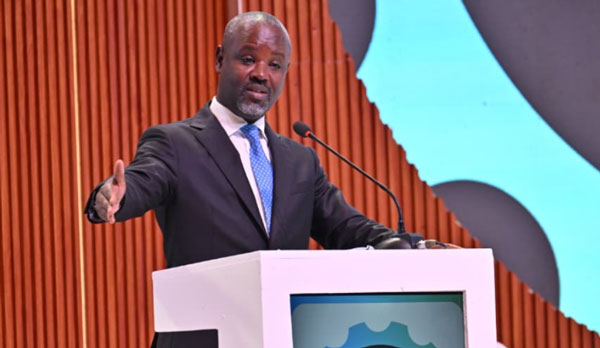
Tayebwa made the call on Wednesday while opening the Uganda Industrialisation Conference 2026 at Speke Resort Munyonyo
The Deputy Speaker of Parliament, Thomas Tayebwa, has urged East African Community (EAC) partner states to fast-track the conclusion of a regional Economic Partnership Agreement (EPA) with the European Union (EU), warning that prolonged delays could expose local manufacturers to unfair competition and undermine the region’s industrialisation efforts.
Tayebwa made the call on Wednesday while opening the Uganda Industrialisation Conference 2026 at Speke Resort Munyonyo, where he represented Speaker of Parliament Jacob Oboth-Oboth. The three-day conference also marks the tenth anniversary of the revival of the Uganda Development Corporation (UDC).
Addressing Trade, Industry and Cooperatives Minister Sanjay Tanna, Tayebwa said outstanding issues in the EAC-EU trade negotiations needed urgent resolution to protect regional industries and ensure fair competition.
“I request you, Minister, to push so that we can quickly conclude the Economic Partnership Agreement for the region, so that goods from Europe don’t come and distort the market for our industries,” he said.
He warned that the absence of a comprehensive regional agreement had created trade imbalances, with individual EAC member states pursuing separate arrangements with the EU.
Kenya’s bilateral Economic Partnership Agreement with the EU, which took effect in July 2024, illustrates the challenges. The deal grants Kenyan goods duty-free, quota-free access to the European market while providing for the gradual removal of tariffs on imports from the EU.
However, the arrangement has attracted legal scrutiny at the East African Court of Justice, which issued an interim suspension in late 2025. Kenya has since appealed while maintaining that market access arrangements remain in place.
Negotiations for a regional EAC-EU EPA were concluded in 2014, with Kenya, Rwanda and the EU signing the agreement. However, its full implementation has remained pending ratification by the other partner states. Uganda and other least-developed EAC members currently enjoy preferential access to the European market under the EU’s Everything But Arms initiative, which grants duty-free and quota-free entry to most products.
Tayebwa argued that a regional agreement would provide a more sustainable framework for protecting East African manufacturers, harmonising trade arrangements and ensuring that the benefits of international trade are shared more equitably across the Community.
He cautioned that the absence of such an arrangement could leave regional exporters at a disadvantage, particularly those seeking to move beyond exporting raw materials to producing higher-value goods. Using coffee, one of Uganda’s leading exports, as an example, Tayebwa highlighted the tariff differences between raw and processed products in the European market.
“If we add value from here, they add a tax of 15 per cent. But if it goes as a green bean, then no tax,” he said. Green coffee generally enters the EU duty-free, while roasted and further-processed coffee attracts higher most-favoured-nation tariffs. This creates a tariff structure that can discourage processing at source, limiting opportunities for value addition, employment and industrial growth in producing countries.
Tayebwa also briefed the conference on recent engagements under the Organisation of African, Caribbean and Pacific States (OACPS)-European Union Parliamentary Assembly. As President of the OACPS Parliamentary Assembly, he led the African, Caribbean and Pacific delegation in discussions with the European side in Brussels last week.
The talks covered critical raw materials, climate adaptation, ocean protection, financing and market access, although he said negotiations were particularly difficult on the question of natural resources. “We couldn’t agree, especially on the issue of critical raw materials, where we want critical raw materials to benefit the producing countries more than the extracting companies,” he said.
He expressed optimism that the next round of discussions, scheduled to take place in Kampala in 2027, would help bridge the differences and build consensus. On continental trade, Tayebwa challenged the Ministry of Trade, Industry and Cooperatives to intensify awareness campaigns among Ugandan manufacturers and investors about opportunities under the African Continental Free Trade Area (AfCFTA).
He observed that despite the enormous market potential presented by the agreement, many businesses remained insufficiently informed about the opportunities available to them.
AfCFTA brings together a market of approximately 1.4 billion people, with a combined Gross Domestic Product estimated at US$3.4 trillion. It is designed to reduce trade barriers, expand intra-African commerce and create opportunities for businesses to access markets across the continent. “Your people are not benefiting what they are supposed to be benefiting from.
This is an agreement that gives us access to more duty-free and quota-free goods,” Tayebwa said. “With the potential for a market of around 1.4 billion people in Africa that has a GDP of around $3.4 trillion combined, I think that’s a huge opportunity.” He called for greater sensitisation to ensure that Ugandan businesses understand the agreement’s provisions and position themselves to take advantage of expanded market access.
Tayebwa also reaffirmed Parliament’s commitment to supporting Uganda’s industrialisation agenda through legislation that promotes value addition, strengthens production infrastructure and enhances oversight. He said legislators would undertake visits to factories to engage directly with workers and investors, understand the challenges affecting production and identify areas requiring government intervention.
GOT A HOT STORY? BLOW THE WHISTLE!
Have breaking news, explosive revelations, juicy leads or evidence of wrongdoing?
WE WANT TO HEAR FROM YOU!
Send your tips, documents, videos, photos and audio recordings to:
redpeppertips@gmail.com
Whether it’s corruption, scandals, abuse of office, injustice or stories others are afraid to tell, help us bring the truth to light.
SOURCES ARE PROTECTED.
CONFIDENTIALITY IS OUR NO.1 PRIORITY!
About Post Author