TRACTOR CHAOS! No Guidelines, Missing Revenue Records & Broken Systems Rock Govt Mechanisation Centres Under MAAIF Watch

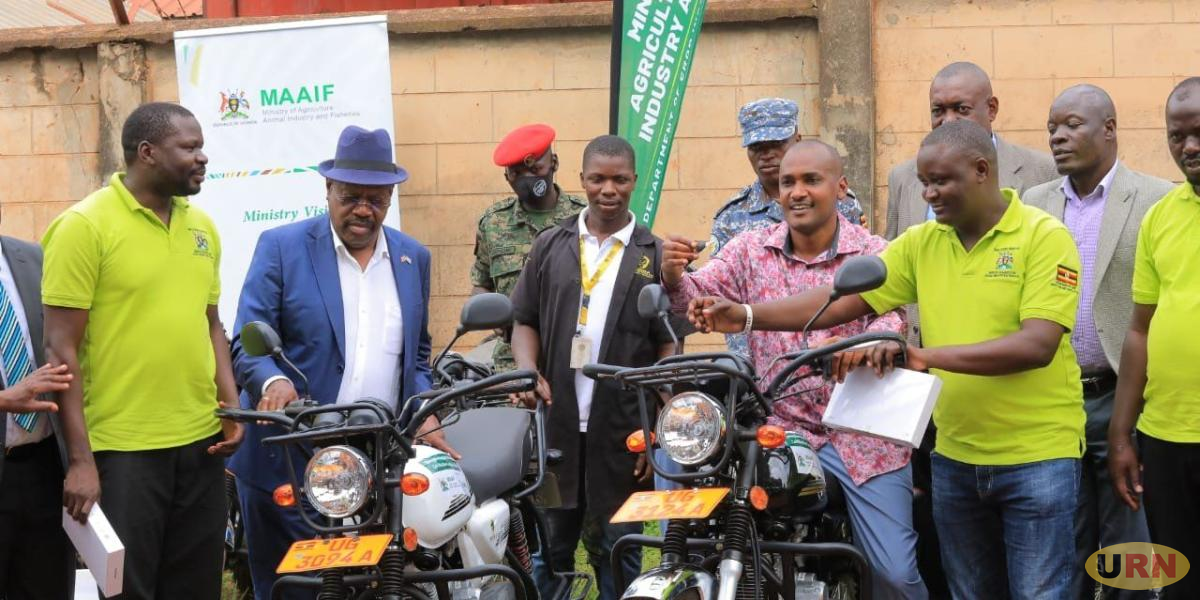
Uganda’s ambitious plan to modernise agriculture through mechanisation is now under intense scrutiny after findings exposed a trail of disorder, weak controls, and missing systems at regional Agricultural Mechanisation Centres operating under the watch of Eng.Boniface Okanya, the Assistant Commissioner of Engineering and Mechanization in the Ministry of Agriculture.
The centres, established by the Ministry of Agriculture, Animal Industry and Fisheries to transform farming through access to machinery, maintenance, and irrigation services, are spread across Buwama, Sanga, Kiryandongo, Agwata, and Bunghokho, with a national referral hub in Namalere. They were designed to boost productivity, reduce reliance on manual labour, and improve efficiency. But what is emerging is a system struggling to function in the absence of basic structures.
At the core of the breakdown is the absence of standard operating procedures. The centres are running without formal guidelines to define how they should be managed, who should benefit, what objectives they should achieve, or how accountability should be enforced. Without a framework to guide operations, critical elements such as management committees, reporting structures, and target beneficiaries remain undefined, leaving the entire programme exposed to inconsistency and mismanagement.
The hiring of equipment to farmers, which is the backbone of the initiative, is also riddled with gaps. There are no proper registers capturing requests for equipment hire at the centres, and no equipment logs to track machine hours or the services delivered. This means there is no reliable way to account for how machinery is used, who uses it, or for how long, creating a system where tracking usage becomes nearly impossible.
Even more concerning is the lack of structure in managing the equipment itself. There is no standardized criteria for selecting which farmers qualify to hire the machinery, raising questions about fairness and transparency in allocation. When equipment develops mechanical problems while in use, there are no incident reports detailing what went wrong, no repair requirement records, and no maintenance logs to track the history of the machines. The absence of such records makes it difficult to monitor wear and tear, plan repairs, or ensure the longevity of the equipment.
Revenue management is another major blind spot. There is no record of non-tax revenue generated from hiring out the machinery, and no trace of such collections in the Uganda Revenue Authority records. This means the financial returns from the programme cannot be verified, leaving a gap in accountability over funds that should be supporting the sustainability of the centres.
On the ground, the situation reflects deeper operational weaknesses. All six mechanisation centres were found to be operating without sufficient records of their activities. Some do not even have proper office spaces for staff, and where offices exist, they lack basic necessities such as computers and furniture. The centres are also not equipped with repair workshops or service bays, limiting their ability to maintain the very machinery they are supposed to provide to farmers.
These gaps paint a picture of facilities that were set up to drive agricultural transformation but are operating without the tools, systems, or structures needed to deliver on that promise.
Management has indicated that a mechanisation policy is being developed to guide operations and that engagement with the Ministry of Finance is ongoing to secure increased funding for the centres. However, until such frameworks and resources are put in place, the centres remain vulnerable to inefficiencies, poor tracking, and limited impact.
What emerges is a programme with significant potential but weighed down by foundational weaknesses — no guidelines, no proper records, no clear revenue tracking, and limited operational capacity. Under the oversight of Boniface Okanya, the mechanisation drive now faces critical questions about structure, accountability, and whether the systems in place are sufficient to support the transformation of Uganda’s agriculture sector.
GOT A HOT STORY? EMAIL: redpeppertips@gmail.
SOURCE PROTECTION/CONFIDENTIALITY IS OUR NO.1 PRIORITY.
About Post Author