URA MOVES TO PROTECT TENANTS! CG Rujoki Urges Renters to Demand EFRIS Receipts from Landlords
By Amos Tayebwa
The Uganda Revenue Authority (URA) has stepped up efforts to promote transparency in the rental sector, urging tenants to demand Electronic Fiscal Receipting and Invoicing Solution (EFRIS) receipts whenever they pay rent.
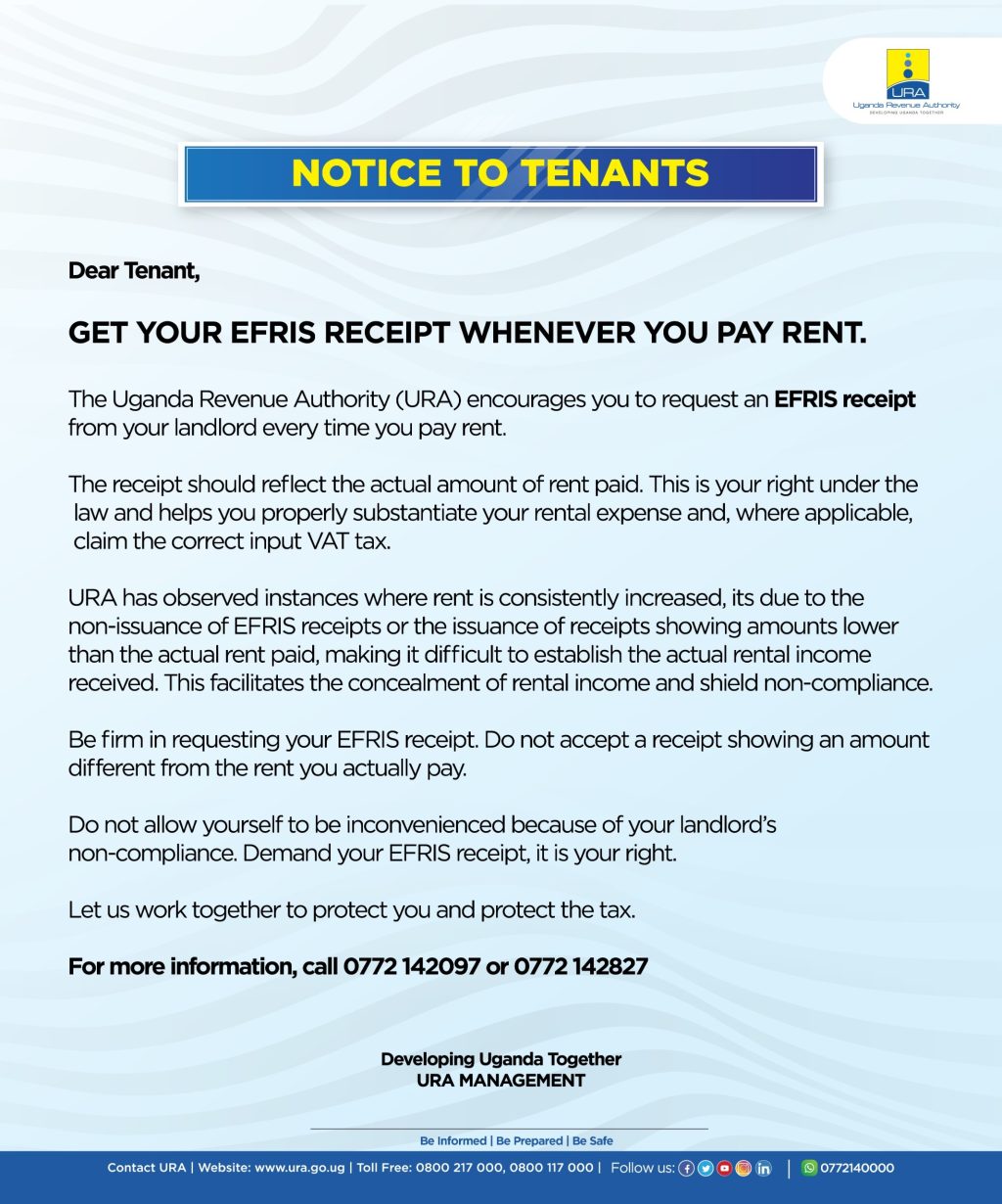
In a notice to tenants, URA Commissioner General, John Rujoki Musinguzi is encouraging renters to ensure that the EFRIS receipt issued by their landlords reflects the actual amount of rent paid, describing the receipt as an important record that protects tenants and promotes tax compliance.
Rujoki says the initiative is aimed at improving transparency in rental transactions while helping the tax body establish the actual rental income earned by landlords.
“URA has observed instances where tenants pay higher amounts than those reflected on receipts, a practice that can make it difficult to establish the true rental income received and may facilitate concealment of income,” he said.
The tax authority is now encouraging tenants to be firm in requesting proper documentation rather than accepting receipts showing amounts lower than what they actually paid.
The move is part of URA’s wider push to use digital systems to improve accountability, simplify tax compliance and strengthen the relationship between taxpayers and the authority.
The URA Commissioner General has repeatedly emphasised the authority’s commitment to making tax compliance easier for Ugandans.
“We are committed to making it easier for you to meet your tax obligations by simplifying processes, expanding digital services, strengthening taxpayer education,” Rujoki said in URA’s Client Service Charter.
URA says EFRIS is designed to improve transparency and accuracy by enabling businesses to record transactions and share transaction information with the authority in real time.
The system also provides tenants and other customers with documentary evidence of transactions, helping them keep proper records of expenses and payments.
For landlords, proper documentation of rental income also supports compliance with rental income tax requirements. URA requires persons earning annual gross rental income above Shs 2,820,000 to declare their rental income and meet their tax obligations.
The authority has further been taking taxpayer education directly to landlords and property owners. In June, URA trained landowners in Buliisa on EFRIS and rental income compliance, highlighting the system’s role in transparency, accountability and proper record keeping.
URA’s latest tenant-focused message therefore presents EFRIS not simply as a tax collection tool, but as a mechanism that gives renters better documentation of their payments while helping create a more transparent rental market.
Tenants seeking clarification or assistance can contact URA through its toll-free lines 0800 117 000 / 0800 217 000 or WhatsApp 0772 140 000.
About Post Author