URC WAGON-MILKING SCANDAL! Missing Uganda Railways Wagons Worth Sh42bn Allegedly Hired Out In Kenya, Cash Paid Into Senior Officials Personal Accounts
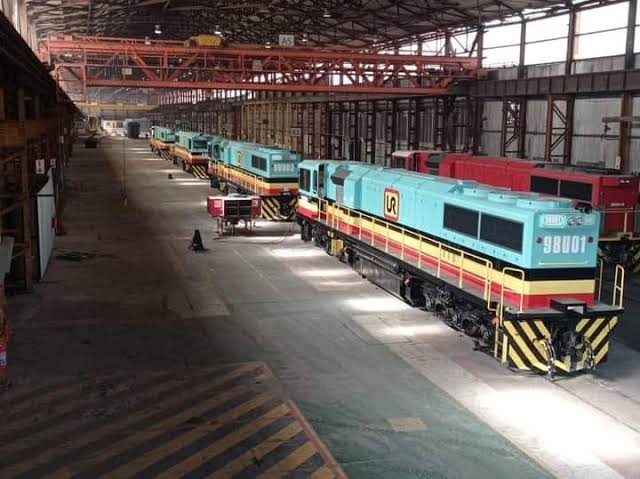
KAMPALA — Uganda Railways Corporation (URC) is facing fresh allegations that some of its railway wagons are being taken across the border into Kenya and leased out, with proceeds allegedly channelled into personal bank accounts belonging to some senior officials.
A whistleblower has claimed that wagons belonging to the struggling state corporation are being used to generate private income, even as URC continues to face financial and operational challenges.
“Some URC wagons are taken to Kenya and leased out, with proceeds purportedly paid into the personal Kenyan bank accounts of certain URC senior officials. They look poor as an organisation but milk it,” the source alleged.
The tipster further pointed to a man identified as Abu (full name withheld for now) claiming he knows something about this alleged arrangement and had recently disappeared.
“The man at the centre is Abu, who recently ran away. He may not have acted alone, although he has ended up being sacrificed,” the source claimed.
The whistleblower added that there had been plans to have Abu arrested but could not establish what happened after his alleged disappearance.
These allegations have not been independently verified, and no evidence has been provided to establish that URC wagons were leased out for private gain or that rental proceeds were deposited into officials’ personal accounts.
But the allegations land at a particularly explosive moment for URC, following a parliamentary investigation that exposed serious questions surrounding missing railway wagons, questionable scrap sales, foreign consultancy payments and the management of a Spanish-funded railway rehabilitation project.
In findings presented to Parliament in September, MPs painted a troubling picture of an institution that has struggled to account for hundreds of wagons and billions of shillings in railway assets and project expenditure.
The committee recommended that the Inspectorate of Government (IGG) investigate former URC Managing Director David Musoke Bulega and several other officials over alleged mismanagement, possible financial losses and irregularities in the implementation of the project.
394 WAGONS MISSING!
At the heart of the parliamentary investigation is the disappearance of 394 railway wagons, including 113 belonging to the Government of Uganda.
When URC took back railway operations from Rift Valley Railways (RVR) on January 25, 2018, there was no formal handover or comprehensive stock-taking of railway assets.
That omission left the corporation without a conclusive record of the wagons and other assets it inherited.
The situation was further complicated by RVR’s transition from a manual wagon-tracking system to a digital platform known as Translogic.
According to the findings, wagons that could not immediately be located were reportedly transferred in the system to a “virtual station” in Nyahururu, Kenya, after which some became untraceable.
Between 2018 and 2024, URC physically located 18 wagons in Kenya and had them reclassified in the system, reducing the number of missing URC-owned wagons from 131 to 113.
Another wagon was subsequently recovered, bringing the outstanding number to 112.
The missing wagons were estimated to be worth approximately $11.2 million, equivalent to about Shs42.28 billion, based on an estimated value of $100,000 per wagon.
The parliamentary findings raise an uncomfortable question: how did a national railway operator lose track of so many valuable assets, and who should account for the failure?
152 WAGONS SOLD AS SCRAP!
The MPs’ investigation unearthed another troubling development involving the sale of railway wagons.
The committee found that 28 wagons were sold in Tanzania through an advertisement published in The East African newspaper on April 12, 2025.
In Uganda, another 152 wagons were reportedly sold as scrap to steel companies, including Diamond Steel and China Chang.
The 152 wagons were reportedly sold for Shs2 billion, despite having an estimated value of Shs4.4 billion.
But the committee questioned the number of wagons that URC declared as scrap.
A March 2024 handover report by former Chief Mechanical Engineer Peter Katwebaze had identified only 82 wagons as scrap. That figure reportedly remained unchanged in a subsequent handover report dated June 2025.
MPs questioned how URC could have sold 152 wagons as scrap in 2025 when the earlier reports had consistently identified only 82.
“This raises questions as to where URC obtained the 152 wagons which it sold as scrap in 2025, in addition to the 28 wagons sold in Tanzania during the same year,” the committee observed.
The discrepancy raises further questions about the corporation’s asset records, the authorisation of the sales and the whereabouts of the proceeds.
SHS113.6BN SPANISH LOAN UNDER SPOTLIGHT
The parliamentary probe also examined the Spanish-funded railway rehabilitation and capacity-building programme.
Parliament approved borrowing approximately €25.9 million, equivalent to Shs113.6 billion, from Spain’s Internationalization Fund.
The financing arrangements were signed on August 6, 2021.
The physical rehabilitation works involved replacing steel sleepers with concrete ones, with the target of raising train operating speeds from between 20 and 35 kilometres per hour to as high as 120 kilometres per hour.
A completed section valued at approximately €19.8 million, or Shs75.4 billion, was launched by President Yoweri Museveni at Kyetume in Mukono District in December 2024.
However, MPs raised serious questions about the programme’s capacity-building component, which cost €4.821 million, approximately Shs21.1 billion.
At least €4.338 million, equivalent to about Shs19 billion, was allocated to five key experts.
But the committee found that only three of the five experts were deployed.
Two other experts were later replaced by Morris Tibenda and Paul Power, but MPs said URC had not authorised the substitutions.
The committee also questioned Power’s qualifications, saying URC had not provided evidence that he possessed the required railway operations and customer service experience.
EXPERTS PAID PEANUTS?
The committee also heard testimony from two experts, Saul Tukashaba and Kiiza Pascazia, who reportedly said they received only Shs6.5 million each per month from the consultant.
This was despite the contract providing for payments of approximately €20,500, equivalent to about Shs89.9 million, per month for each expert.
The two reportedly told MPs that they were still pursuing unpaid balances.
The revelations raised questions about how the money allocated for the experts was administered and whether the contracted amounts were actually paid to the intended beneficiaries.
SHS348M TRAVEL BILL WITH NO TRIPS?
MPs also questioned payments for travel by foreign experts and the consultant’s back-office team.
URC reportedly paid €39,750 for travel by key experts from Spain and another €39,750 for the back-office team.
However, the committee said no key experts travelled from Spain as envisaged in the contract.
The two payments totalled €79,500, equivalent to approximately Shs348.7 million, which MPs described as a potential financial loss.
The committee also scrutinised six workshops that had been budgeted at €36,000.
URC provided minutes for only two workshops, both reportedly held at Silver Springs Hotel in July 2022.
“The absence of documentation for the other four workshops raises questions as to whether they took place and whether the €12,000 reportedly spent on the two documented workshops represented value for money,” the committee noted.
PROJECT VEHICLES SOLD TO INSIDERS!
The vehicle procurement arrangement also attracted parliamentary scrutiny.
Four double-cabin pickup trucks had been intended for project management, but only three were purchased, according to testimony before the committee.
The vehicles were supposed to revert to URC after the programme ended.
However, MPs found no evidence of a formal handover to the corporation. Instead, all three vehicles were later sold to individuals involved in the project.
Patrick Okanang told the committee that he bought one vehicle for Shs20 million, while Tukashaba said he paid Shs30 million.
Joshua Turyatemba also said he paid for his vehicle, although he did not disclose the amount.
The three reportedly told MPs that they did not know the vehicles were supposed to be returned to URC.
The committee questioned the circumstances under which project assets meant to revert to the corporation ended up in the hands of individuals involved in the programme.
SHS700M FACTORY SITE QUESTIONED
The concrete sleeper factory established under the railway rehabilitation project was another area of concern.
URC’s board had directed management to negotiate with contractor Imathia Construction Limited so that the corporation could retain the factory after the project.
However, the committee said management failed to implement the board resolution.
MPs consequently recommended that the Inspectorate of Government investigate the matter and that the Auditor General conduct a value-for-money audit into the €169,000, approximately Shs700 million, spent by URC levelling the 1.8-acre site where the factory was established.
IGG ASKED TO INVESTIGATE BULEGA, OTHERS
In its recommendations, the committee asked the IGG to investigate several officials linked to the project, including Busingye Richard, Isaac Natukunda, Robert S.K., Patrick Okanang, Pamela Ruceerwa, Patience Baita and Abubaker Ochaki Namara.
The committee also singled out former URC Managing Director David Musoke Bulega, recommending an investigation into his tenure and the handling of the contract.
“The IGG investigates the then Managing Director, URC, David Musoke Bulega, under whose tenure the contract was mismanaged, hence causing financial loss,” the committee recommended.
Abu, identified in the whistleblower’s claims, also appears in the parliamentary recommendations.
The new allegations about wagons allegedly being leased out in Kenya and proceeds channelled into personal accounts now add another layer to the questions surrounding URC’s management of its assets.
The key questions are whether any URC wagons are currently being commercially exploited outside Uganda, who authorised their movement and leasing, where the proceeds are paid, and whether the corporation is receiving its rightful share.
More details to follow…
GOT A HOT STORY? BLOW THE WHISTLE!
Have breaking news, explosive revelations, juicy leads or evidence of wrongdoing?
WE WANT TO HEAR FROM YOU!
Send your tips, documents, videos, photos and audio recordings to:
redpeppertips@gmail.com
Whether it’s corruption, scandals, abuse of office, injustice or stories others are afraid to tell, help us bring the truth to light.
SOURCES ARE PROTECTED.
CONFIDENTIALITY IS OUR NO.1 PRIORITY!
About Post Author