VIRUS ON THE MOVE? East Africa Scrambles to Contain Ebola Threat
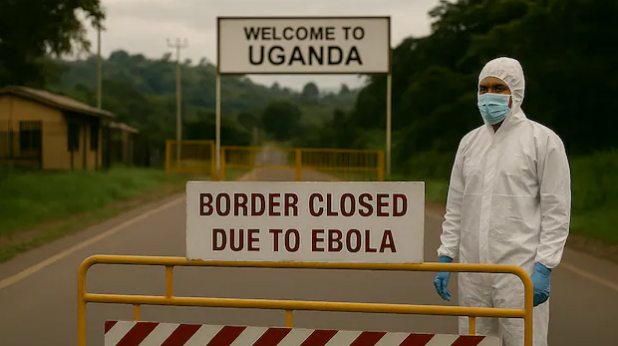
The East African Community (EAC) is convening an emergency ministerial meeting over the spread of the Bundibugyo Ebola virus strain that has already crossed borders from the Democratic Republic of Congo (DRC) into Uganda.
The outbreak is requires a coordinated regional response amidst fears that East Africa is not well prepared to respond.
Health ministers from EAC Partner States are scheduled to meet virtually between June 1-2 to formulate a common strategy against the outbreak.
The Bundibugyo virus strain, a rare form of Ebola currently has no licensed vaccine or approved specific treatment.
The emergency session comes as health authorities and international agencies intensify surveillance and preparedness measures following confirmed infections in both the DRC and Uganda, countries linked by extensive cross-border trade, migration and family ties.
“The EAC remains committed to ensuring that every outbreak meets a prepared community,” EAC Secretary General Hon. Stephen Mbundi said in a statement announcing the meeting.
“We are mobilising regional mechanisms and working closely with Partner States, Africa CDC, WHO and development partners to strengthen surveillance, laboratory diagnosis, infection prevention and control, risk communication and rapid response capacities.”
The outbreak was officially declared on May 15, 2026, after laboratory investigations confirmed the presence of the Bundibugyo strain of Ebola virus disease.
According to the EAC Secretariat, as of May 26, the DRC had reported 121 confirmed cases, including 17 deaths among confirmed patients, alongside 1,077 suspected cases and 246 suspected deaths.
Uganda had registered seven confirmed cases and one death by May 25, with authorities indicating that the first infections involved travellers who crossed from the DRC and sought treatment in Uganda.
However, the latest figures released by the World Health Organization (WHO) indicate that the outbreak has continued to expand. As of May 29, WHO reported 134 confirmed cases across the DRC and Uganda, including nine confirmed cases in Uganda and 18 deaths among confirmed cases. The DRC alone had recorded 125 confirmed infections and 17 deaths, while Uganda had reported nine confirmed cases and one death.
WHO has classified the outbreak as a Public Health Emergency of International Concern (PHEIC), the highest level of global health alert under the International Health Regulations (2005). The outbreak is concentrated largely in eastern DRC, particularly in Ituri Province, where Mongbwalu remains the epicentre. Health experts warn that the area’s high mobility, mining activities, porous borders and ongoing insecurity significantly increase the risk of further regional spread.
Uganda once again finds itself on the frontline of a regional Ebola emergency.Permanent Secretary in the Ministry of Health Dr. Diana Atwine confirmed the country’s first imported Bundibugyo Ebola case on May 15 after a Congolese patient who had travelled from the DRC died in Kampala. Subsequent investigations identified additional cases linked to cross-border movement and healthcare exposure. WHO says Kampala and neighbouring Wakiso District have so far reported confirmed infections, with hundreds of contacts placed under monitoring.
Health authorities have since strengthened screening at border points, intensified contact tracing and activated emergency response teams.
The outbreak has revived memories of Uganda’s previous battles with Ebola, including the 2000 Gulu outbreak that killed hundreds and the 2022 Sudan Ebola outbreak, both of which exposed weaknesses but also strengthened the country’s surveillance and response systems.Public health experts note that Uganda’s experience in managing viral haemorrhagic fevers could prove critical in containing the current threat.
Unlike the more common Zaire strain of Ebola, against which vaccines have been developed and deployed, the Bundibugyo strain presents unique challenges. WHO officials have warned that no licensed vaccine or specific antiviral treatment currently exists for this strain, meaning containment efforts depend heavily on rapid case identification, isolation, contact tracing, infection prevention measures and community cooperation.
WHO Director-General Dr. Tedros Adhanom Ghebreyesus has emphasized that early diagnosis and supportive treatment can significantly improve survival rates despite the absence of a licensed vaccine.Recent reports from eastern Congo indicate that at least five Ebola patients have recovered following intensive medical care, offering a measure of hope amid the escalating outbreak.
“Early medical intervention saves lives,” WHO officials have repeatedly stressed while urging communities to report symptoms promptly and cooperate with health workers.Regional Response IntensifiesThe EAC Secretariat says it has activated several emergency mechanisms designed to strengthen preparedness across Partner States.
Among the most significant interventions is the deployment of nine mobile laboratories to strategic border crossings and high-risk locations, including Beni in eastern DRC, Busia in Kenya, Nimule-Elegu on the South Sudan-Uganda border, Kobero in Burundi, Kagera and Kigoma in Tanzania, Kisenyi and Kihundwe in Rwanda, and Bwera Hospital in Kasese District.
The laboratories are expected to enhance rapid testing and surveillance capacity at critical entry points. Uganda Virus Research Institute (UVRI), designated as the EAC Regional Centre of Excellence on Virology, is also playing a central role in laboratory diagnostics and specialised training for health personnel.
In addition, the EAC is activating its pool of more than 180 Rapidly Deployable Experts who have previously supported responses to Ebola, Marburg, Mpox and Anthrax outbreaks across the region. The bloc, with support from Germany, Africa CDC and WHO, is also conducting refresher training in infection prevention and control, outbreak management, risk communication and emergency response.
To bolster frontline protection, the EAC has procured 500 sets of personal protective equipment (PPEs) for Uganda and the DRC, with additional supplies expected for other Partner States. he Ebola emergency is increasingly being viewed as a test of East Africa’s regional health security architecture.
The EAC’s response aligns with commitments under the East African Community Treaty, which obliges Partner States to cooperate in disease prevention, health promotion and emergency public health responses. It also complements obligations under the International Health Regulations (2005), which require countries to detect, report and respond rapidly to public health threats capable of crossing borders.
Health experts say the outbreak demonstrates the growing importance of regional coordination as diseases move faster than national borders can contain them. Africa CDC Director-General Dr. Jean Kaseya recently argued that Africa’s response must be driven by African leadership and regional solidarity, warning that fragile health systems, insecurity and population movement could undermine containment efforts if countries act in isolation.
The EAC Secretariat has advised the public to seek information only from official sources, maintain hand hygiene, avoid contact with suspected cases and report symptoms immediately. The current outbreak is centred in eastern DRC’s Ituri Province and has already resulted in cross-border transmission into Uganda.
GOT A HOT STORY? EMAIL: redpeppertips@gmail.
SOURCE PROTECTION/CONFIDENTIALITY IS OUR NO.1 PRIORITY.
About Post Author