UGANDA’S SHS6.5BN NAGOYA PROJECT STUMBLES! Investigation Flags Unspent Billions, Slow Implementation & Lack of Plan To Protect Gains As Closure Looms
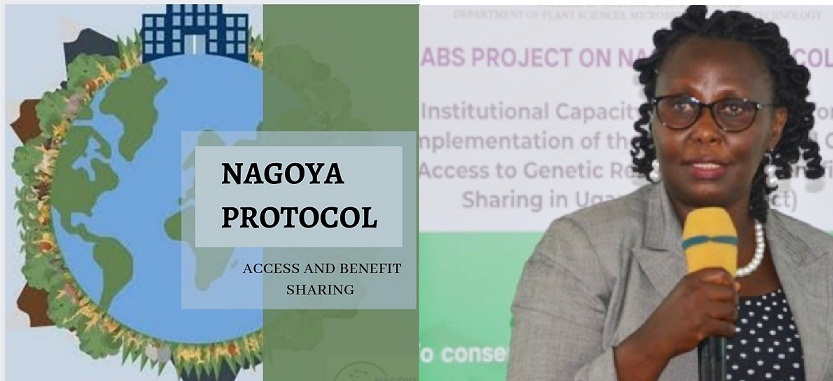
The project is led by Dr. Katuura Esther, Principal Investigator and senior researcher at Makerere University, who is spearheading efforts to strengthen Uganda’s capacity under the Nagoya Protocol for Access to Genetic Resources and Benefit Sharing
KAMPALA – The future of a major government project aimed at protecting Uganda’s genetic resources and ensuring communities benefit from the country’s biodiversity wealth is hanging in the balance after a report raised concerns over funding gaps, slow implementation, unspent funds and lack of sustainability plans ahead of its closure.
The Auditor General’s report for the period ended 31st December 2024 on the Institutional Capacity Strengthening for Implementation of the Nagoya Protocol on Access to Genetic Resources and Benefit Sharing in Uganda (ABS) Project reveals that millions of dollars meant to strengthen Uganda’s capacity under the international biodiversity agreement remain either unavailable, unspent or tied to activities yet to be achieved.
The project, implemented by the National Environment Management Authority (NEMA) with support from the Global Environment Facility (GEF) and partner institutions including Makerere University, received an unqualified audit opinion, but the Auditor General pointed out several issues that could threaten the sustainability of the gains made once donor support ends.
The Auditor General revealed that the total cumulative disbursements to the project stood at USD 1,746,612 (approximately Shs6.5 billion) against the expected USD 2,560,842 (approximately Shs9.5 billion), creating a shortfall of USD 814,230 (approximately Shs3 billion), representing 32 percent.
The audit further established that implementation of planned activities was behind schedule.
The Auditor General sampled 54 activities worth USD 1,523,605 (approximately Shs5.7 billion) and found that targets for only 19 activities worth USD 498,432 (approximately Shs1.9 billion) had been fully achieved.
However, targets for the remaining 35 activities worth USD 1,025,173 (approximately Shs3.8 billion) had not yet been achieved.
The financial performance of the project also raised concerns.
According to the report, the project had an approved budget of USD 993,626 (approximately Shs3.7 billion) as at 31st December 2024, out of which USD 892,375 (approximately Shs3.3 billion) from the donor had been released.
This resulted into a funding shortfall of USD 101,251 (approximately Shs377 million), representing 90 percent budget performance.
The total amount available for spending was USD 893,109 (approximately Shs3.3 billion), including rolled-over unspent funds.
However, despite the availability of resources, the project failed to utilise all the money.
The Auditor General found that only USD 670,102 (approximately Shs2.5 billion) had been spent, leaving an unspent balance of USD 223,007 (approximately Shs830 million).
The unspent funds were still held on the project bank account number 003500088400014 at Bank of Uganda, resulting in an absorption level of 75 percent.
The Auditor General expressed concern over the future of the project after establishing that its closure date is nearing, but management had not provided evidence of sustainability measures to ensure the achievements made during the project lifespan would continue after donor funding ends.
The project, which started in 2023, is a four-year initiative designed to strengthen Uganda’s institutional capacity to implement the Nagoya Protocol on Access to Genetic Resources and Benefit Sharing (ABS).
The Nagoya Protocol, adopted in 2010 under the Convention on Biological Diversity (CBD), provides a framework for countries to benefit from the utilisation of genetic resources within their jurisdiction while ensuring conservation and fair sharing of benefits arising from their use.
Uganda ratified the Convention on Biological Diversity on 8th September 1993, recognising the importance of its rich biodiversity in supporting wealth creation, national development, sustainable development goals and improving livelihoods of indigenous people and local communities.
The ABS project was established because without adequate institutional capacity, Uganda risks failing to fully benefit from access to and utilisation of its genetic resources.
The project focuses on strengthening the national regulatory and institutional framework for ABS, building government capacity to implement and enforce compliance with the Nagoya Protocol, developing professionals trained in ABS issues, strengthening ABS management at local government and community level, and increasing public awareness.
A key part of the project is being implemented by Makerere University, which is responsible for training and producing professionals with knowledge of ABS under the Nagoya Protocol.
The project is hosted in the Department of Plant Sciences, Microbiology and Biotechnology in the School of Biosciences at the College of Natural Sciences (CoNAS).
The project is led by Dr. Katuura Esther, Principal Investigator and senior researcher at Makerere University, who is spearheading efforts to strengthen Uganda’s capacity under the Nagoya Protocol for Access to Genetic Resources and Benefit Sharing.
NEMA is the executing agency working alongside the Uganda National Council for Science and Technology (UNCST) and other state and non-state partners including the Uganda Wildlife Authority (UWA), National Forestry Authority (NFA), Plant Genetic Resources Centre (PGRC), National Forestry Resources Research Institute (NaFORRI), National Chemotherapeutic Research Institute (NCRI), GIZ ABS Capacity Development Initiative, Karamoja Women Cultural Group (KWCG) and the United Organization for Batwa Development in Uganda (UOBDU).
The Auditor General’s findings raise questions on whether the project will achieve all its intended objectives before its planned closure and whether Uganda will sustain the institutional capacity built under the Nagoya Protocol after donor funding comes to an end.
GOT A HOT STORY? LET US KNOW!
Got breaking news, explosive secrets, or hard evidence?
Email us: redpeppertips@gmail.com
We accept tips, documents, videos, photos, and recordings—the more evidence you have, the better.
CONFIDENTIALITY IS OUR TOP PRIORITY. SOURCES ARE ALWAYS PROTECTED!
About Post Author