LIRA UNIVERSITY MESS! Probe Exposes Sh14Bn Failures as VC, Council Boss Power War Deepens
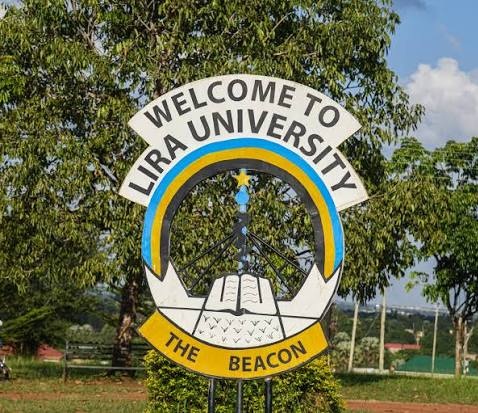
LIRA – Lira University’s top bosses are under fresh scrutiny after the Auditor General uncovered a trail of financial, procurement, planning and performance failures worth billions of shillings, even as the institution is being torn apart by an ugly leadership war that has forced the Office of the Attorney General to intervene.
The Auditor General’s report for the financial year ended December 2025 paints a troubling picture of an institution struggling with weak planning, poor budget implementation, procurement irregularities, declining revenue performance and limited research output despite receiving billions of taxpayers’ money.
The findings come barely months before an unprecedented power struggle exploded into public view between Vice Chancellor Prof. Dr. Jasper Ogwal Okeng and University Council Chairperson David Geoffrey Opiokello, exposing deep divisions at the institution over who should run the university.
According to the Auditor General, the university diverted UGX 147 million from the current year’s budget to settle domestic arrears that had not been budgeted for, raising questions over adherence to approved budget allocations.
The audit also established that receivables amounting to UGX 980 million included UGX 260 million dating as far back as 2016, suggesting the university had failed for years to recover outstanding funds.
The procurement function also came under fire after the Auditor General found that although the university had planned procurements worth UGX 3.1 billion, contracts worth only UGX 2.44 billion were awarded, representing an implementation rate of just 79 percent.
Even more troubling, auditors established that the university failed to prepare a multi-year procurement plan for the construction of its Administration Block, despite awarding the project at a contract price of UGX 13.82 billion.
Planning failures stretched beyond procurement.
The Auditor General found that by 1 July 2025, the university had still not finalised a new draft Strategic Plan aligned to the Fourth National Development Plan (NDP IV), leaving the institution operating without an updated strategic roadmap at the commencement of the planning period.
Implementation of government-funded programmes also fell far below expectations.
Out of 10 planned outputs worth UGX 14.3 billion, auditors found that only five outputs valued at UGX 2.5 billion were fully implemented, while the remaining five outputs worth UGX 11.8 billion were only partially implemented.
Revenue generation also failed to meet expectations.
The university had projected to collect UGX 7.5 billion in Non-Tax Revenue (NTR) from tuition, functional fees and other services but managed to realise only UGX 4.8 billion, leaving a UGX 2.7 billion shortfall, equivalent to 36 percent of the target.
The Auditor General further highlighted poor academic research performance, revealing that participation by academic staff remained extremely low.
At Lira University, only 22 out of 116 academic staff, representing just 19 percent, published research during the period under review.
The report attributes the weak research culture to inadequate mentoring structures, limited training in proposal development and weak incentives for junior researchers.
The audit findings now add another layer of pressure to an institution already engulfed in one of the most bitter leadership battles ever witnessed at a public university.
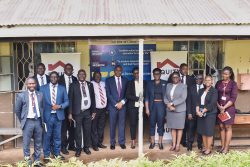
On 3 August 2026, the Office of the Attorney General dispatched a high-powered delegation led by Deputy Solicitor General Charles Ouma to Lira University for a crisis meeting with top management over what officials described as “pertinent university issues.”
The meeting brought together Vice Chancellor Prof. Dr. Jasper Ogwal Okeng, University Council Chairperson David Geoffrey Opiokello, Appointments Board Chairperson Onyik Bosco and other senior university officials.
The intervention followed an extraordinary exchange of letters between the Vice Chancellor and the University Council.
In a letter dated 27 July 2026, the University Council questioned why Prof. Ogwal-Okeng had resumed office earlier than expected after sick leave, whether his leave had been lawful, whether he had obtained medical clearance before returning to work and why he allegedly reversed several Council resolutions made during his absence.
The Council also questioned decisions concerning the Deputy Vice Chancellor (Academic Affairs), who had been assigned to perform the functions of the Vice Chancellor during the period of absence.
Instead of backing down, Prof. Ogwal-Okeng responded in a strongly worded letter dated 31 July 2026, accusing Council Chairperson David Geoffrey Opiokello of unlawfully interfering in the day-to-day management of the university.
The Vice Chancellor reminded the Council Chairperson that under Section 31(1)(i) of the Universities and Other Tertiary Institutions Act, the Vice Chancellor is the university’s chief academic, administrative and financial officer with exclusive responsibility for managing the institution’s daily affairs.
He accused Opiokello of bypassing the Office of the Vice Chancellor by issuing operational directives directly to university staff and acting beyond the powers granted to him by law.
Prof. Ogwal-Okeng further directed that all future operational communication be routed through the Office of the Vice Chancellor and warned staff against implementing what he described as unlawful instructions issued outside established university procedures.
In perhaps the most explosive part of his response, the Vice Chancellor bluntly told the Council Chairperson that if he could not operate within the legal framework governing public universities, “the most responsible action for you is to resign.”
The explosive correspondence was copied to the Chancellor, the Minister of Education and Sports, the Attorney General, the Permanent Secretary in the Ministry of Education, members of the University Council, the University Senate, the Academic Registrar and the University’s Legal Department, exposing the extent of the internal divisions.
With the Auditor General exposing billions in planning, procurement, implementation and revenue shortcomings while the institution’s top leaders battle openly over authority, serious questions are now emerging over whether the leadership entrusted with steering Lira University has been focused on fixing the institution’s operational weaknesses or consumed by a power struggle that continues to overshadow the university’s core mandate.
GOT A HOT STORY? LET US KNOW!
Got breaking news, explosive secrets, or hard evidence?
Email us: redpeppertips@gmail.com
We accept tips, documents, videos, photos, and recordings—the more evidence you have, the better.
CONFIDENTIALITY IS OUR TOP PRIORITY. SOURCES ARE ALWAYS PROTECTED!
About Post Author