MOBILE MONEY FRAUD, NETWORK WOES THREATEN TRUST! Fintech Bosses Sound Alarm

KAMPALA — Uganda’s booming mobile money industry is facing a fresh credibility test, with fintech bosses warning that fraud, network failures and costly transactions could drive customers away and undermine trust in digital financial services.
Industry players under the Financial Technology Service Providers Association (FITSPA) say the rapid growth in mobile money users, agents and digital transactions is piling pressure on service providers to strengthen networks, tighten cybersecurity and improve coordination across the sector.
The warning comes as billions of shillings continue to flow through mobile money platforms, making the sector increasingly central to Uganda’s daily economic life.
Albert Gitta, Chief Technical Officer at MTN Mobile Money, said Uganda’s digital economy is expanding at a rapid pace as businesses and consumers increasingly embrace digital services.
But he warned that the growth comes with major responsibilities, particularly because mobile money has become a lifeline for millions of Ugandans.
Recent Bank of Uganda statistics indicate that between 6.5 billion and nine billion mobile money transactions are registered annually, highlighting the enormous volume of money and activity moving through the platforms.
Gitta said such volumes mean that even a short network disruption can affect millions of customers and agents, while security breaches can quickly damage confidence in the entire industry.
He pointed to a network disruption earlier in July this year, which he said followed a power surge at an MTN data centre and affected millions of customers and agents.
According to Gitta, mobile money is not simply about convenience, as many transactions are made under pressure and involve essential needs such as buying airtime and data, paying medical bills and sending school fees.
He warned that customers can rapidly lose confidence when transactions fail, funds are delayed or money is lost to fraud.
Gitta urged fintech companies to step up investment in anti-fraud technology and work collectively to fight criminals exploiting digital financial platforms.
He said technology has made it possible for fraud to spread quickly, meaning an incident affecting one user or company can have consequences far beyond the original victim.
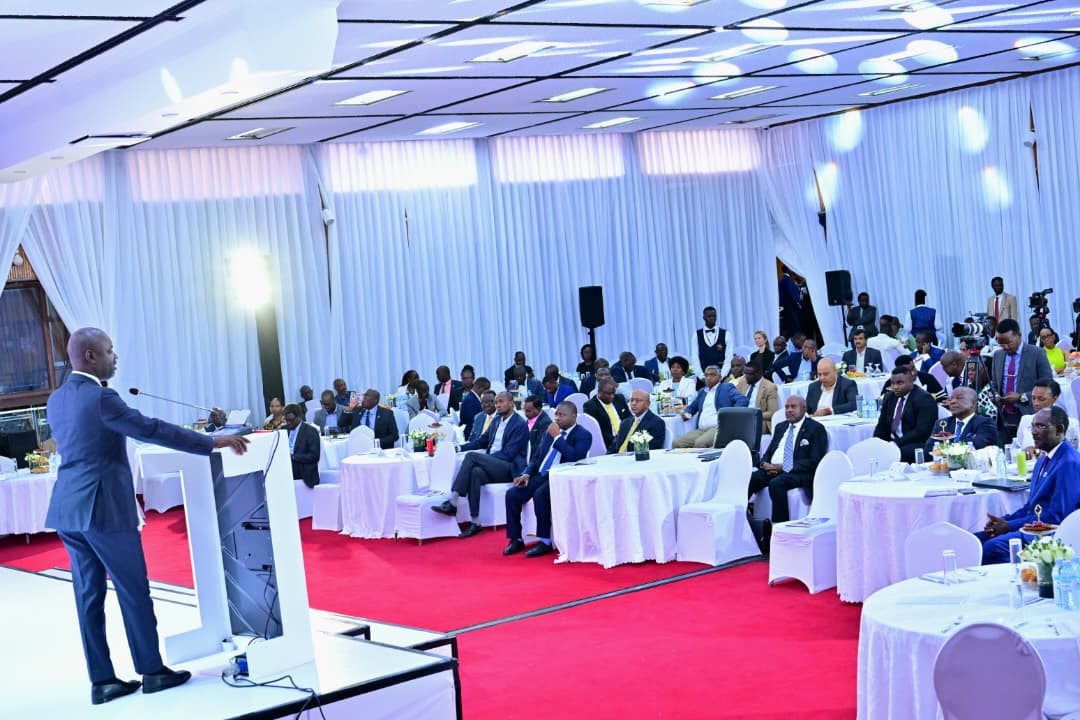
Gitta was speaking during the eighth FITSPA Annual Fintech Conference, held under the theme “Scaling Fintech Innovation for Inclusive Growth and a Resilient Digital Economy.”
The conference brought together players in Uganda’s financial technology sector to discuss the future of digital finance and the challenges threatening its expansion.
Airtel Calls for Interoperability
Japhet Aritho, Managing Director of Airtel Money, called for wider access to smartphones and digital financial services to ensure more Ugandans participate in the digital economy.
Aritho also urged greater investment in digital solutions for key sectors including agriculture, tourism, minerals, science and technology.
He said the industry must simultaneously strengthen cybersecurity and intensify the fight against fraud.
One of his key proposals was greater interoperability between mobile money platforms, allowing customers to complete transactions across networks when one provider suffers a technical disruption.
Aritho warned that the fintech industry is interconnected, meaning a major fraud incident at one company could damage public confidence in the wider ecosystem.
He said mobile money providers are increasingly working towards integrating their systems so that when one network fails, customers could potentially complete transactions through another.
Talent, Cash Needed
Vincent Tumwijukye, FITSPA Chairperson and Chief Executive Officer of Future Link Technologies, said Uganda’s ambition of achieving a tenfold expansion of its economy will require a major transformation of the technology sector.
He said the country must move beyond incremental improvements and focus on developing talent, attracting investment and supporting innovation.
Tumwijukye identified talent, high-risk capital and informed media as three critical pillars for transforming Uganda’s fintech industry.
He called for stronger collaboration between government, businesses, universities and other players in the digital economy.
Tumwijukye also urged government to extend the recently introduced Capital Gains Tax exemption for local companies regulated by the Capital Markets Authority to foreign companies investing in Uganda that may not be domiciled in the country.
He further called on universities to make digital and financial technology a more integral part of their programmes to ensure Uganda produces enough skilled workers to meet the needs of the rapidly expanding fintech industry.
With mobile money now deeply embedded in everyday transactions, industry leaders say keeping the platforms secure, reliable and affordable will be crucial if Uganda is to maintain public confidence as its digital economy expands.
GOT A HOT STORY? LET US KNOW!
Got breaking news, explosive secrets, or hard evidence?
Email us: redpeppertips@gmail.com
We accept tips, documents, videos, photos, and recordings—the more evidence you have, the better.
CONFIDENTIALITY IS OUR TOP PRIORITY. SOURCES ARE ALWAYS PROTECTED!
About Post Author