ENTEBBE AIRPORT MESS REPORT (PART 2): IS GEN KISAME SLEEPING ON THE JOB? …Investigation Exposes Unfenced Airport Installation, No CCCTV Cameras, Unmanned Watchtowers, No Guard House & Police Patrols… Critical Lighting Facility Used To Guide Landing Aircraft Left Exposed To Attacks, Vandals & Darkness
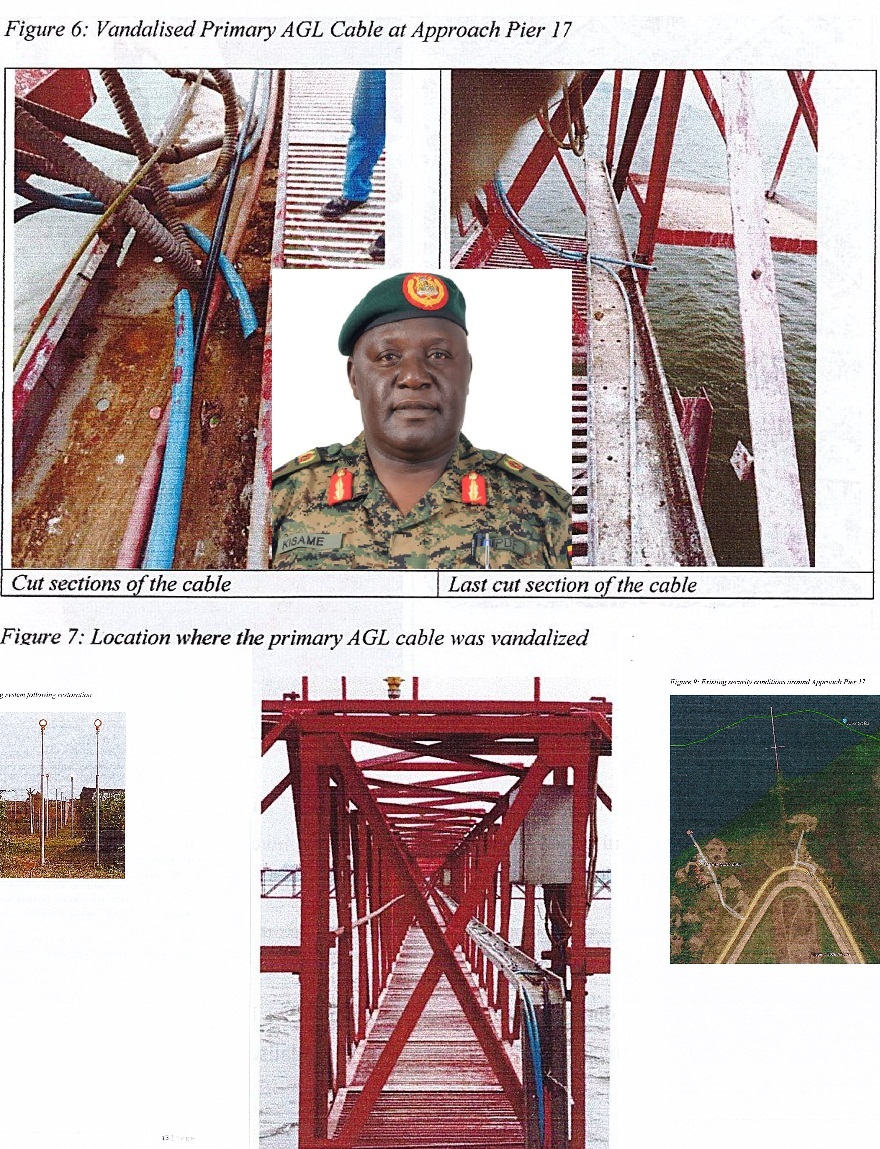
KAMPALA — Uganda Civil Aviation Authority (UCAA) Aviation Security Manager Brigadier General Mike Samuel Kisame is facing questions over security lapses at Entebbe International Airport after an internal investigation exposed how thieves accessed a critical aviation installation and vandalised approximately 470 metres of electrical cable without being detected.
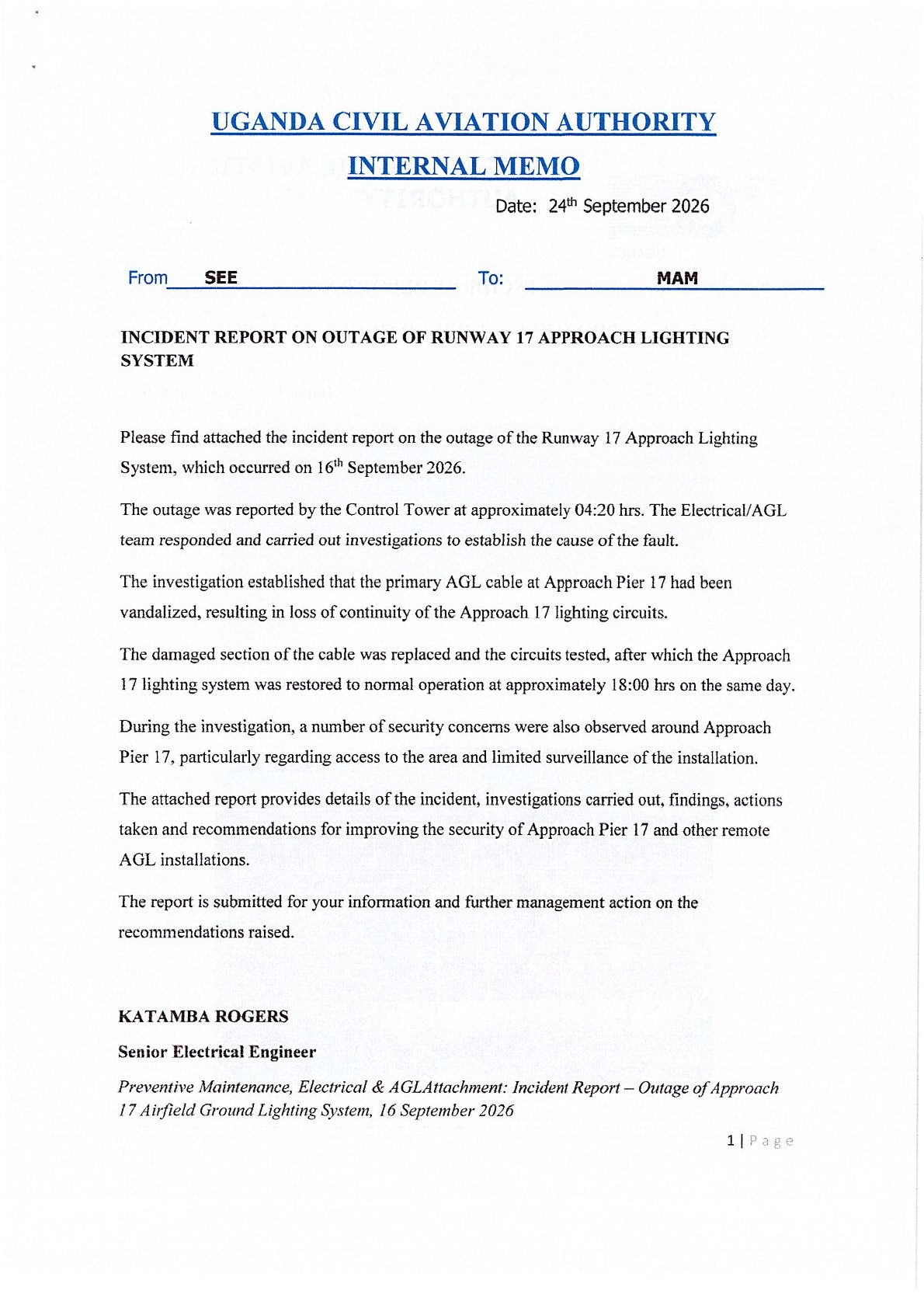
A damning incident report compiled by Chief Electrical Engineer Eng. Patrick Ojok and dated September 25, 2026, reviewed by RedPepper, paints a picture of a vulnerable airport facility where criminals could gain access from surrounding land and water, with no CCTV surveillance, inadequate fencing and no dedicated security personnel to guard the installation.
The revelations raise serious questions about the effectiveness of the aviation security arrangements under Kisame, particularly given that the security weaknesses were not entirely new and that requests for additional surveillance cameras had been circulating within UCAA since May 2022.
How could a facility carrying critical equipment used to guide aircraft during landing be left exposed to vandals?
And with the Aviation Security Department responsible for safeguarding airport infrastructure, what had been done to close the security gaps before thieves struck?
The report indicates that the theft occurred at Approach Pier 17, part of the Runway 17 Airfield Ground Lighting (AGL) installation.
Unknown individuals accessed the facility and cut approximately 470 metres of primary electrical cable, comprising two sections measuring 250 metres and 220 metres.
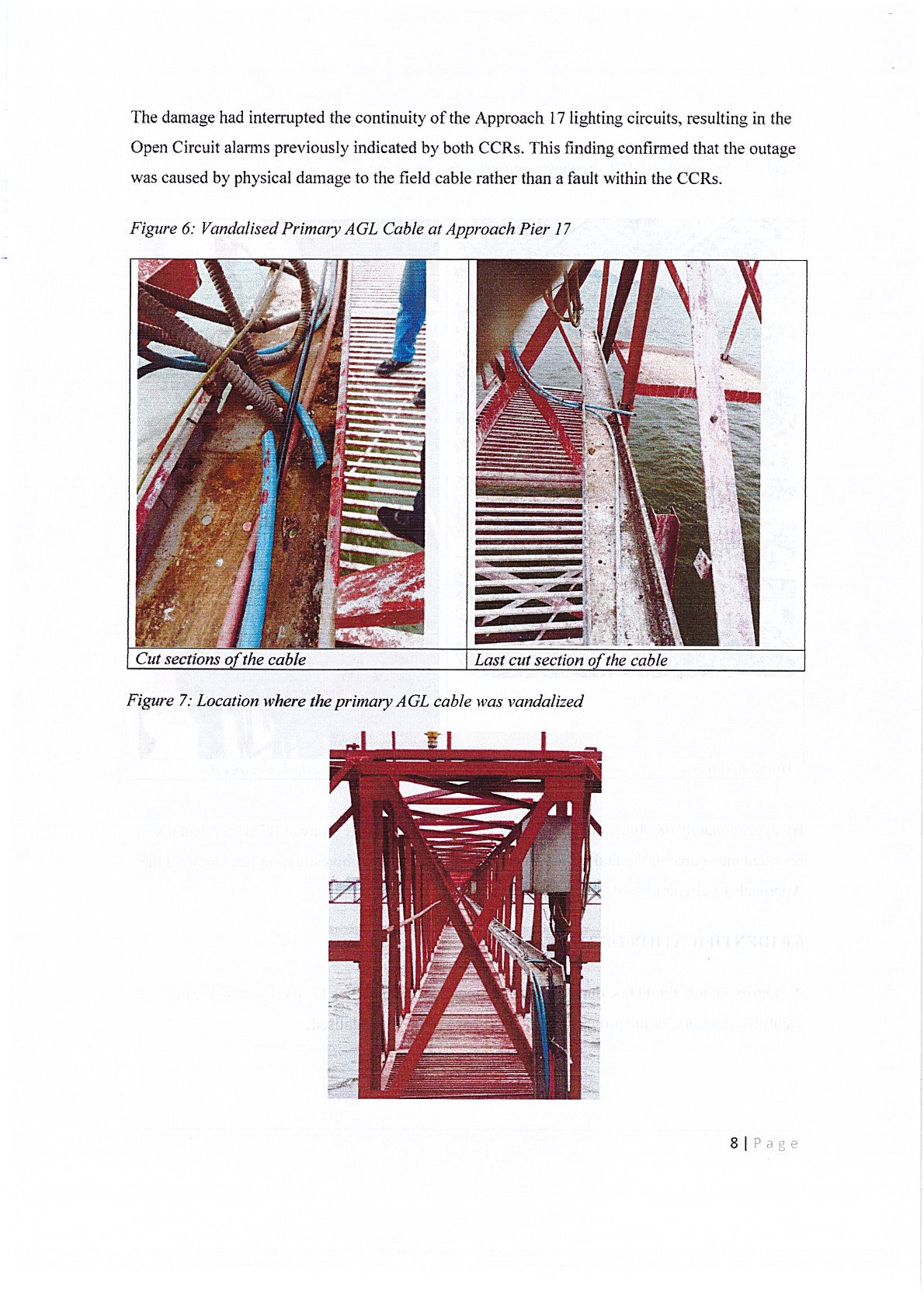
The damage interrupted power supply to the approach lighting circuits, eventually knocking out the entire lighting installation.
The problem was discovered on September 16, 2026, after a Kenya Airways aircraft crew alerted the Control Tower that the Approach 17 lights were not working while landing as we earlier reported in part 1 of this expose. Link here: https://redpepper.co.ug/red-pepper-exclusive-entebbe-airport-mess-report-part-1-kenya-airways-crew-prevents-entebbe-landing-disaster-pilots-spot-120-lights-designed-to-guide-pilots-into-runway-17-switched-off-a/152869/
But when the electrical team investigated, they discovered that the problem was not a technical failure. The primary cable had been vandalised.
NO CCTV, NO FENCE, NO GUARDS!
The internal investigation lists several security weaknesses that investigators say exposed the installation to unauthorised access and interference.
First, the Approach Pier 17 installation was accessible from surrounding areas by both land and water, making it difficult to control who accessed the facility.
Second, there was no CCTV coverage monitoring the entire installation and other remote electrical facilities.
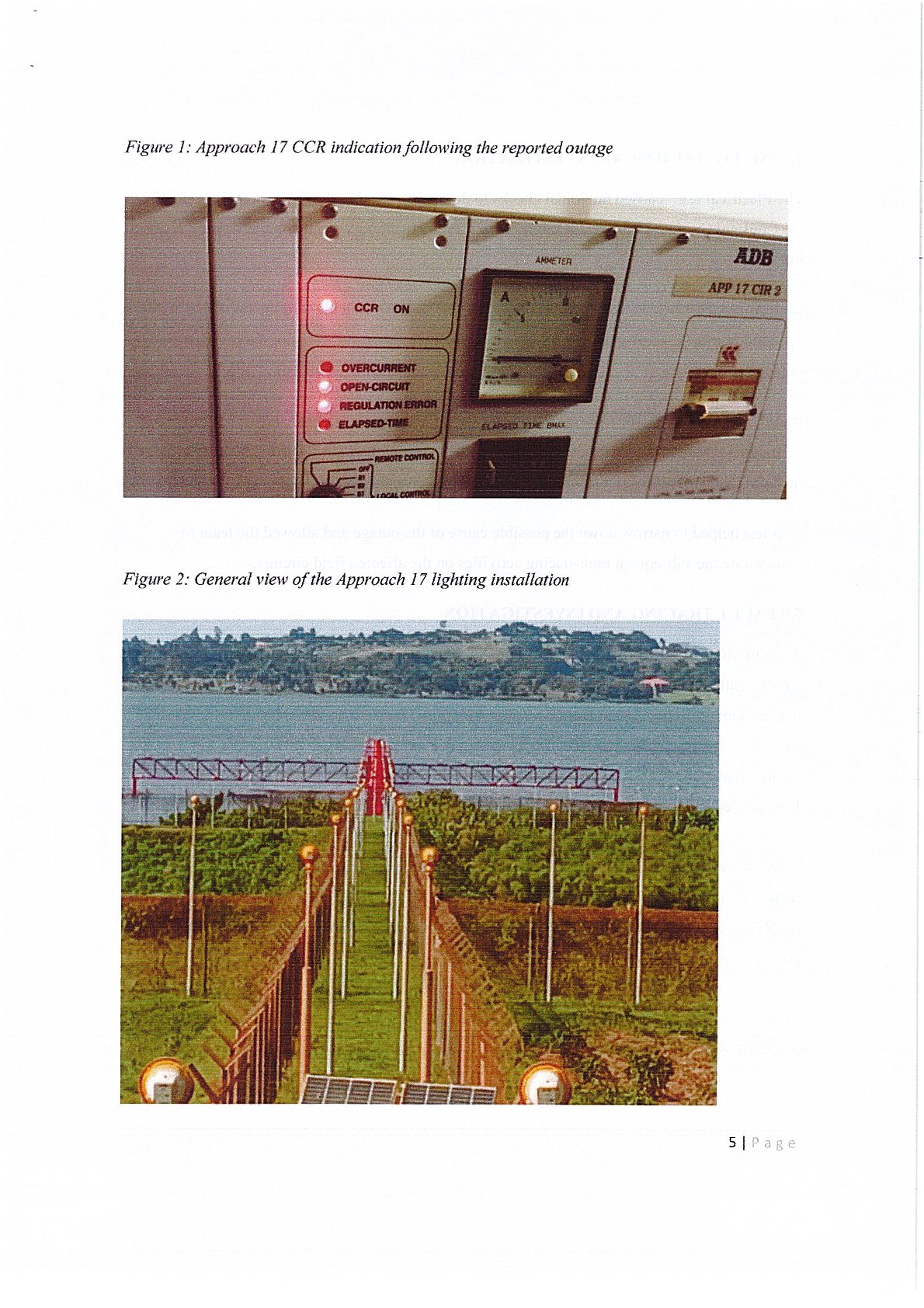
Third, the nearby security watchtowers were not continuously manned, limiting surveillance of the area.
Even more worrying, the report says there was no dedicated guard house at Approach Pier 17 to support continuous security presence and access monitoring.
The facility was also not fully enclosed by a permanent security fence, leaving sections of the installation exposed to unauthorised access.
A separate assessment by the Aviation Security Department, dated September 18, 2026, further established that the northern approach lighting area lacked adequate lighting and CCTV coverage.
The assessment, compiled by Airport Security Inspector Collins Aritua Aleni, observed that although parts of the bridge had perimeter fencing, the bridge itself was not adequately protected.
The report also noted that the affected Ring Main Units (RMUs) at the VVIP access road had been vandalised, with their cables cut.
The assessment identified another vulnerable area at the Threshold House station, where electrical staff had been deployed on September 15, 2026, after a power switch tripped.
According to the security team, the area had neither adequate lighting nor CCTV cameras.
These findings raise questions about how many other sensitive installations around Entebbe could be exposed to similar interference.
WATCHTOWERS TOO FAR, PATROLS MISS TARGET!
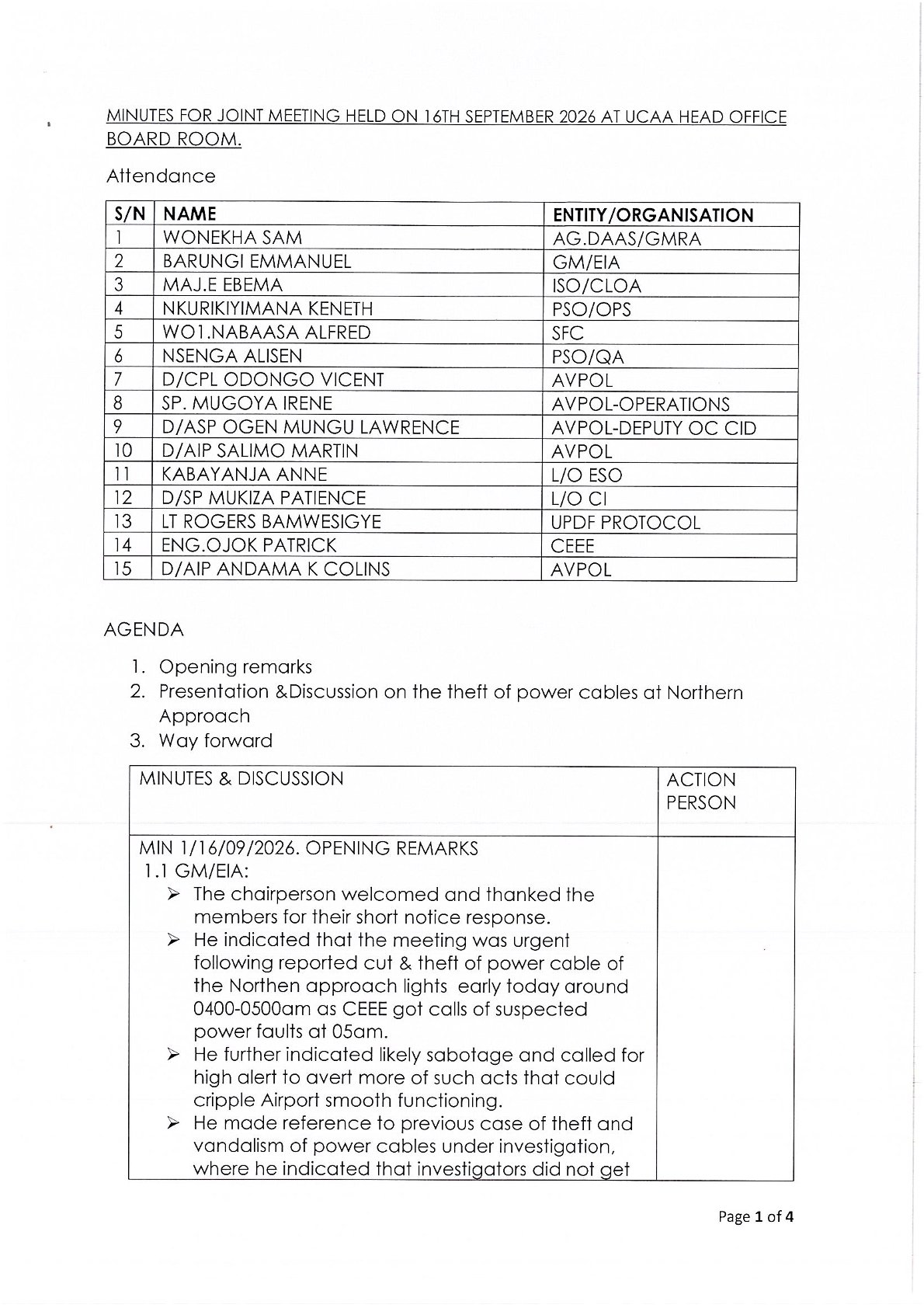
Minutes of an emergency joint security meeting held at UCAA headquarters on September 16, 2026, provide further insight into the security shortcomings.
During discussions, officials sought clarification on how far the existing watchtowers were from the vandalised facility.
The response was that the watchtowers were too far apart to provide effective assistance.
Asked whether there were daily deployments of security personnel at watchtowers, the meeting was informed that Aviation Police (AVPOL) deployed personnel daily.
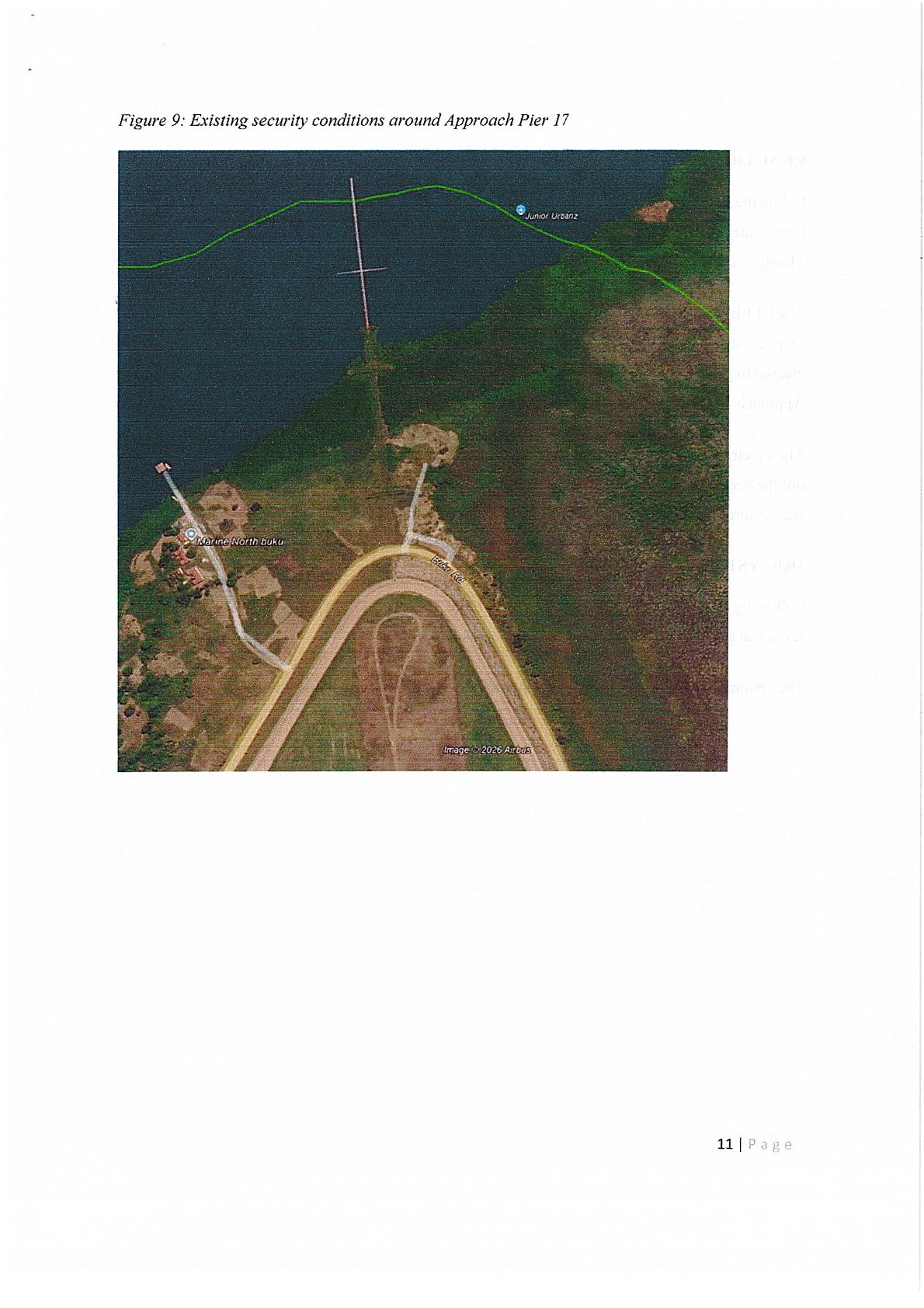
However, when asked whether the Approach 17 installation was under CCTV surveillance, officials confirmed that it had no CCTV coverage.
The meeting also discussed whether security personnel conducted night patrols.
The response was that patrols were conducted, but with emphasis on the airport perimeter fence.
This effectively exposed a possible gap between protecting the general airport perimeter and providing direct protection to critical electrical installations located away from the main operational areas.
The Chief Legal Officer who attended the meeting reportedly expressed concern that security efforts had largely concentrated on the integrity of the perimeter fence, including crash gates and grills, while critical infrastructure elsewhere lacked an adequate security regime.
The Chief Engineer also told the meeting that another power-backup cable had been found cut near the VVIP area, raising concerns about what he described as a worrying trend.
The meeting was chaired by Acting General Manager, Directorate of Airports and Aviation Security, Sam Woneka, and attended by representatives of airport management, aviation police, security and engineering departments.
2022 CCTV REQUESTS!
Perhaps the most embarrassing revelation for the airport security establishment comes from email exchanges dating back to May 2022.
The correspondence shows that UCAA’s Chief Electrical and Electronics Engineer, Eng. Patrick Ojok, had already raised concerns about inadequate CCTV surveillance at the Electrical Centre and other remote power centres.
In an email dated May 21, 2022, Ojok wrote to the then Manager Aviation Security, Lt Col Allan Murari Matsiko, explaining that the Electrical Centre was a critical facility necessary for uninterrupted airport operations.
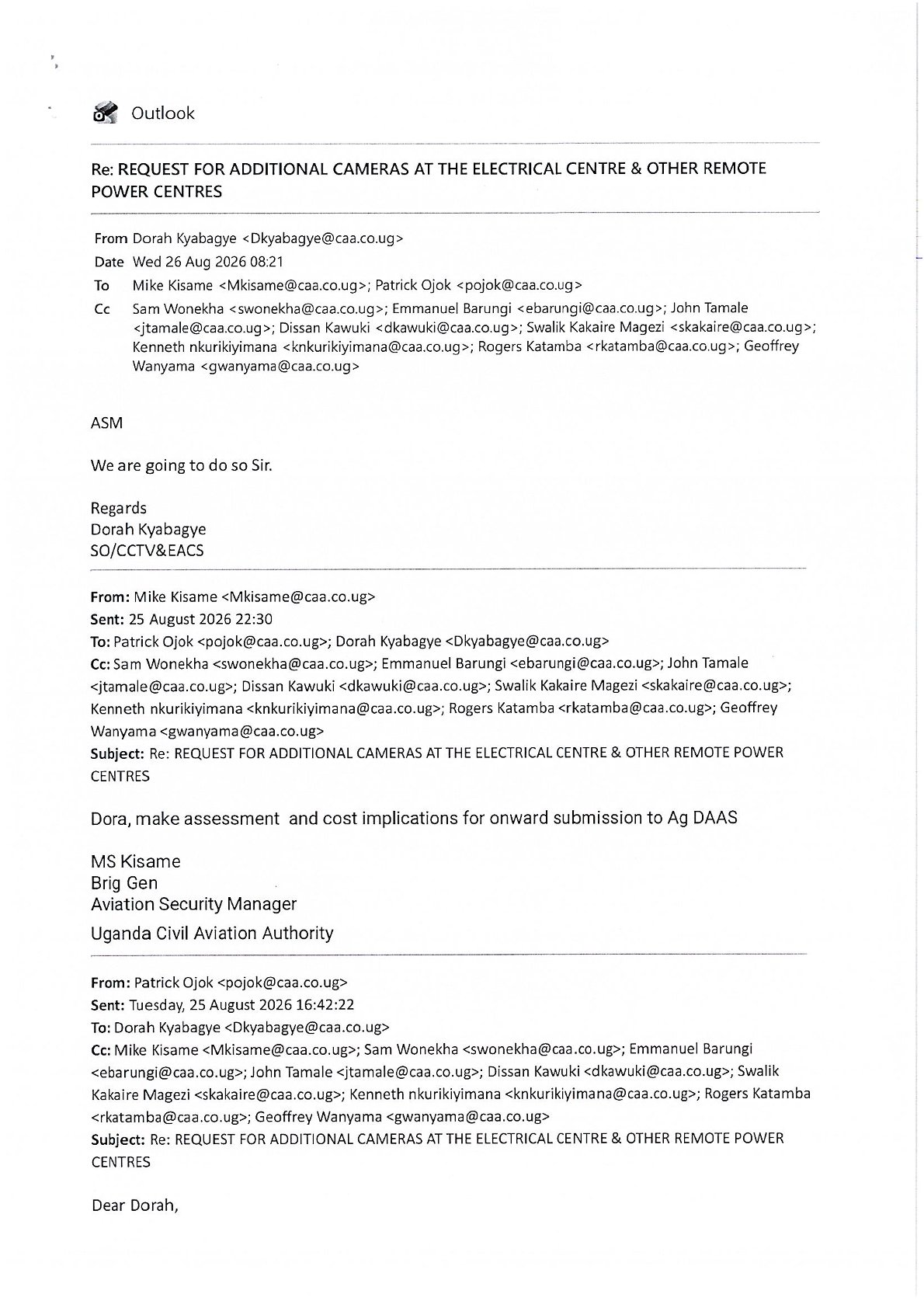
He warned that inadequate CCTV coverage at the Electrical Centre and other remote power centres compromised the security of electrical installations as well as airport security.
He requested an upgrade of CCTV coverage to include several installations, among them the Strongroom, Arrivals power centre, PTB Low Voltage Switchboards, Threshold Building, VVIP high-voltage room, VVIP generator room, VVIP low-voltage room, VVIP external fuel tank and concession building power rooms.
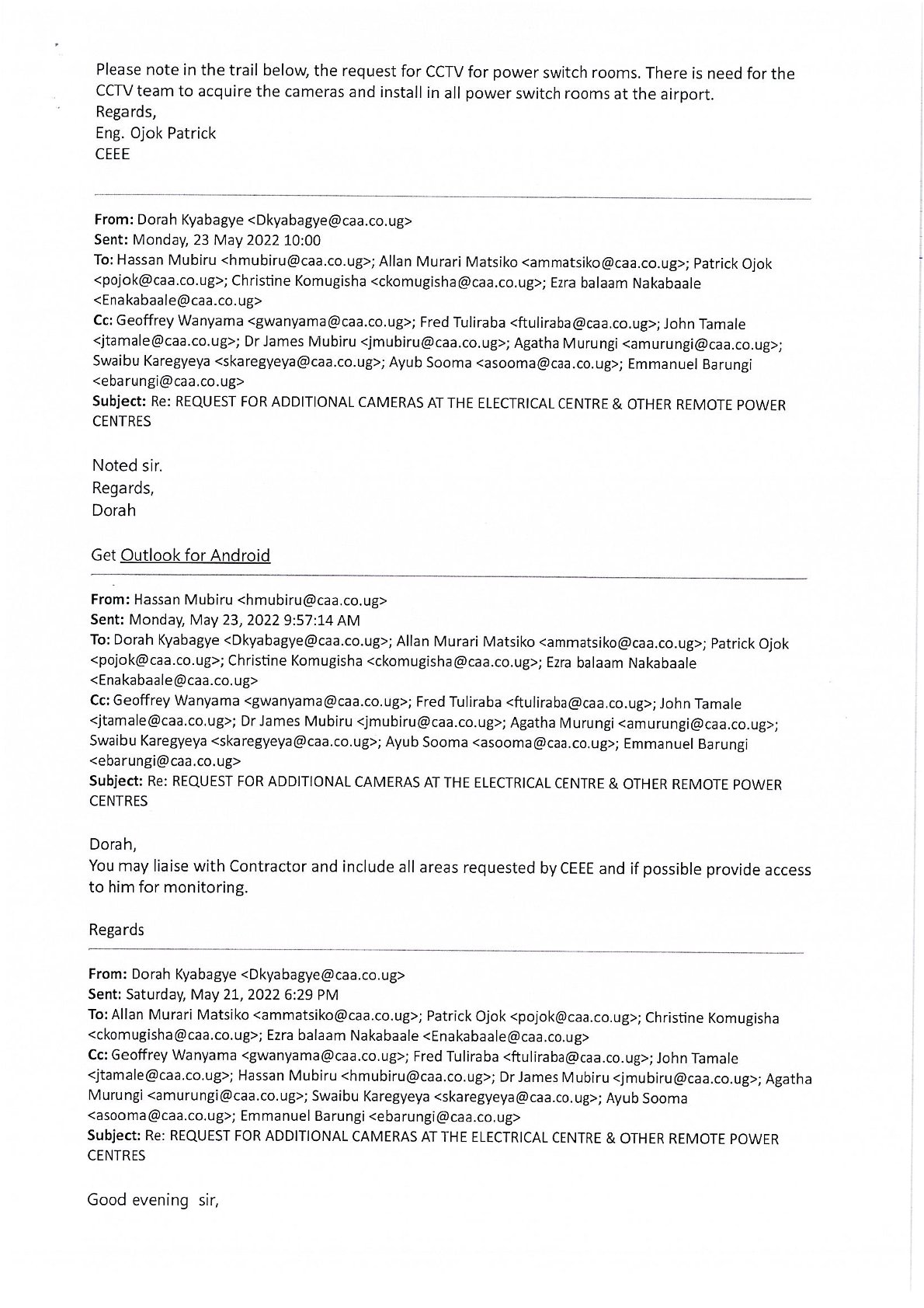
Matsiko responded that the request should be assessed in consultation with the relevant planning office to establish whether it could be accommodated.
On May 23, 2022, Hassan Mubiru advised that the CCTV department should liaise with the contractor and include all the requested areas.
Dorah Kyabagye, who was handling CCTV matters, subsequently indicated that a survey had been conducted with the contractor, Balton Uganda Limited, and that they were waiting for the contractor’s works to commence.
She further assured the engineering team that the surveillance concerns would be addressed.
But four years later, the September 2026 investigation still found serious CCTV gaps around critical airport installations.
KISAME’S AUGUST 2026 EMAILS!
The correspondence becomes particularly interesting when the newer exchanges involving Brig Gen Mike Kisame are examined.
On August 25, 2026, Eng. Patrick Ojok again raised the issue of additional cameras at the Electrical Centre and other remote power centres.
Gen.Kisame, who serves as UCAA Aviation Security Manager, responded by directing Dorah Kyabagye to assess the request and establish the cost implications for onward submission to the Acting Director General, Airports and Aviation Security.
In his email, Kisame wrote:
“Dora, make assessment and cost implications for onward submission to Ag DAAS.”
The following day, August 26, Kyabagye responded:
“We are going to do so Sir.”
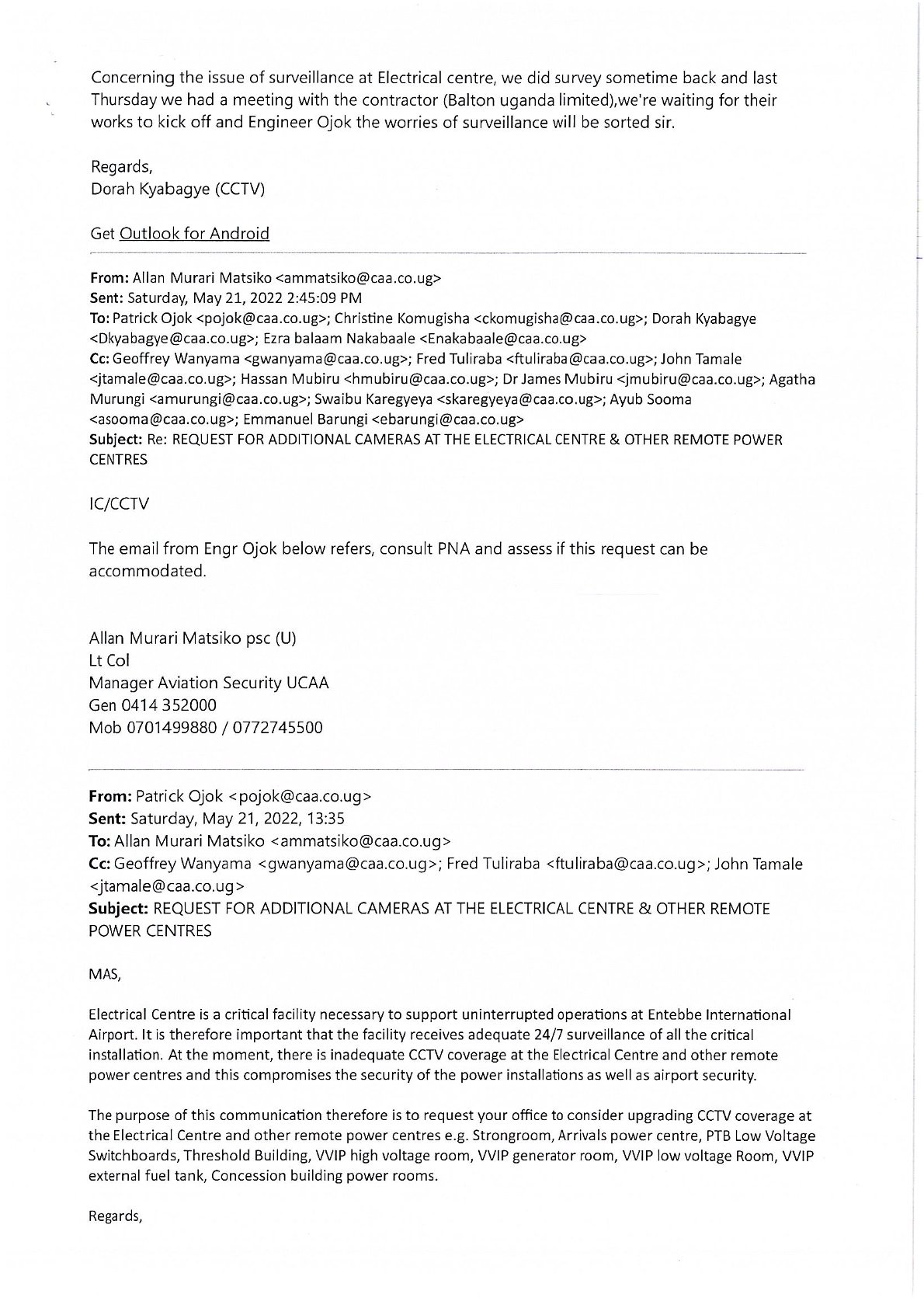
 The email trail suggests that the CCTV proposal was still undergoing assessment and costing in August 2026.
This was just weeks before the September 16 cable theft that knocked out the Approach 17 lighting system.
It is important to distinguish that the email exchanges specifically concerned additional cameras at the Electrical Centre and other remote power centres. They do not establish that a CCTV installation specifically covering Approach Pier 17 had been approved or funded.
Nevertheless, they demonstrate that concerns about surveillance of critical airport electrical infrastructure had been raised years earlier and were still being discussed in 2026.
Why had comprehensive surveillance not been achieved? Was funding the problem? Had the contractor failed to execute the proposed works? Who was responsible for following up the outstanding security installations?
And what measures had the Aviation Security Department put in place to protect remote installations while the proposed cameras were still being assessed?
WHAT UCAA WANTS TO INSTALL!
Following the revelations, the various internal reports proposed a raft of security interventions aimed at closing the loopholes.
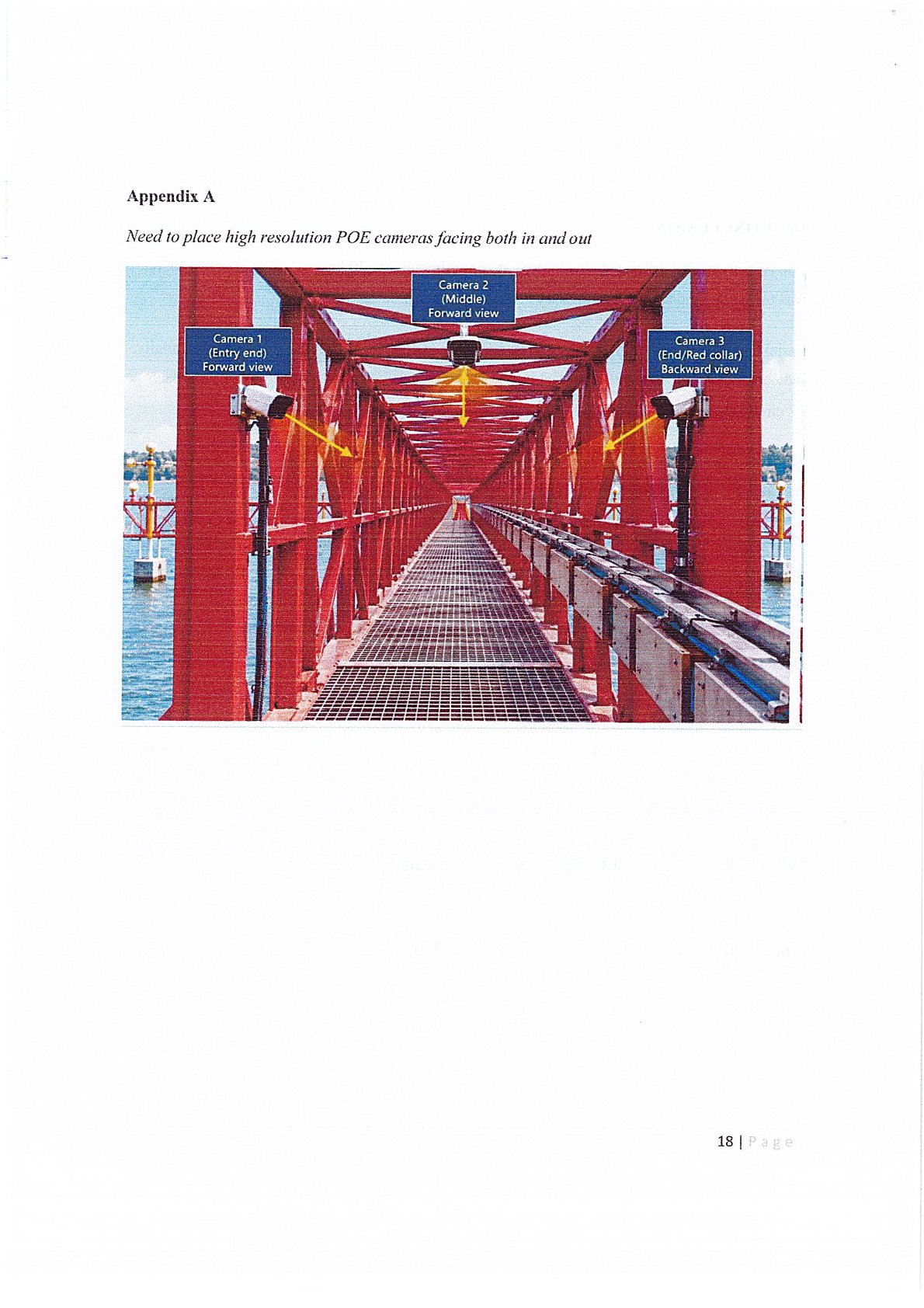
The proposals include installing high-resolution CCTV cameras to monitor the approach lighting bridge from different directions.
An illustration attached to the report proposes three Power over Ethernet (POE) cameras: one at the entrance facing forward, another in the middle facing forward and a third at the far end facing backwards.
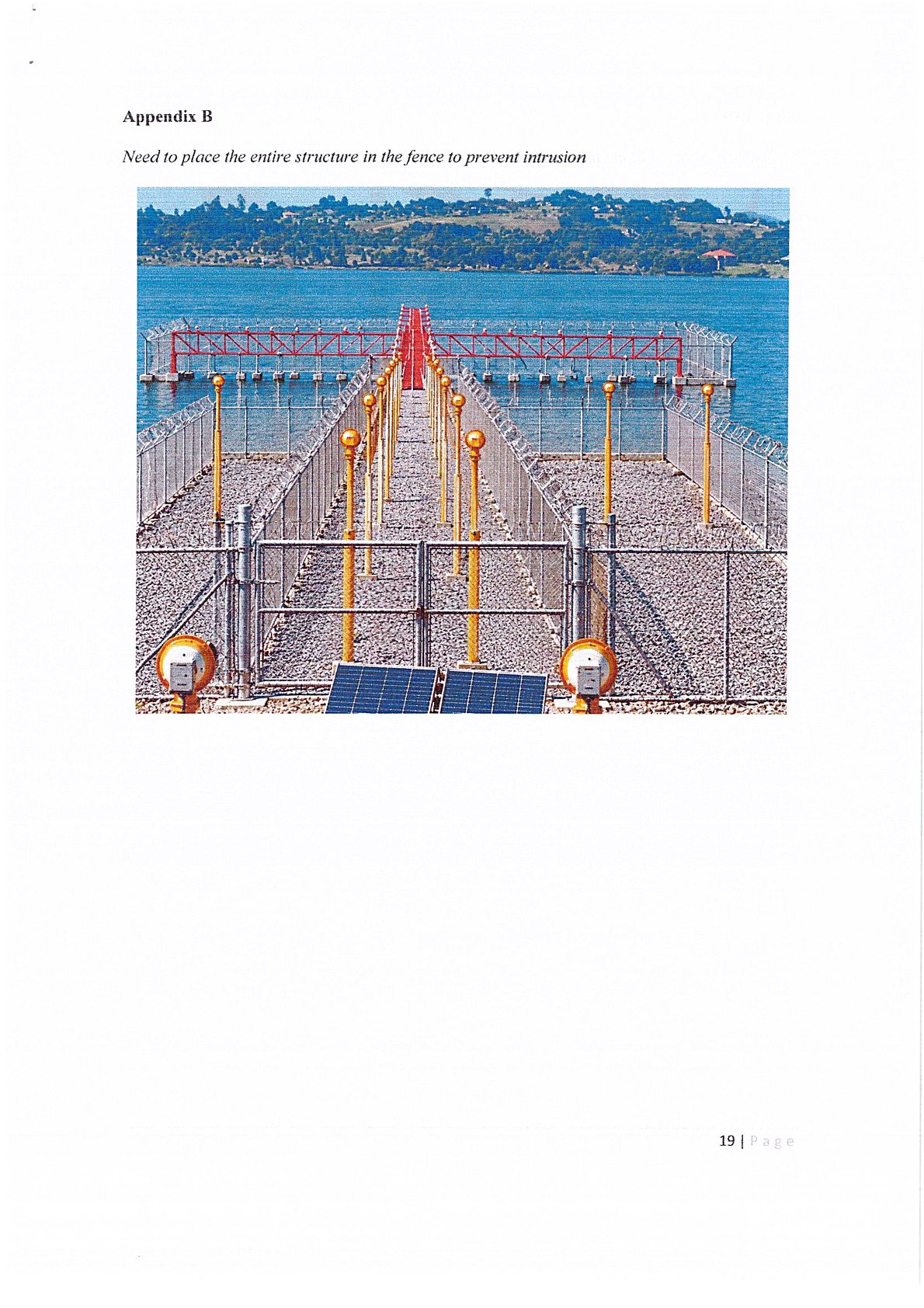
The security team also proposed enclosing the entire structure with fencing to prevent intruders from accessing the installation.
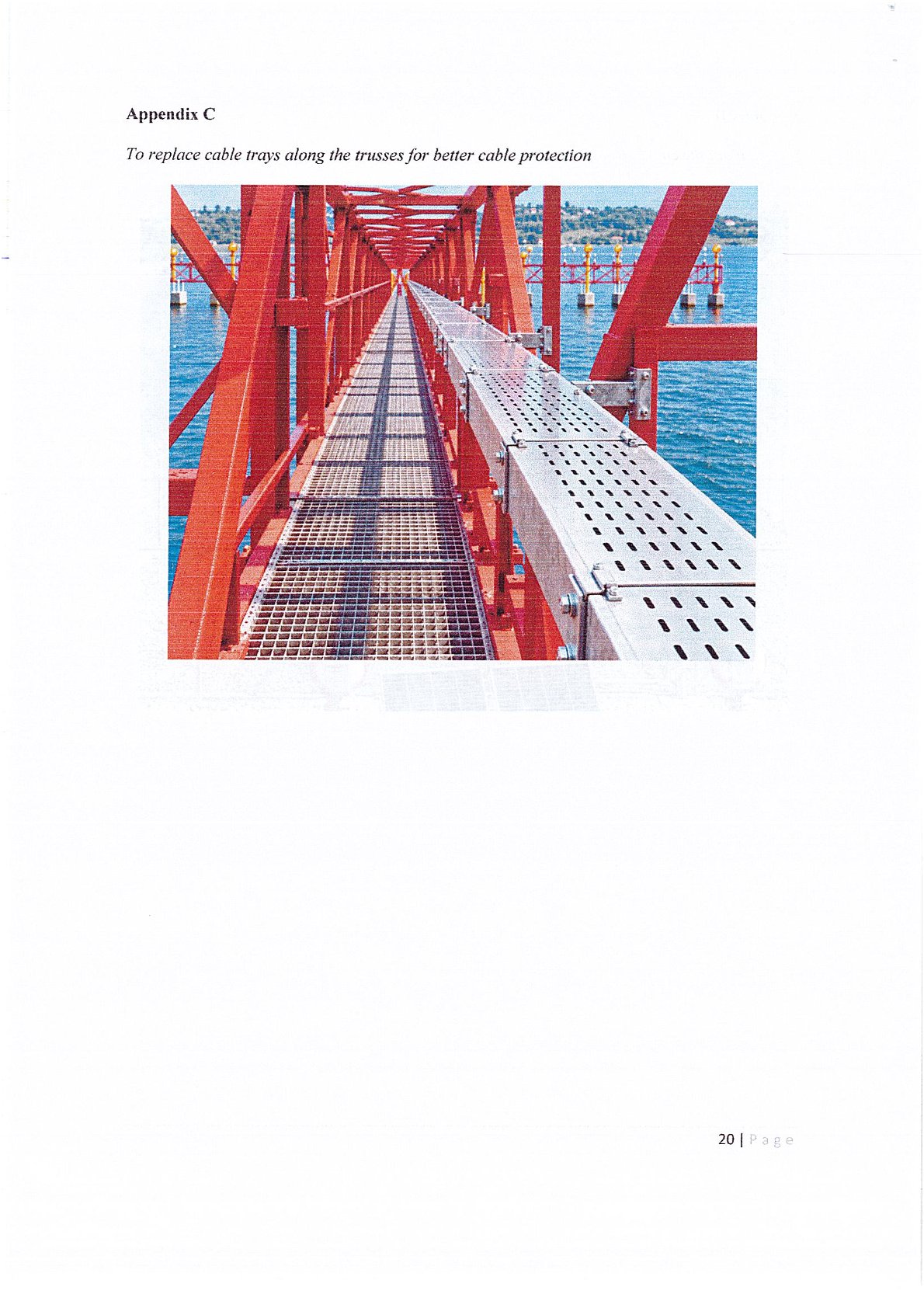
Another proposal is to replace the existing cable trays along the bridge trusses with covered cable trays to provide better physical protection for electrical cables.
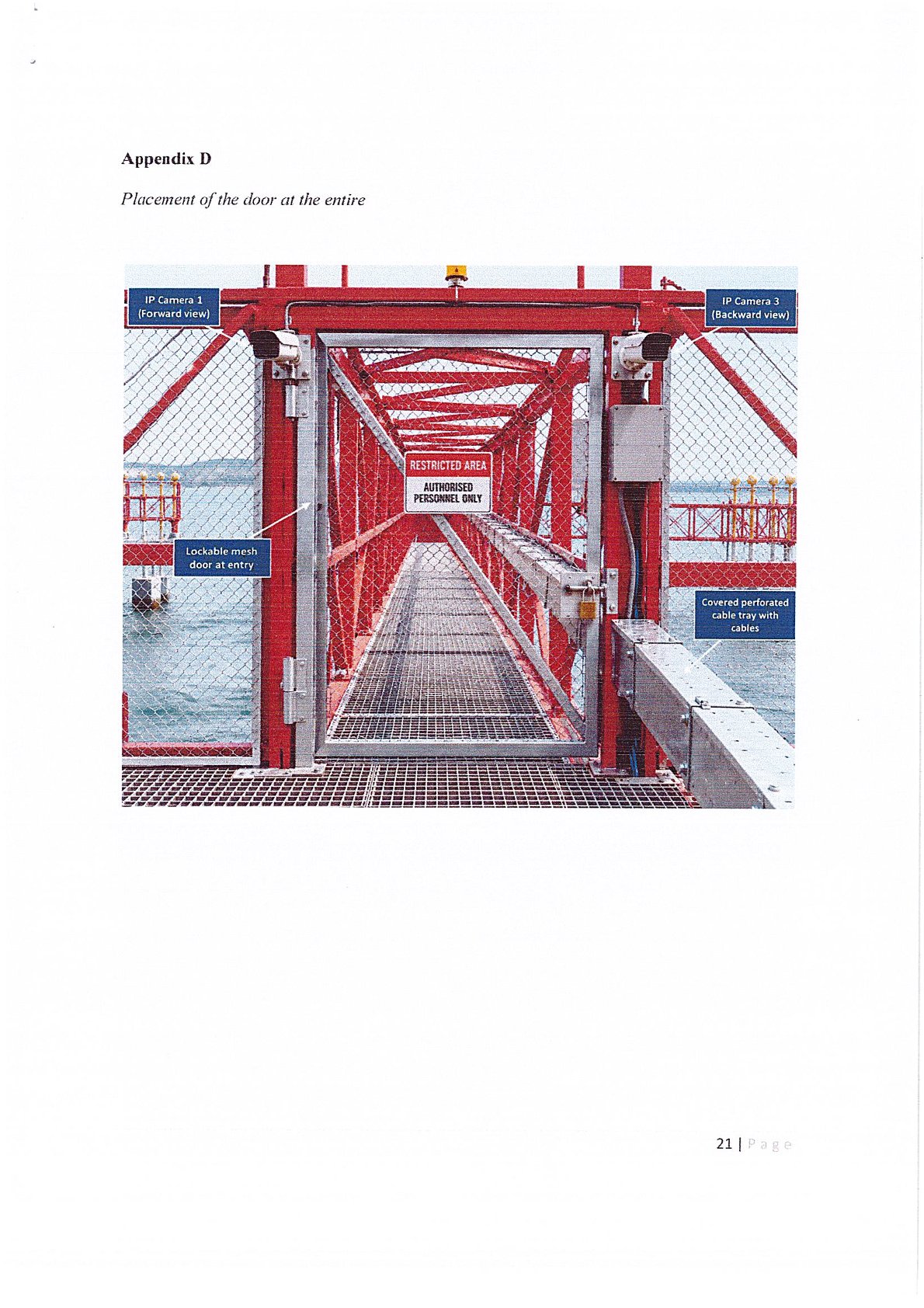
The proposed design also includes a lockable mesh access door, CCTV cameras at the entrance and a clearly marked restricted area for authorised personnel only.
Other recommendations include extending fencing into the lake to cover the entire length of the approach lighting installation, establishing watchtowers closer to the facility and ensuring that Aviation Police personnel are deployed with night-vision binoculars.
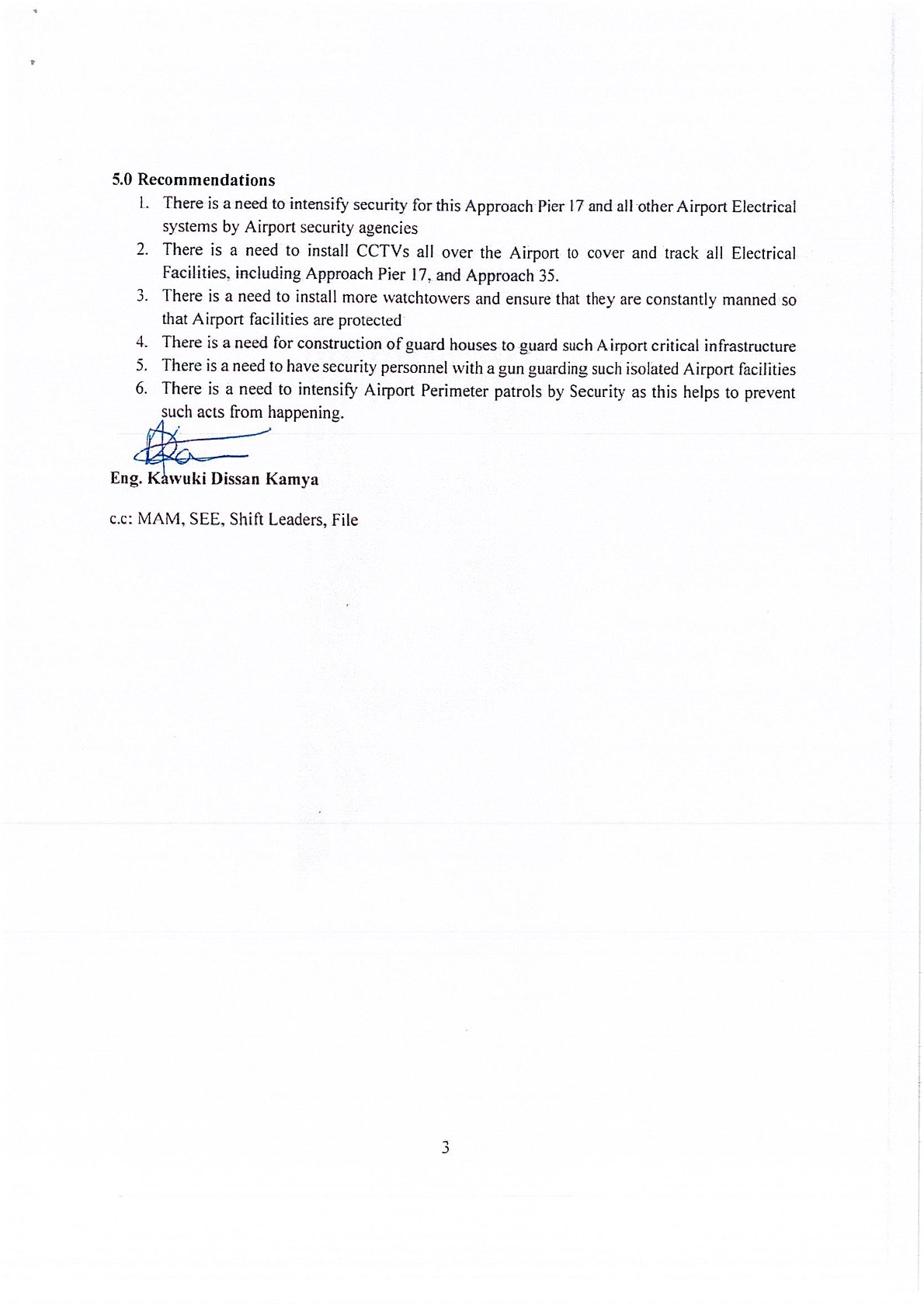
The reports further recommend:
- Installing CCTV cameras at Approach Pier 17, Approach 35 and other critical electrical installations.
- Providing adequate lighting around vulnerable installations, including the VVIP access road and Threshold House.
- Constructing dedicated guard houses and deploying armed security personnel to isolated airport installations.
- Ensuring watchtowers are continuously manned.
- Intensifying routine Aviation Security and Aviation Police patrols during both day and night.
- Establishing controlled access points to prevent unauthorised persons from reaching critical electrical installations.
- Extending the airport perimeter fence to cover currently exposed areas around Approach Pier 17.
The security assessment also warns that ongoing airport construction works create another vulnerability because many construction workers have access to the airside, making monitoring difficult and background checks challenging.
It cautions that the possibility of insider threats must also be addressed.
KISAME ON THE SPOT!
With the Aviation Security Department’s own assessment exposing these weaknesses, Brig Gen Kisame faces questions about the state of security supervision at Entebbe.
The central issue is not merely that thieves stole electrical cables. It is that a critical airport installation was accessible, lacked comprehensive CCTV surveillance and did not have dedicated security personnel guarding it, despite earlier concerns about the protection of airport electrical facilities.
The August email exchanges also raise questions about the progress of surveillance proposals that had been under discussion for years.
Was the CCTV installation proposal eventually funded? Were the identified remote power centres secured? Why was Approach Pier 17 not adequately monitored? Who was responsible for ensuring that the security gaps identified in previous assessments were closed?
The incident is among the developments now placing UCAA’s management of critical airport infrastructure under scrutiny, with 13 authority officials having been remanded to Kigo Prison over separate allegations involving neglect of duty, theft of electrical materials and interference with airport installations.
The officials have denied the charges.
Part 3 of the report to follow…
GOT A HOT STORY? BLOW THE WHISTLE!
Have breaking news, explosive revelations, juicy leads or evidence of wrongdoing?
WE WANT TO HEAR FROM YOU!
Send your tips, documents, videos, photos and audio recordings to:
redpeppertips@gmail.com
Whether it’s corruption, scandals, abuse of office, injustice or stories others are afraid to tell, help us bring the truth to light.
SOURCES ARE PROTECTED.
CONFIDENTIALITY IS OUR NO.1 PRIORITY!
About Post Author