African Literature Icon Ngũgĩ wa Thiong’o Dies at 87
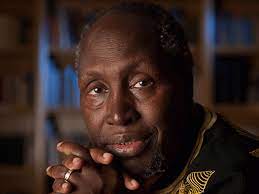
Celebrated Kenyan author and intellectual giant Ngũgĩ wa Thiong’o has passed away at the age of 87 in the United States, after a prolonged battle with kidney disease. his legacy on African literature remains deeply etched in the continent’s literary and cultural history.
His daughter, Wanjiku wa Ngũgĩ, announced his passing in a heartfelt Facebook post on Wednesday, 28th May 2025:
“It is with a heavy heart that we announce the passing of our Dad, Ngũgĩ wa Thiong’o, this Wednesday morning. He lived a full life, fought a good fight. As was his last wish, let’s celebrate his life and his work. Rîa ratha na rîa thŭa. Tŭrî aira.”
She added that the family spokesperson, Nducu wa Ngũgĩ, will announce details of his celebration of life in the coming days.
Ngũgĩ wa Thiong’o’s life and career were defined by his unwavering commitment to decolonizing African literature, language, and education.
Born in 1937 in Limuru, Kenya, his early years were profoundly shaped by the Mau Mau uprising (1952–1960), a nationalist revolt against British colonial rule. These formative experiences inspired much of his writing, which grappled with themes of colonialism, resistance, identity, and justice.
Ngũgĩ pursued his university education at Makerere University in Kampala, Uganda, beginning in 1959—an institution widely regarded as one of Africa’s premier academic centers. It was here that he began to hone his craft as a writer and intellectual.
He first gained international recognition with his debut novel, Weep Not, Child (1964), followed by critically acclaimed works such as The River Between (1965), A Grain of Wheat (1967), and Petals of Blood (1977). These novels explored the complexities of post-colonial African society and the tensions between tradition and modernity.
In the late 1970s, Ngũgĩ made a radical and historic shift: he began writing exclusively in his native Kikuyu language. This decision was both literary and political, aimed at reclaiming African languages and affirming cultural identity in the face of linguistic imperialism.
His works in Kikuyu, such as Caitaani Mutharaba-Ini (Devil on the Cross) and Matigari, had a transformative impact on African literature and inspired a generation of writers to embrace their indigenous tongues.
Ngũgĩ will be remembered not only as a pioneer of African literature, but also as a passionate advocate for indigenous languages, a fearless critic of authoritarianism, and a champion for social justice.
His work has been translated into numerous languages and continues to be taught in universities around the world.
Ngũgĩ wa Thiong’o’s legacy is one of resilience, intellectual courage, and powerful storytelling. He leaves behind a towering body of work that will continue to influence generations to come.
About Post Author