BOU SACCO CRACKDOWN! 83 Saccos Face Closure As Bou Licence Deadline Nears
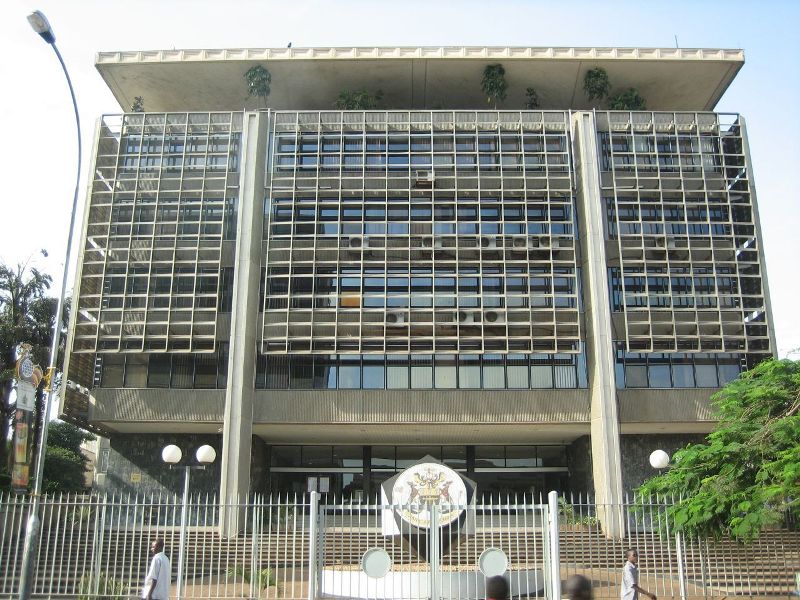
Bank of Uganda headquarters in Kampala.
Only seven of an estimated 90 large Savings and Credit Cooperative Societies (SACCOs) have so far obtained licences from the Bank of Uganda, with just over five weeks remaining before the September 30 deadline for eligible institutions to come under direct central bank supervision.
The slow pace of licensing is raising questions about the preparedness of the cooperative movement for the new regulatory regime and what the changes will mean for SACCO members who depend on the institutions to save, borrow and access other financial services.
The Bank of Uganda has warned that eligible SACCOs that fail to apply for licences by September 30 could face penalties prescribed by law, which may include closure.
State Minister for Finance in charge of Microfinance, Shartsi Kutesa Musherure, said seven SACCOs are fully licensed, while 15 applications are still being processed.
She said the government and Bank of Uganda estimate that about 90 SACCOs fall within the category that must obtain central bank licences.
The affected SACCOs are those with voluntary savings exceeding 1.5 billion shillings and institutional capital of more than 500 million shillings.
Voluntary savings are money members deposit with a SACCO for safekeeping and other financial purposes, rather than savings made specifically to qualify for a loan.
The Bank of Uganda says its primary concern is ensuring that these large amounts of members’ savings are protected through stronger regulatory oversight.
Under the new framework, eligible SACCOs are moving from the Tier Four category of microfinance institutions, which is supervised by the Microfinance Regulation Department in the Ministry of Finance, to the direct supervisory mandate of the Bank of Uganda.
The change means that SACCOs holding large amounts of members’ savings will be subjected to stronger requirements on governance, financial management and depositor protection.
The new regulatory framework also provides for protection of depositors through the Deposit Protection Fund and access to centralised credit referencing, similar to other financial institutions supervised by the Bank of Uganda.
The central bank argues that stronger supervision could protect members from losing their savings in the event of mismanagement or collapse of a large SACCO.
Aomu Mackay, the Director of Non-Bank Financial Institutions at the Bank of Uganda, says self-regulation within the cooperative movement cannot by itself guarantee the safety of members’ deposits.
“If a large SACCO with billions in savings collapses, it can trigger widespread financial panic and destabilize the broader financial sector,” Aomu says.
But the move has faced resistance from leaders of the cooperative movement, who argue that central bank regulation could increase the cost of running SACCOs and eventually make financial services more expensive for members.
All SACCOs, regardless of size, are first incorporated as cooperatives by the Ministry of Trade, Industry and Cooperatives under the Cooperative Societies Act.
Cooperative leaders argue that adding direct Bank of Uganda supervision creates another layer of regulation on institutions that are already subject to cooperative laws and oversight.
Ivan Asiimwe, the Executive Director of the Uganda Cooperative Alliance, fears that SACCOs could be required to meet expensive compliance requirements similar to those imposed on commercial financial institutions.
He says the additional costs could undermine the community-based model that has enabled SACCOs to provide financial services to people who may not easily access conventional banks.
“It also takes away the unique form of financial inclusion SACCOs provide as community-based initiatives and turns them into commercial and profit-oriented entities,” Asiimwe says.
The Uganda Co-operative Savings and Credit Union has also opposed full central bank licensing of large SACCOs under a system similar to the regulation of banks.
Its Chief Executive Officer, Sylvester Ndiroramukama, cites overlapping or potentially conflicting laws governing the different regulators and is calling for a single, tailored regulatory framework for SACCOs.
The government, however, says the reforms are necessary to maintain stability in the sector while protecting financial inclusion.
Minister Kutesa has pledged support for a regulatory approach that protects members’ money while preserving the cooperative nature of SACCOs, amid calls from SACCO leaders for proportionate regulation.
Some SACCOs that have already obtained Bank of Uganda licences say the new system has instead strengthened their operations and given members greater confidence in the safety of their savings.
Mbarara-based EBO Financial SACCO, the first SACCO to obtain a Bank of Uganda licence in March this year, says central bank supervision has strengthened its governance and positioned the institution for expansion.
Julian Tumusiime, the SACCO’s Executive Director, says the decision to obtain the licence was driven partly by the need to protect members’ deposits and strengthen confidence in the institution.
“We are the first SACCO in the history of Uganda to obtain this licence from the Bank of Uganda, and our reason for this is to ensure that we protect our members’ deposits, build their confidence and enable financial inclusion,” Tumusiime says.
The licence has also enabled EBO Financial SACCO to expand to seven branches in different districts in western Uganda.
The Bank of Uganda extended the licensing deadline from March 31 to September 30, 2026, to give eligible SACCOs more time to prepare the required documentation and allow the central bank to conduct stakeholder sensitisation.
During the extension period, regulated financial service providers were advised to continue supporting eligible SACCOs to obtain the required licences.
The central bank also said regulated financial institutions should not deny financial services to eligible SACCOs before the September 30 deadline.
GOT A HOT STORY? LET US KNOW!
Got breaking news, explosive secrets, or hard evidence?
Email us: redpeppertips@gmail.com
We accept tips, documents, videos, photos, and recordings—the more evidence you have, the better.
CONFIDENTIALITY IS OUR TOP PRIORITY. SOURCES ARE ALWAYS PROTECTED!
About Post Author