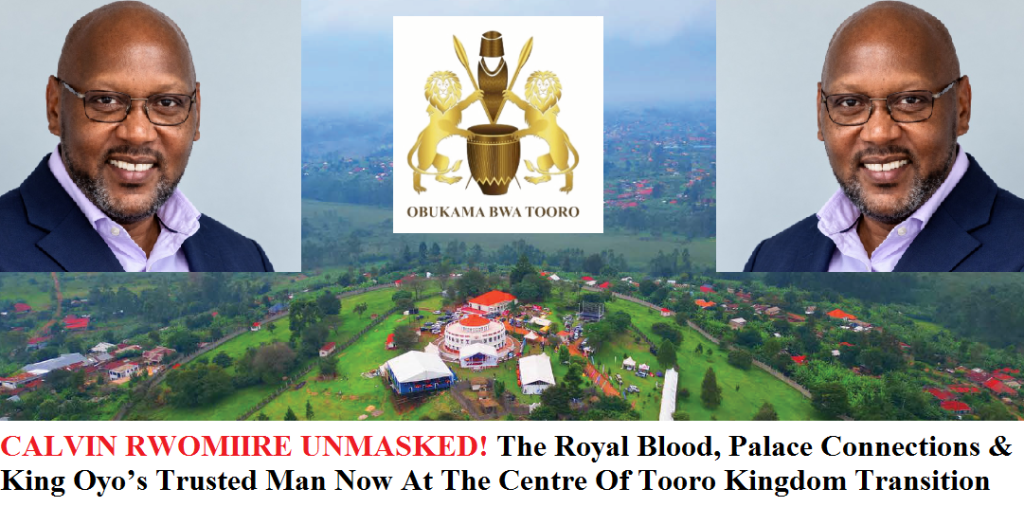
CALVIN RWOMIIRE UNMASKED! The Royal Blood, Palace Connections & King Oyo’s Trusted Man Now At The Centre Of Tooro Kingdom Transition
In moments of transition, particularly those marked by grief, uncertainty and competing interpretations of tradition, institutions are tested, and so are the people entrusted with leading them.
Since the passing of His Majesty King Oyo Nyimba Kabamba Iguru Rukidi IV, the Prime Minister of Tooro, Rt Hon. Calvin Armstrong Rwomiire Akiiki, has found himself at the centre of public attention, with much of the debate focusing on the statements he has made without asking the more fundamental question: Who exactly is Calvin Armstrong Rwomiire, and why did King Oyo entrust him with the administration of the Kingdom?
TO UNDERSTAND THE MAN, START WITH HIS ROOTS
Rt Hon. Calvin Armstrong Rwomiire’s relationship with Tooro’s royal institution is neither recent nor limited to his service as Prime Minister, because it is rooted in a family history closely intertwined with the Babiito Royal House and with generations of service to the Kingdom.
Through his mother, Princess Rebecca Kimoome, Rwomiire traces his lineage through his grandfather, Prince Kiranga Kimoome, son of Prince Samwiri Nyamugabo Kwita Kurumuki, who was descended from Omukama Isingoma Rukiidi I and, ultimately, from Kaboyo I Kasusunkwanzi, the founder and first Omukama of Tooro.
There is a further intersection between the families through the maternal lineage of the Royal House, with Queen Damali, mother of Omukama Rukiidi, having been a sister to Mirika Alyomubandi, the wife of Prince Samwiri Nyamugabo Kwita Kurumuki.
Prince Samwiri was the father of Prince Kiranga Kimoome, whose daughter, Princess Rebecca Kimoome, is the mother of Rt Hon. Calvin Armstrong Rwomiire, creating another historic connection between the Prime Minister’s lineage and the Royal House.
These genealogical ties place Rwomiire within the extended Babiito royal family and establish a longstanding familial relationship with the late King through Rwomiire’s maternal ancestry.
His paternal heritage carries an equally significant tradition of service to Tooro, with Rwomiire being a grandson of Owek. Ham Rwomiire Akiiki, a Mugweri who served as a Saza Chief in the late nineteenth century and was also honoured as Omujwara Kondo, a distinction of particular significance in Tooro that represents recognition by the Crown of exceptional standing, loyalty and service.
His connection to the throne must therefore be understood within this wider history because, long before he assumed administrative responsibility in the Kingdom, his family had been connected to the institution of the Omukama through kinship, leadership and service.
The Kimoome family, in particular, has maintained a longstanding association with the Kingdom, with Rwomiire’s maternal uncle, Prince John Victor Kimoome Isingoma, remaining actively involved in Kingdom affairs while also serving as both a relative and trusted confidant of King Oyo’s father, Omukama Patrick David Matthew Kaboyo Olimi III.
Princess Rebecca Kimoome has similarly devoted much of her life to service, particularly through her work caring for vulnerable children, and her contribution was publicly recognised by King Oyo, who later became Patron of the Rebecca Kimoome Foundation, an acknowledgement of her work and of a family tradition in which proximity to the Royal House has been accompanied by a responsibility to serve.
For Rt Hon. Calvin Armstrong Rwomiire, therefore, service to the Kingdom represents more than the holding of public office, because it forms part of a much longer story of family, heritage, duty and responsibility to the institution of the Omukama and to the people of Tooro.
BUT LINEAGE ALONE DOES NOT EXPLAIN HIS RISE
But lineage alone does not explain Rwomiire’s rise to the office of Omuhikirwa.
Before returning to serve Tooro, Rwomiire had built a life and career away from the Palace, and as a young man in the mid-1990s, he began his professional journey at Stanbic Bank before relocating to the United Kingdom to pursue further academic opportunities and broaden his professional experience.
There, he established himself in the logistics sector and eventually built a successful company that secured major commercial contracts and created employment opportunities, including for Ugandans living in the diaspora.
He had, by any ordinary measure, built a comfortable and successful life abroad, yet distance did not loosen his connection to home.
Rwomiire remained active in Tooro and Ugandan community activities in the diaspora, travelling to Uganda regularly, often every few months, to check on his family and reconnect with the Kingdom, and during these visits, he made a point of meeting King Oyo.
Their discussions reportedly went beyond family ties and ceremony, centring instead on the condition of the Kingdom, its development priorities and the contribution that Batooro in the diaspora could make.
Long before he held public office, therefore, he had begun offering his time, networks and ideas to the Kingdom, meaning that he was not waiting for a title before taking an interest in Tooro.
THE KING’S TRUST
King Oyo eventually appointed him Omujwara Kondo, a title associated with defending and protecting the throne, and this was not an ordinary appointment because, during King Oyo’s reign, the distinction was bestowed very sparingly.
Among the figures publicly associated with the title were President Yoweri Museveni and the late Libyan leader Muammar Gaddafi, while Rwomiire’s inclusion in such limited company was a powerful expression of the King’s confidence in his loyalty and capacity.
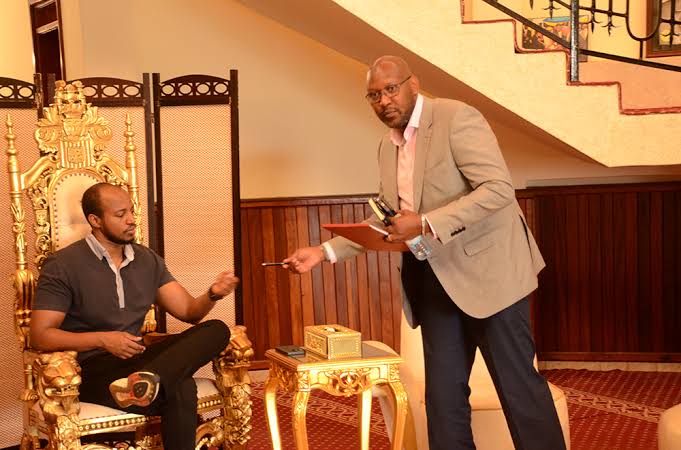
The appointment also carried particular significance because, unlike the other prominent holders of the title, Rwomiire was not a head of state, and what he brought was not political office but demonstrated commitment, a personal relationship of trust with the King and an abiding interest in the future of Tooro.
King Oyo subsequently appointed him Deputy Prime Minister before naming him Prime Minister on 14 February 2025, and the progression, from trusted adviser and Omujwara Kondo to Deputy Prime Minister and finally Omuhikirwa, suggests a relationship in which responsibility was earned gradually.
The King had observed his work, tested his commitment and entrusted him with increasing responsibility.
Accepting the office required considerable personal sacrifice, as Rwomiire had to divide his attention between an established business in the United Kingdom and the increasingly demanding responsibilities of serving the Kingdom in Uganda.
Ultimately, he chose to spend more time at home and answer the call to serve his King.
That decision deserves acknowledgement because many people express love for their homeland from a distance, while fewer are prepared to reorganise their lives, careers and businesses to serve it directly.
REFORMING THE KINGDOM
His first months as Prime Minister were marked by institutional restructuring, and following his appointment, the Cabinet was dissolved and reorganised to reduce duplication and improve coordination.
Related ministries were merged, administrative responsibilities were clarified, and new sub-county chiefs were appointed, while the Kingdom’s 2025 Annual Report says these reforms were intended to strengthen accountability, decentralised governance and results-based service delivery.
The Office of the Prime Minister also conducted engagements across Tooro’s counties, consulting more than 2,000 community stakeholders, including chiefs, elders, women, young people, religious leaders and opinion leaders.
These consultations helped prepare for the King’s Royal Tour and brought grassroots priorities into the Kingdom’s planning.
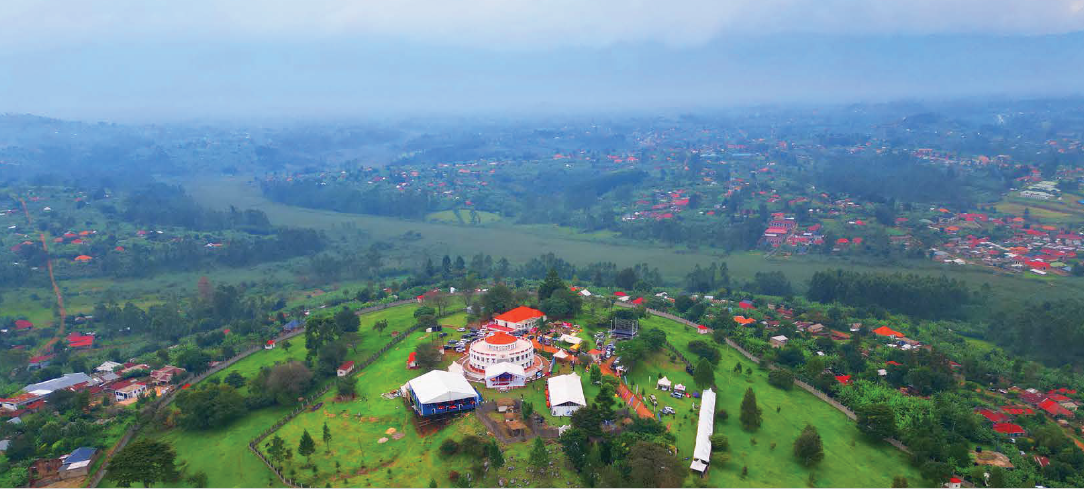
Under the joint leadership of King Oyo and his administration, Tooro recorded several development initiatives, with 59 children receiving corrective orthopaedic surgery during the King’s Birthday Health Week, while the Kingdom expanded youth participation through sports, entrepreneurship, agriculture and the Tooro Kingdom Youth Economic Empowerment Programme.
It engaged investors and development institutions, hosted more than 500 business leaders through the Presidential CEOs Forum and pursued partnerships in tourism, agro-processing, housing, technology, education and youth development.
The administration also supported the establishment of a solar-powered community ICT hub serving 484 learners, mobilised assistance for vulnerable children at Tooro Babies Home and signed cooperation agreements with institutions including Mountains of the Moon University, MTN Uganda, Housing Finance Bank and Habitat for Humanity.
THE KING’S VISION
Perhaps the clearest indication of the working relationship between the King and his Prime Minister is the Kingdom’s Strategic Development Plan for the financial years 2025/26 to 2029/30.
The document sought to translate King Oyo’s long-term vision into measurable programmes covering agriculture, education, health, tourism, infrastructure, culture, communication, governance and environmental protection.
In the plan’s foreword, King Oyo emphasised disciplined implementation and called upon the people of Tooro to imagine the Kingdom they wished to leave to future generations.
The document, in turn, credits Rwomiire with spearheading the planning process and convening the Cabinet that helped translate the King’s vision into actionable strategies.
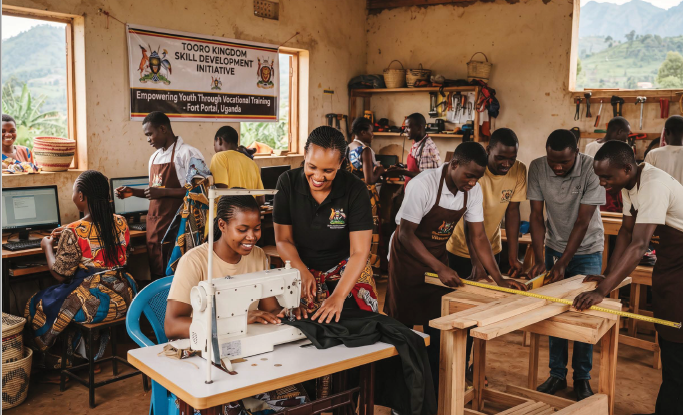
The two men were, therefore, not simply occupying neighbouring offices, because they were working on a shared programme for Tooro’s future.
Some initiatives had already begun, while others remained in development, and according to those familiar with their final exchanges, the King responded warmly to a progress report from his Prime Minister, thanked him for the work being done and expressed his eagerness to return and advance their plans together.
THEN TRAGEDY STRUCK
That future was tragically interrupted.
In the days following King Oyo’s death, Rwomiire has had to shoulder responsibilities few people could adequately prepare for, including announcing the death of a King who was also his relative and friend, coordinating the return of his body from abroad, leading funeral arrangements and managing an administration confronting grief, public scrutiny and disagreement.
He has also faced criticism over communication surrounding the King’s illness and questions concerning the succession, and these are legitimate matters for the proper traditional and institutional authorities to clarify.
Tooro’s succession customs belong to the Babiito royal clan and its recognised cultural leadership, while the Prime Minister carries responsibility for the Kingdom’s administration, meaning that at a time such as this, both spheres must work together with restraint, mutual respect and fidelity to custom.
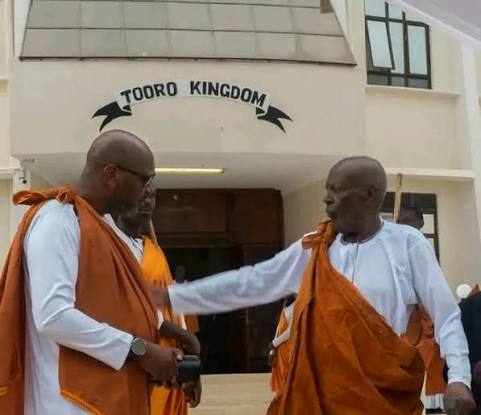
Rwomiire has publicly indicated his willingness to engage the Omujwera Musuuga and other royal leaders to resolve disagreements away from the heat of public confrontation, and that is the correct instinct.
Tooro does not need the administrative and cultural arms of the Kingdom pulling against each other while the King is yet to be laid to rest.
SCRUTINY IS STILL NECESSARY
Understanding Rwomiire’s background does not place him beyond scrutiny because no public or cultural leader should be, but it does challenge the simplistic portrayal of him as an outsider or a commoner with no stake in the Babiito royal institution.
He is connected to that institution by ancestry, family history, appointment and service.
More importantly, his authority as Prime Minister did not arise from public speculation, but came directly from King Oyo, who appointed him after years of engagement and progressively entrusted him with some of the Kingdom’s most significant responsibilities.
History will eventually judge the decisions made during this difficult transition, but for now, judgment should be informed by facts, custom and an appreciation of the enormous burden resting upon those leading Tooro through its grief.
Calvin Armstrong Rwomiire is a royal descendant, a businessman who returned from the diaspora, a servant who accepted personal sacrifice and an administrator whom King Oyo deliberately chose.
His duty now is not to replace the King or the traditional authority of the Babiito, but to protect the dignity of the Crown, preserve the administration they built together and help create the conditions in which Tooro’s lawful cultural authorities can guide the Kingdom forward in unity.
The strongest tribute to King Oyo will not be victory by one faction over another, but the survival of the united, modern and development-focused Tooro that he and his Prime Minister had begun working to build.
GOT A HOT STORY? LET US KNOW!
Got breaking news, explosive secrets, or hard evidence?
Email us: redpeppertips@gmail.com
We accept tips, documents, videos, photos, and recordings—the more evidence you have, the better.
CONFIDENTIALITY IS OUR TOP PRIORITY. SOURCES ARE ALWAYS PROTECTED!
About Post Author