COCA-COLA IN SHs51M JOB SACKING SHOCK! 20-Year Employee Wins Big Over Unfair Dismissal
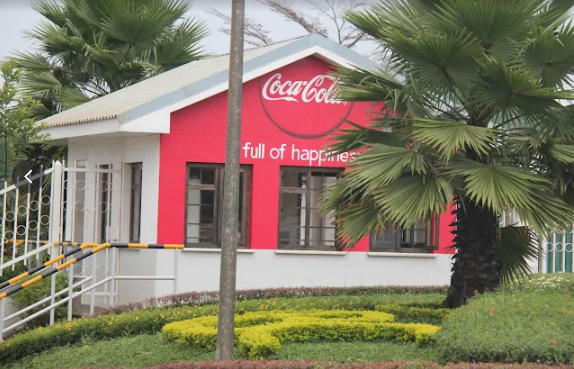
An employee of Century Bottling Company Limited, the producer of Coca-Cola, has been awarded Shs 51 million by the Industrial Court after it ruled that his dismissal was both procedurally and substantively unjustified. Asuman Mulindwa, who worked for the company for about 20 years, was dismissed in April 2022 after its disciplinary committee found him guilty of allegedly injuring a colleague while operating a forklift.
Mulindwa joined the company in 2002 as a casual labourer and rose through the ranks before becoming a forklift operator in 2010. In 2022, he was accused of recklessly operating a forklift and intentionally injuring a fellow employee. He was suspended pending investigations before being subjected to a disciplinary hearing. On April 25, 2022, the company terminated his employment.
Mulindwa subsequently lodged a complaint with the labour office, but his claim was dismissed, prompting him to appeal to the Industrial Court. In his claim, Mulindwa maintained that he was a permanent employee of Century Bottling Company and sought several remedies, including repayment of a Shs 21 million salary loan he had obtained from Stanbic Bank, severance pay, damages for denial of a fair hearing, terminal benefits, repatriation allowance, interest and legal costs.
In its defence, the company argued that Mulindwa was bound by its Human Resource Manual and disciplinary policies. It maintained that he had deliberately injured a colleague by driving a forklift dangerously and that he was suspended, subjected to a disciplinary hearing in which he participated, and lawfully dismissed after being found guilty. The company further told the court that it had calculated and paid him all his terminal benefits upon clearance.
However, the court, presided over by Justice Anthony Wabwire Musana, with assessors Adrine Namara, Suzan Nabirye and Michael Matovu, found that the company had failed to demonstrate that its Human Resource Manual had been properly communicated to employees. The court noted that the manual relied upon to justify Mulindwa’s dismissal was unsigned and that there was no evidence that it had been shared with him.
“We do not accept the view that an unsigned human resource manual formed the basis for imposing dismissal sanctions on the Claimant. In our judgment, while the Respondent produced an HRMH setting out a schedule of offences and the relevant penalties, it was unsigned, and no evidence showed it was shared with the Claimant,” the court ruled.
It added that the failure to demonstrate that the manual had been communicated to Mulindwa meant that the company had not established a clear set of rules defining gross misconduct and the penalties applicable to such offences. “For this reason, we cannot agree that the Claimant’s dismissal was substantively justified,” the court held. The court also found that, although the company had issued notice of the disciplinary proceedings, the chairperson had summarily found Mulindwa guilty on the basis of preliminary investigations without allowing him to cross-examine adverse witnesses or present a defence.
It ruled that this amounted to a breach of the principles of natural justice. “The Respondent therefore failed to establish a valid, verifiable reason for dismissal. The unsigned Human Resource Manual lacked evidentiary value, and no direct eyewitness evidence of the alleged negligence was adduced before this Court. Accordingly, the dismissal lacked substantive justification,” the court ruled.
Following its findings, the court awarded Mulindwa Shs 10 million in compensation, equivalent to approximately five months’ salary, Shs 37 million in severance pay, Shs 2 million in statutory notice pay and another Shs 2 million as repatriation allowance. The awards total Shs 51 million and attract annual interest at a rate of eight per cent. However, the court declined to order the company to repay the outstanding Shs 21 million salary loan Mulindwa had obtained from Stanbic Bank.
“In our judgment, the Respondent did not agree to guarantee the Claimant’s loan. It did not undertake to repay the loan, even if the Respondent were dismissed, unlawfully or otherwise. This means that liability for the salary loan cannot be transferred to the Respondent,” the court ruled. The court referred to its decision in Namakula v Scooby-Doo Daycare and Nursery School, in which it observed that an employer was not liable to repay an employee’s outstanding loan where the bank undertaking merely required the employer to deposit the employee’s salary and terminal benefits into a nominated account, rather than provide an unequivocal guarantee of the loan.
Applying that reasoning to Mulindwa’s case, the court found no legal or justifiable basis for transferring liability for the outstanding loan to Century Bottling Company. The court also declined to award legal costs, directing that each party meet its own costs.
GOT A HOT STORY? LET US KNOW!
Got breaking news, explosive secrets, or hard evidence?
Email us: redpeppertips@gmail.com
We accept tips, documents, videos, photos, and recordings—the more evidence you have, the better.
CONFIDENTIALITY IS OUR TOP PRIORITY. SOURCES ARE ALWAYS PROTECTED!
About Post Author