CRACKDOWN! Gov’t Hunts Fake International Schools, Closure Looms
By Our Reporter
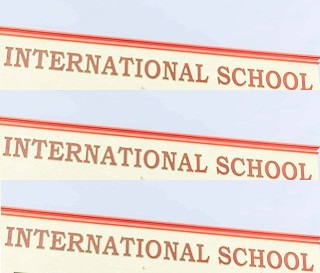
The Ministry of Education and Sports has tightened the noose around international schools, ordering institutions offering both foreign and Ugandan curricula to obtain separate licences or meet the full regulatory requirements for each pathway.
The ministry says schools cannot present themselves as international institutions while operating under a single registration and mixing curricula without meeting the applicable standards.
Frances Atima, the Chief Education Officer in charge of Education Standards and Quality Assurance, said schools that want to offer dual curricula must comply with the requirements governing both national and international schools.
“If you want to do a dual curriculum, you must meet two standards. You must meet our basic requirements for national schools, and you must also meet the requirements for international schools,” Atima said.
She added that schools offering both pathways must maintain separate registration and licensing arrangements.
The tough stance is part of a wider government drive to bring Uganda’s rapidly expanding international-school sector under tighter oversight.
It follows the introduction in May 2026 of the Basic Requirements and Minimum Standards for International Schools (BRMS-IS), the first specific standards developed to regulate the sector.
‘NO MORE FAKE INTERNATIONAL SCHOOLS’
Atima said the new standards address a longstanding regulatory gap that made it difficult for inspectors to distinguish genuine international schools from local institutions simply using the international label.
She said some schools have even been operating from residential houses while marketing themselves as international schools.
“At times when I am coming to office, I count about 20 signposts advertising international schools along the road and you find new ones coming up all the time,” Atima said.
According to Atima, some of the institutions charge high fees while offering programmes that are essentially similar to the national curriculum.
“You find a parent paying a lot of money thinking the child is in an international school, yet the school is offering something different. Parents are thus being duped,” she said.
NATIONWIDE SCHOOL HUNT
To establish the true size of the sector, the Ministry of Education is preparing a nationwide validation exercise before the end of this year.
The exercise will map international schools operating across the country, including institutions that are not captured in official ministry records.
Atima said the exercise will enable the ministry to establish which schools are operating legally and those that fail to meet the required standards.
Schools found operating without the necessary licences or failing to meet the standards will face regulatory action, including closure.
Inspectors have also been directed to identify and document every international school they encounter, including those missing from ministry records.
WHAT SCHOOLS MUST MEET
The BRMS-IS cover international schools from foundation level through secondary education, including day and boarding institutions.
The standards cover governance and management, registration and licensing, staffing, curriculum, teaching and learning, financial management, infrastructure, child protection, security, health and sanitation, food safety, environmental management and parent engagement.
Schools must be registered with the Uganda Registration Services Bureau and licensed by the Ministry of Education and Sports.
They must also have qualified school leaders, functional boards of governors or management committees and parent-teacher associations.
The standards prescribe teacher-learner ratios of one teacher to 15 learners in early years, one to 25 in primary and one to 30 in secondary.
Schools are also expected to obtain an examination centre number within three years or demonstrate documented progress towards obtaining one.
FOREIGN CURRICULA UNDER WATCH
The new regulations place particular emphasis on foreign curricula.
According to the standards, foreign curricula used in Uganda must receive approval from the National Curriculum Development Centre (NCDC) and accreditation from a recognised international body.
They must also be age-appropriate, cater for different learning needs and take into account Uganda’s cultural, social and linguistic context.
The requirement also applies to schools serving refugee and migrant communities that offer curricula from their countries of origin.
Ugandan schools currently offer several foreign pathways, including Cambridge programmes, the International Baccalaureate, American programmes and the French Baccalaureate.
In July 2024, NCDC approved Pearson’s iPrimary, iLowerSecondary, International GCSE and International A-Levels for use in Ugandan schools.
FEES, TEACHERS ALSO IN SPOTLIGHT
Education consultant Gonzaga Kaswarra welcomed the new standards and the planned validation exercise, describing the move as long overdue.
Kaswarra said the overall direction was positive but argued that gaps remain in the regulation of international curricula, teacher recruitment and school fees.
“By and large, it’s a welcome move in the right direction, but it requires alignment with international law to regulate the curriculum,” he said.
He also raised concerns about what he described as racial imbalances in teacher recruitment in international schools.
“Another area of concern is racial segregation in teacher recruitment in international schools, because the current reality is not balanced,” Kaswarra said.
He further criticised the rising cost of international education, saying the policy does not adequately address school fees.
“Regulation around skyrocketing fees wasn’t catered for, leaving parents to fall prey to exorbitant costs in the name of attaining international education, albeit the policy requiring schools to publish fees on their websites, a policy requirement we are yet to see being enforced,” he said.
The validation exercise is expected to give Government a clearer picture of the international-school sector and provide the basis for enforcing the new standards across the country.
GOT A HOT STORY? LET US KNOW!
Got breaking news, explosive secrets, or hard evidence?
Email us: redpeppertips@gmail.com
We accept tips, documents, videos, photos, and recordings—the more evidence you have, the better.
CONFIDENTIALITY IS OUR TOP PRIORITY. SOURCES ARE ALWAYS PROTECTED!
About Post Author