DIGITAL POWERHOUSE! Here’s How MTN Is Powering Uganda’s First Oil Journey with Cutting-Edge Technology & World-Class Connectivity Solutions
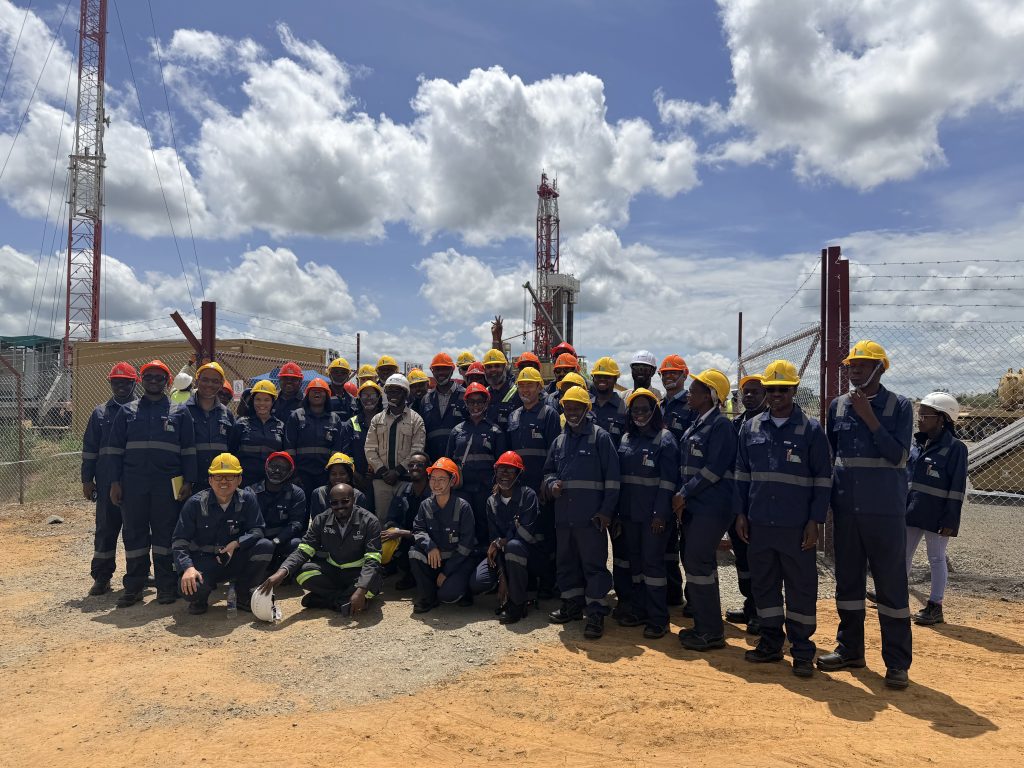
A group of Delegates from this year's oil and Gas convention during a visit to the Tilenga Oil well
Uganda’s journey to first oil is not only an energy story. It is also a technology story, one that is being shaped by the digital infrastructure, connectivity, and platforms required to keep complex operations running safely, efficiently, and in real time.
At the centre of that story is MTN, whose network and digital capabilities are supporting both the strategic ambition and day-to-day operational demands of the country’s oil and gas sector.
Following the recent Oil and Gas Convention in Kampala, where conversations centred on Uganda’s readiness for first oil, an excursion to the Albertine region offered a firsthand look at that progress in motion.
The journey into Hoima and onward to the Tilenga project revealed a region evolving rapidly, powered not only by oil and gas activity, but by the infrastructure, systems, and digital ecosystem growing around it. It also made clear that technology is no longer peripheral to this sector. It is central to how it operates.
What immediately stands out is the scale of development taking shape across the region. New roads cut through areas that were once difficult to access. Logistics hubs, accommodation facilities, businesses, and support services are steadily emerging to meet the demands of a growing industry.
There is visible movement everywhere, from heavy machinery and engineering teams to transport activity and communities adapting to new opportunities being created around the oil and gas value chain.
At the center of this transformation lies the Tilenga project, one of Uganda’s most significant upstream oil developments and a key driver in the country’s journey toward first oil. On-site, the level of coordination and precision required to support operations becomes clear very quickly. In an environment where multiple teams operate across vast and remote locations, connectivity is no longer just an operational advantage. It is essential infrastructure.
This is where MTN’s role becomes clear, not only as a strategic enabler, but as an operational technology partner supporting one of Uganda’s most important national development priorities.
As Uganda prepares for first oil, MTN has continued investing in the digital infrastructure that supports the growing oil and gas ecosystem.
Across Tilenga and other sites in the Albertine region, MTN’s connectivity is enabling seamless communication between teams working in complex and remote environments, supporting real-time coordination, faster data exchange, remote monitoring, and more efficient decision-making on the ground.
This positions MTN not simply as a telecoms provider, but as a technology company supporting critical infrastructure for operations in one of the country’s most important sectors.
“The future of oil and gas is not only physical infrastructure, but digital infrastructure as well,” said Sylvia Mulinge. “As MTN, we are committed to building the connectivity and digital solutions that will support businesses, communities, and Uganda’s broader economic transformation as we prepare for first oil.”
Engineers on-site say reliable internet connectivity has become central to day-to-day operations at the oil wells. “The teams here are in constant communication with support teams all over the world and we need first and steady internet. Decisions have to be made in real time. A lot of what we do today depends on real-time data transmission, remote monitoring, and constant communication between teams in different locations,” Gilbert Natwijuka, a drilling engineer at the petroleum Authority of Uganda. “To put that in perspective, I could simply save the drill stream from getting stuck by making a decision one minute earlier.”
MTN’s contribution goes beyond voice and data connectivity. It is helping power an operational ecosystem that depends on secure, reliable, and responsive digital solutions. Through Mobile Money services, businesses, contractors, suppliers, and local entrepreneurs within the region are able to transact more efficiently, supporting smoother day-to-day activity across the value chain. This demonstrates MTN’s ability to deliver technology platforms that support both industrial operations and broader economic participation.
Beyond financial services, digitalisation is increasingly central to how the sector operates. From data sharing and remote coordination to operational monitoring and integrated systems, technology is improving responsiveness, safety, and decision-making across the industry. MTN’s continued investment in network resilience, coverage, and digital capability positions it as a key technology partner to the Government of Uganda and to the wider ecosystem supporting the country’s economic development.
“The developments taking place in the Albertine region demonstrate the scale of opportunity within Uganda’s oil and gas sector,” said Humphrey Asiimwe. “What is equally important is the ecosystem being built around it, from infrastructure and technology to local enterprise participation, which will be critical for sustainable long-term impact.”
The impact is also being felt beyond the project sites themselves. Communities around Hoima and Buliisa are becoming more digitally connected, creating opportunities for local businesses and young people to participate more actively in the evolving economy. As new industries emerge around oil and gas, access to reliable digital infrastructure is helping bridge participation gaps and unlock new possibilities.
What the excursion ultimately revealed is that Uganda’s journey to first oil is not only about extracting a natural resource. It is about building an ecosystem capable of sustaining long-term economic growth, and that requires more than roads and industrial infrastructure alone. It requires strong digital systems, dependable connectivity, and technology partners that can support operations at scale.
As the country moves closer to this historic milestone, MTN is demonstrating that its role in Uganda’s first oil journey is not peripheral, but central. Through connectivity, digital platforms, and operational support, MTN is helping power the systems that keep the sector running.
In doing so, it is reinforcing its position not just as a telecommunications provider, but as a technology company and a key partner to the Government of Uganda in advancing national development and economic transformation.
About Post Author